Reviewed by Clinton Funk
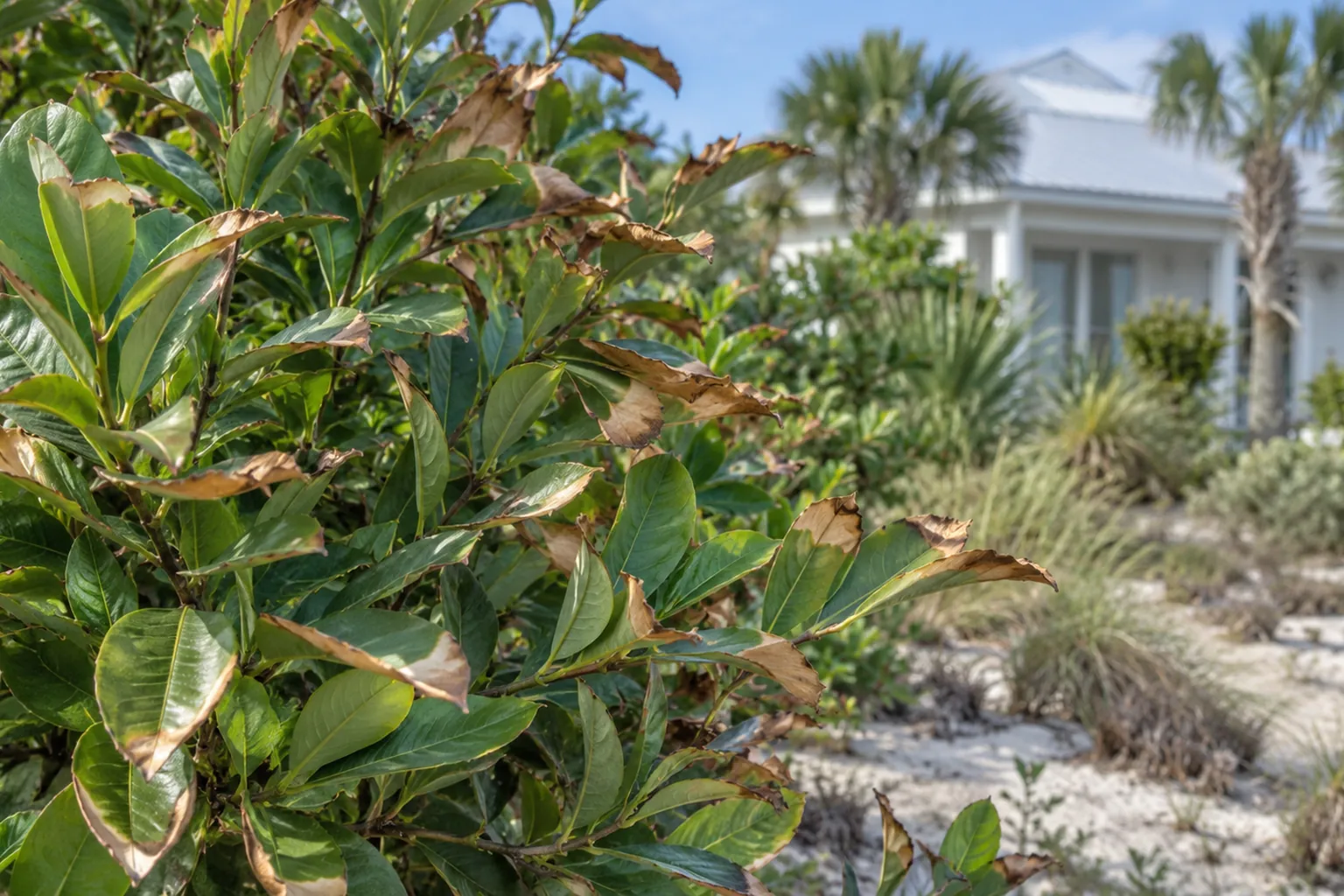
Salt-damaged trees and shrubs in Navarre need care based on exposure and damage, not leaf color alone. Which plants need help first, and does brown growth mean a plant is dead? Trees can recover from full leaf loss, though major trunk damage is often beyond repair (UF/IFAS tree guide).
At 4:16 p.m. CDT on October 8, 2026, NWS Mobile listed storm surge and hurricane warnings for coastal Santa Rosa County, but these warnings did not prove damage at your home. Follow local orders and check county updates (NWS local statement).
Salt-damaged trees: what signs can you note?
Record visible changes and unresolved questions for each plant. For palms, salt injury often shows as dead leaf tips across the crown (UF/IFAS palm guide), and use the cleanup guide for broad priorities and the Pensacola root recovery guide for palm questions, and keep notes about each plant separate.
A palm's leaf tips offer one clue to record, and they do not give you a full care plan, and the palm guide links this pattern to salt injury, and it also notes that some palm problems may predate the storm (UF/IFAS palm guide).
Use photos you already have or a distant view. Describe the scene without naming a cause.
- Give each plant a simple name or yard location.
- Note which leaves changed and when you first noticed.
- Describe the whole crown and where you saw brown tips.
- Keep an older photo beside the new view.
- Write down parts you could not see clearly.
The supplied guides give no salt care plan for shrubs. Keep shrub notes separate and request advice for the named shrub. A rule for a palm should not become a rule for every plant in the bed.
How should you separate spray from floodwater?
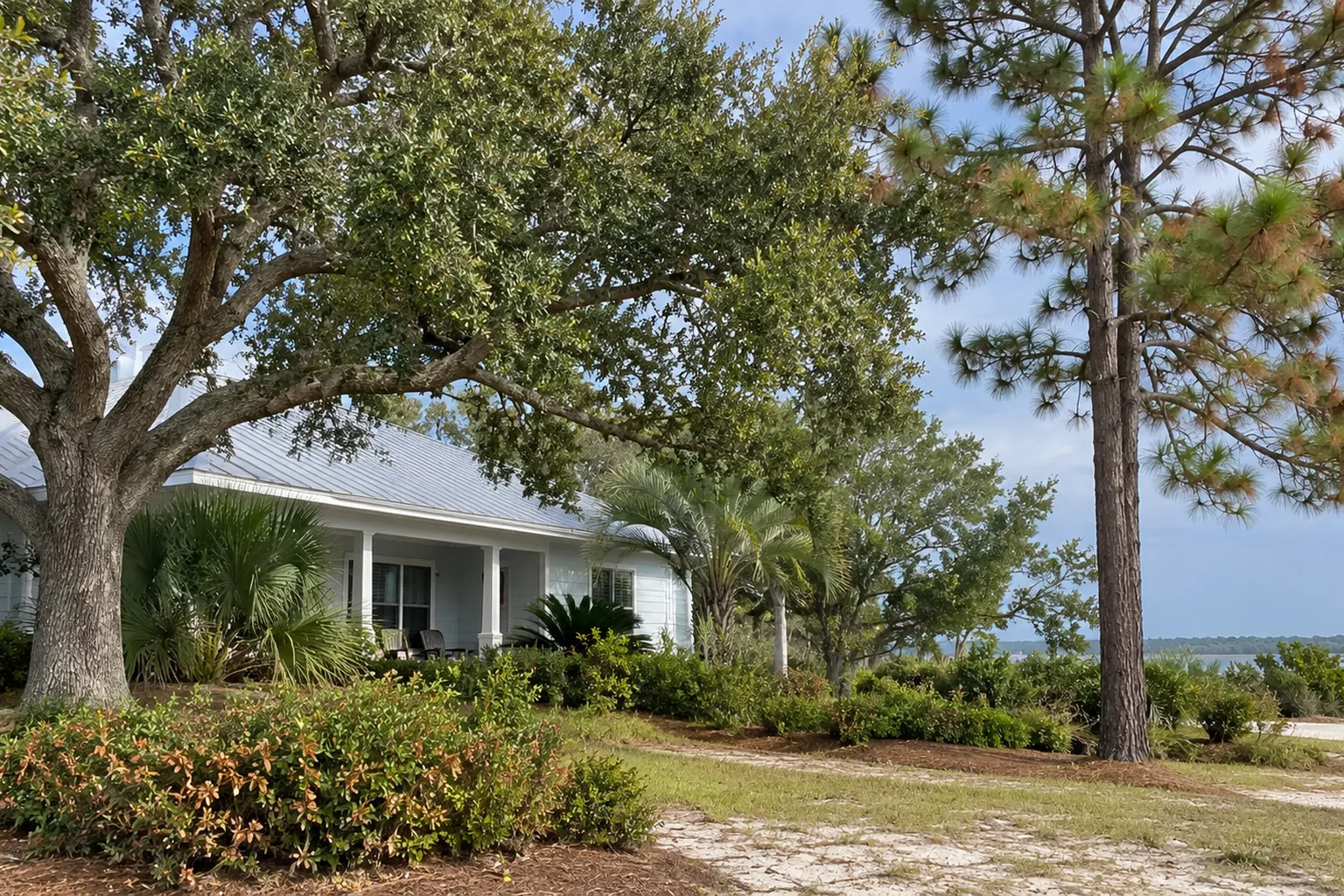
Keep spray and floodwater in separate parts of your notes, and record what you saw without guessing what reached the roots, and the Pensacola root recovery guide can help frame soil questions, and the cleanup guide puts those questions beside other storm needs, and start with the known exposure history of each bed.
UF/IFAS says coastal trees reached by storm surge can suffer major salt dieback, and those trees may need water to flush salt from soil, and this guidance concerns soil salt after surge, and it does not set out a leaf rinsing plan (UF/IFAS tree guide).
The palm guide also describes serious injury from saltwater flooding, and it notes greater concern when water stays for more than a few hours, or when no major rain follows (UF/IFAS palm guide).
- Known floodwater: List the beds you saw it reach.
- Possible spray: Describe what you saw, without adding a soil claim.
- Unknown exposure: Say that the water source is unknown.
- Rain history: Note rain after the water left.
If you were away, note that gap in your exposure record. Since forecasts cannot show which beds flooded, keep them apart from your dated account.
Which tree concerns should come before leaf color?
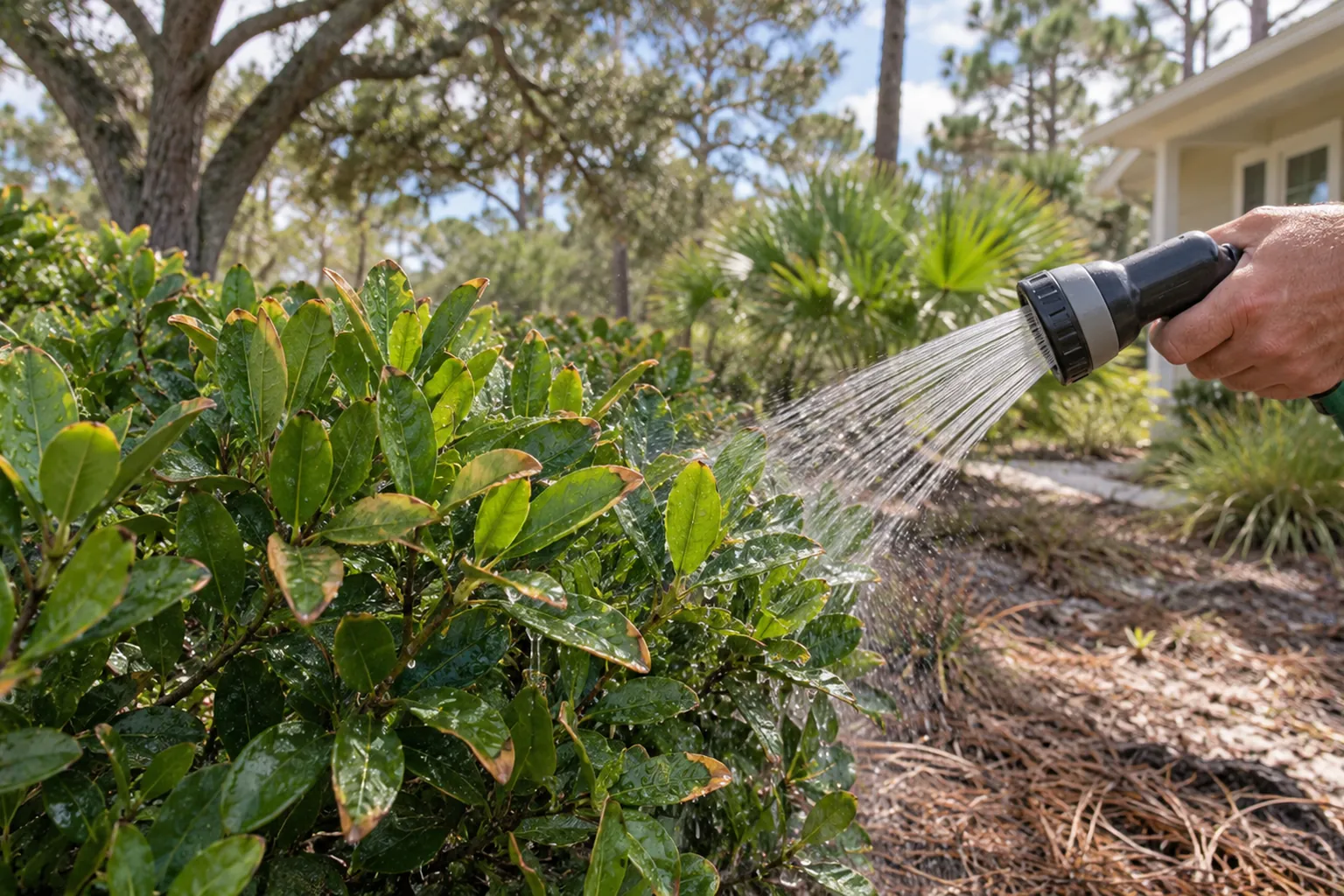
Large hanging limbs and leaning trees that could hit people or homes need expert attention first (UF/IFAS tree guide), and use Pensacola tree risk guide to frame that concern, and keep the Pensacola root recovery guide for later questions about keeping the tree, and leaf care comes after these risks.
A limb near power lines needs a qualified line-clearance arborist. UF/IFAS warns that work near those lines can be fatal (UF/IFAS tree guide).
When you request help, lead with the concern you can describe, and use an existing photo or a safe indoor view, and do not make a closer view part of the request.
- Name the tree's location in plain words.
- Describe the hanging limb or changed lean.
- Note nearby lines, a house, or a used path.
- Explain which parts are hidden from your view.
For trees that may be restored, UF/IFAS calls for an intact frame, and it should lack visible cracks or large wounds on the main trunk, limbs, or main roots (UF/IFAS tree guide), and leave that judgment to the person who checks the tree, and brown leaves cannot answer it.
When might fresh water help with soil salt?
Fresh water may help flush soil salt from trees reached by surge, and water is not needed when the root ball is wet from heavy rain or already soaked (UF/IFAS tree guide), and read the Pensacola root recovery guide and Pensacola root recovery guide before discussing a plan for a specific tree. For related tree-care background, read the Pensacola tree risk guide and Pensacola root recovery guide.
For flooded palms, UF/IFAS says fresh water may help leach soil when no major rain follows the floodwater's retreat, and that advice concerns soil around palms, and it does not give a leaf washing method or shrub treatment (UF/IFAS palm guide).
Use these points to request a plant-specific plan, not a fixed watering dose.
- Which plant is the water plan meant to help?
- Was saltwater flooding known, possible, or not seen?
- How will recent rain affect the next step?
- What soil condition would change the advice?
- Who will check the result and explain changes?
Keep routine tree watering and salt flushing as separate entries, and the tree guide gives a water amount for staked trees, and it does not label that amount as a salt flushing dose (UF/IFAS tree guide).
Request instructions that name the plant and treatment purpose. Save the date and adviser’s name so later changes are easier to discuss.
Does brown growth mean the whole plant is dead?
Brown growth needs context, and trees do not all respond alike, and trees can recover from full leaf loss (UF/IFAS tree guide), and use the Pensacola root recovery guide for broad questions and the Pensacola root recovery guide for palms, and ask which plant group the advice covers before drawing a conclusion. For related tree-care background, read the Pensacola tree risk guide and Pensacola root recovery guide.
UF/IFAS gives different signs for different tree groups, and pines with all brown needles, or no needles, are dead, with some exceptions such as pitch pine, and for broadleaf trees, it advises waiting until the next spring to judge whether growth returns (UF/IFAS tree guide).
These rules do not cover every shrub, and nor do they settle whether a damaged tree can be kept, and major trunk damage is often beyond repair, even though trees can recover from lost leaves (UF/IFAS tree guide).
- Ask someone to confirm the plant's name.
- Keep leaf changes apart from trunk and branch concerns.
- Use the same distant view for later photos.
- Record dates rather than relying on memory.
Ask what change would prompt another visit, and the tree guide says age, health, size, species, and damage affect recovery, and there is no single recovery date for all trees (UF/IFAS tree guide).
Why do damaged palms need their own plan?
Palms need a separate plan because their new leaves come from a bud at the trunk's top, and recovery shows through new leaves from that bud (UF/IFAS palm guide), and compare the Pensacola root recovery guide with the cleanup guide, and keep the palm's history and follow-up questions together.
Unless bud damage is clear, UF/IFAS says survival after wind damage cannot be predicted, and recovery takes at least six months to become clear, and often longer, and the guide calls for watching damaged palms over the next one to two years (UF/IFAS palm guide).
That time range is useful for planning future checks, and it is not a promise that a given palm will live.
- Keep a dated record of any new leaves.
- Share older photos that show its pre-storm state.
- Note whether it was moved or replanted.
- Ask which leaf changes need another review.
UF/IFAS recommends leaving broken green palm leaves attached because they help the palm recover, and its advice also allows limited removal when only a few leaves are broken (UF/IFAS palm guide), and ask a qualified tree-care professional handling the palm to explain any proposed leaf removal. A neat appearance alone should not define your request.
What should you ask before agreeing to tree work?
Ask whether the proposed work deals with risk, soil care, or later tree recovery, and give each purpose its own place in the written plan, and use Pensacola tree risk guide for removal questions and the Pensacola root recovery guide for questions about keeping a tree, and ask what remains uncertain before you agree.
UF/IFAS advises against major shaping during initial cleanup, and it calls for removing as little live wood as possible, and it also warns against more injury to trunks, branches, and roots (UF/IFAS tree guide).
- Which concern does each proposed task address?
- What live growth would be removed, and why?
- How will cleanup avoid further tree injury?
- Which tasks belong in a later visit?
Recovery pruning often takes two to five years, and large, badly damaged mature trees may need much longer (UF/IFAS tree guide), and ask for a staged plan rather than one vague promise.
If you seek bids, the FTC recommends written estimates from more than one contractor, and each should state the work, price, planned finish date, and contact details (FTC repair advice), and compare the listed work before comparing the totals.
Frequently asked questions
Keep one simple record for each tree, palm, or shrub, and put photos, dates, known exposure, and open questions in the same place, and the cleanup guide helps order broad concerns, and the Pensacola root recovery guide offers related tree-care background. A clear record gives your next conversation a firm starting point.
You can organize this record indoors, and use material you already have, and no close inspection is needed to make the first version.
- Name the plant. Use its yard location if its name is unknown.
- Add a starting view. Label the date and where the photo was taken.
- List known events. Separate seen flooding from possible spray and unknown exposure.
- Save the advice. Include who gave it and which plant it covers.
- Track the next step. Write the planned review date and questions still open.
Keep any planting history with a fallen tree's record. UF/IFAS treats recently planted trees as a separate case from established fallen trees, and it calls for expert help with staking those new plantings (UF/IFAS tree guide).
For later tree visits, ask how new shoots fit the plan. UF/IFAS says letting sprouts grow helps rebuild stored energy, and later pruning selects shoots to form new branches (UF/IFAS tree guide), and save that explanation beside the next visit date.
Can rain wash away all the salt?
The supplied guides do not promise that rain clears all soil salt, and for flooded palms, UF/IFAS says fresh water may help leach soil when no major rain follows, and for trees, water is not needed when the root ball is already wet or soaked, and ask how recent rain affects the plan (Palm guide); tree guide.
Should I remove every brown shrub leaf?
These sources give no shrub leaf removal rule, and they cover trees and palms, so their advice cannot settle that shrub question, and record the shrub's name, changed leaves, and known exposure, and then request advice for that plant, and for trees, UF/IFAS calls for removing as little live wood as possible during cleanup (UF/IFAS tree guide).
Can a live oak recover after losing leaves?
Yes, recovery from full leaf loss is possible for trees. UF/IFAS also says live oaks tend to recover better than laurel oaks, and that comparison does not predict one tree's fate, and the same guide says major trunk damage is often beyond repair, and ask about the whole tree rather than judging only its leaves (UF/IFAS tree guide).
Does salt tolerance mean a palm cannot be hurt?
Do not treat salt tolerance as proof that a flooded palm is unharmed. UF/IFAS says soil salt after flooding can seriously injure many palm species, and it describes dead leaf tips across the crown as a typical sign, and record exposure and leaf changes, then ask for a plan tied to the palm involved (UF/IFAS palm guide).
What should I share before a tree visit?
Share the plant's location, dated photos, and known flood history, and add earlier photos and any written care advice, and lead with hanging limbs, leaning trees near people or homes, and limbs near power lines. UF/IFAS puts those risks before other work, and say clearly which parts you cannot see from your safe location (UF/IFAS tree guide).
Read the Pensacola tree risk guide and Pensacola root recovery guide for related tree-care background. Ask qualified local providers to assess your own site.
Florida Foliage is based in Daytona Beach and serves Volusia and Flagler counties. For a Panhandle or Alabama site, ask qualified local providers about your own project.
About this article: AI helped draft this article.
Florida Foliage is a Daytona Beach tree service that works with an ISA Certified Arborist consultant. For tree work in Volusia or Flagler County, call (386) 481-7913 to discuss your project.
For tree work in Volusia or Flagler County, call (386) 481-7913 to request a free on-site estimate.