Reviewed by Clinton Funk
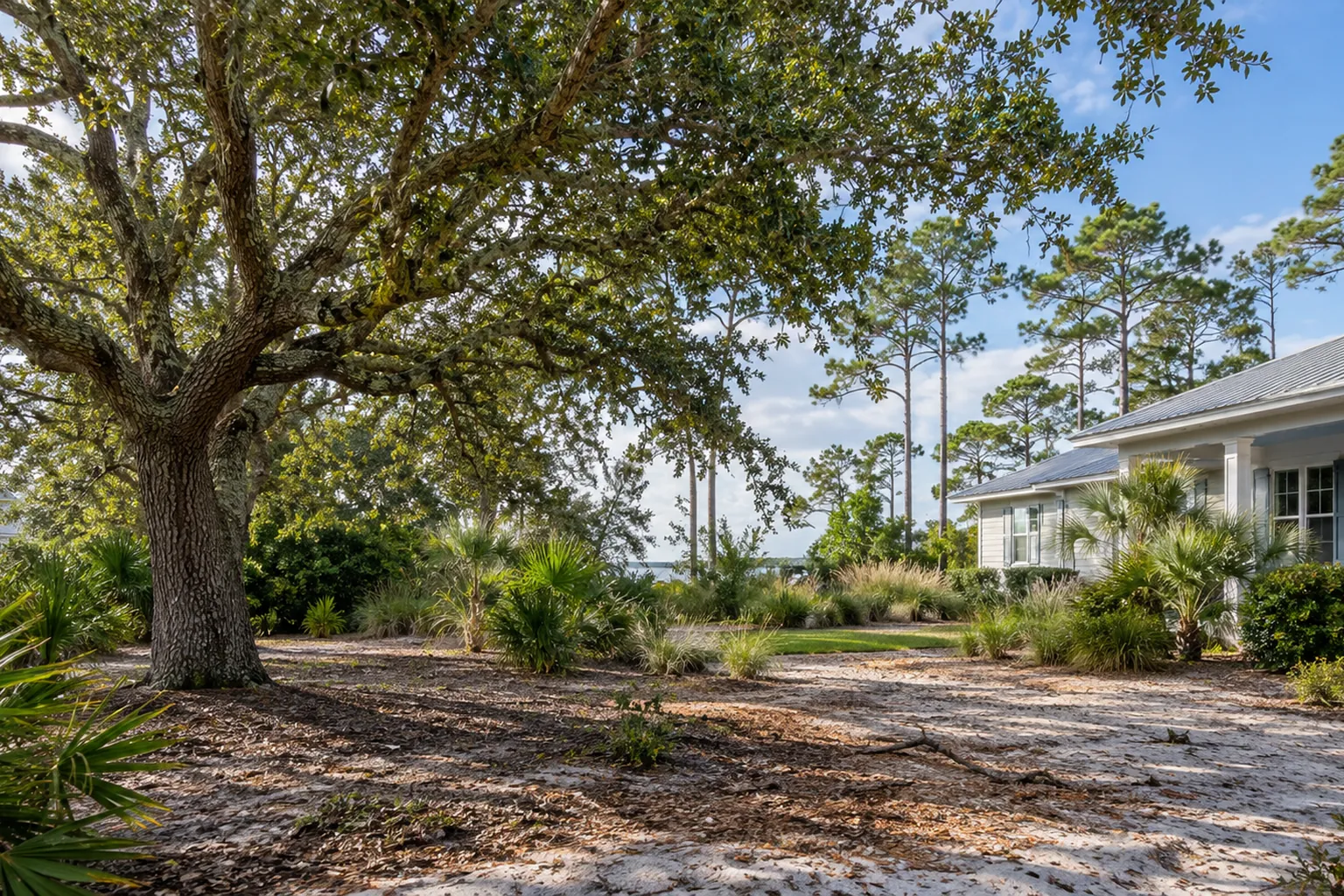
Storm tree recovery in Panama City Beach involves three main decisions: which trees need urgent expert help, which may be restored, and where replacements belong. UF/IFAS explains that recovery depends on tree age, health, size, species, and damage. Its guidance also notes that repair often takes more than one pruning visit. UF tree guide.
At 7 p.m. CDT on October 8, 2026, the National Hurricane Center forecast Hurricane Isaias to approach the northern Gulf Coast on Friday, with landfall late Friday or early Saturday. This was a forecast, not a report of local damage. The supplied local statement listed Coastal Bay under hurricane and storm surge warnings. Read the dated NHC advisory and NWS Tallahassee statement.
What does storm tree recovery after past hurricanes involve?
Use your past storm records as a starting point for reviewing your own landscape history. Gather past photos, list trees that remain, and note spaces where trees were lost. The Emerald Coast hurricane cleanup guide and Pensacola tree risk guide can help frame questions for your next visit.
Distinguish the first cleanup from the longer recovery plan. UF/IFAS says immediate treatment should focus on unacceptable risks and broken limbs. It advises against major pruning that changes the tree's structure at that stage. Ask how the proposed work follows those priorities for each tree. UF tree guide.
- Past photos can help you describe what changed without relying on a vague memory of the yard.
- Use familiar labels, such as the driveway tree or the tree beside the back fence.
- Put the same label on current photos and any written advice you receive.
For each tree, request a clear next step: urgent work, repair, further review, or replacement planning. Ask the person making the advice to explain its basis in plain words. Record unanswered questions beside that tree's name so they remain part of the talk.
Keep your goals exact when discussing the future yard: afternoon shade, a clear view, privacy, or fewer planting beds. These goals give the planting conversation direction without turning memories of a past storm into predictions about another one.
Which tree problems need professional attention first?
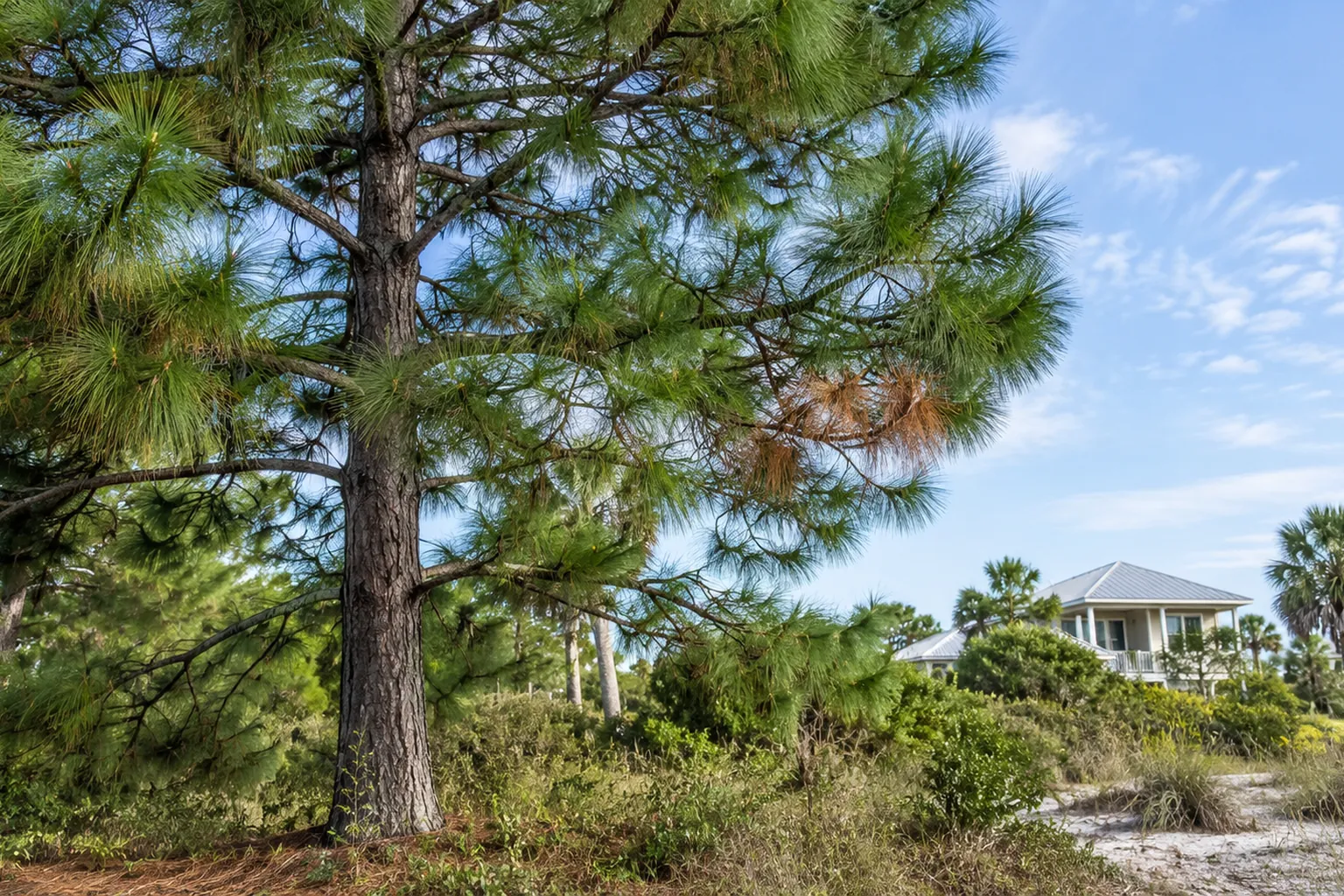
Give priority to expert help for large hanging limbs, trees leaning toward people or buildings, and branches near power lines. UF/IFAS identifies these as potentially risky situations. UF tree guide, then use the Pensacola tree risk guide and Pensacola tree risk guide to frame your request. For related tree-care background, read the Pensacola tree risk guide and Pensacola root recovery guide.
For a limb near power lines, UF/IFAS calls for a qualified line-clearance arborist. It warns that work near electrical lines can be fatal when proper safety steps are not followed. Leave that work to the qualified expert rather than trying to clear the branch yourself. UF tree guide.
When requesting help, describe the location and the concern without attempting to examine the damage closely. A useful message might name a hanging limb above the driveway and state whether you already have a photo. Leave uncertain details marked as unknown.
- Follow local officials' instructions about shelter, access, and return. Read the supplied official instructions.
- List the tree's location and the visible problem in plain words for the expert.
- Include photos you already have, with the date and tree location clearly labeled.
- Ask which concerns need attention before the rest of the proposed tree work.
- Keep the response beside your original request so the next talk starts with shared facts.
Make a distinct list of ordinary landscape goals, such as restoring shade or choosing replacements. Bring both lists to the conversation so each concern receives a clear answer.
Why can a tree decline after the first cleanup?
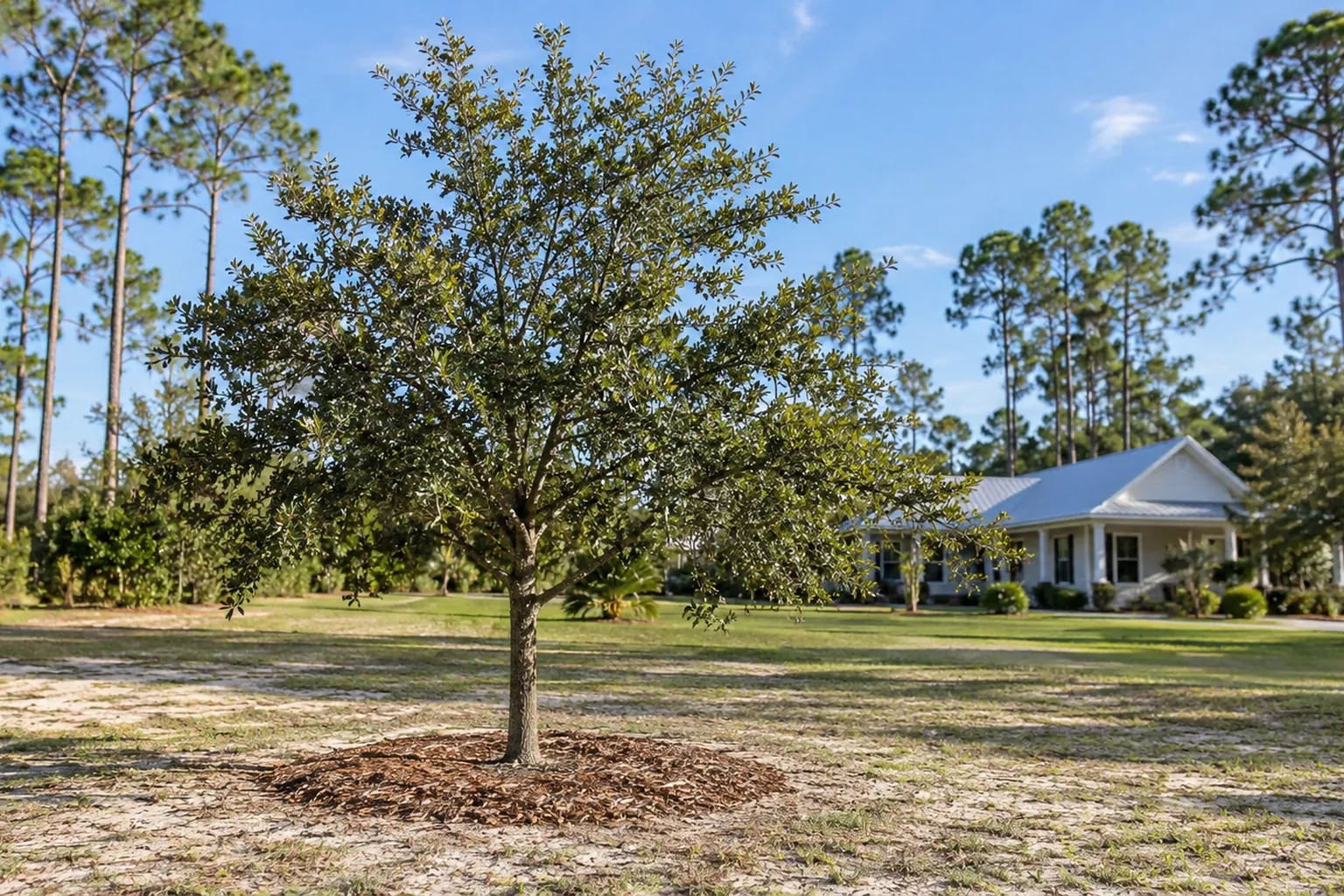
Cleanup does not settle every recovery question because UF/IFAS describes both recovering and declining trees after severe damage. It also identifies coastal storm surge as a cause of salt-related dieback. UF tree guide, alongside the Pensacola root recovery guide and Pensacola tree risk guide.
UF/IFAS says trees in poor health before a storm may recover more slowly than healthy trees. It describes old trees with root decay, stem decay, and large dead branches as more likely to decline or die. Ask whether earlier problems affect the advice for your tree. UF tree guide.
Salt exposure deserves its own question on a coastal property. UF/IFAS states, “Significant tree dieback due to salt damage can occur in coastal areas that receive storm surge from hurricanes.” Record any known saltwater flooding and share that history when discussing the tree's care. UF tree guide.
- Keep dated photos together under the same tree label for future conversations.
- Write down visible changes without assigning a cause that has not been confirmed.
- Include earlier photos or notes that show the tree before the storm.
- Record the next review date and the questions you want answered then.
Use descriptions such as fewer leaves or brown tips rather than a diagnosis. Keep your views distinct from the expert's findings, and ask what changes warrant another visit.
How is restoration weighed against tree removal?
Repair depends on the remaining structure and damage, rather than the owner's wish to keep a tree. UF/IFAS says major trunk damage is often irreparable. UF tree guide, then compare the regional cleanup planning guide with the Pensacola tree risk guide when planning questions.
UF/IFAS says a tree considered for repair should have intact structure without visible cracks or large wounds on its main trunk, limbs, or main roots. It also explains that trees can recover from full leaf loss or substantial crown damage. Those findings support examining more than appearance alone. UF tree guide.
Species can inform the talk without settling it. UF/IFAS reports that live oak and buttonwood resist decay and recover from damage better than laurel oak. The same source identifies the extent of damage and the tree's earlier health as recovery factors. UF tree guide.
- Ask for the advice to name the tree, describe the findings, and explain the proposed next step.
- If repair is suggested, ask what later visits would involve.
- If removal is suggested, request the reason in clear language before discussing the replacement plan.
When recommendations differ, put the explanations side by side and name the exact point of disagreement. One person may have described a finding that another has left unanswered. Ask each person to address that finding directly, keeping the talk tied to the same tree.
What should ongoing recovery care include?
Ongoing care should follow a plan for the single tree, with later visits explained from the start. UF/IFAS says repair commonly needs repeated pruning. UF tree guide, and keep the Pensacola tree risk guide and Pensacola tree risk guide available when discussing follow-up work. For related tree-care background, read the Pensacola tree risk guide and Pensacola root recovery guide.
UF/IFAS describes a typical repair pruning program lasting two to five years, sometimes longer for large, severely damaged mature trees. Treat that as a general range, not a promised end date. Ask how the tree's age, health, size, species, and damage shape its own plan. UF tree guide.
The source advises removing as little live wood as possible during cleanup and leaving shaping for later recovery work. Ask the expert to explain which proposed tasks address current damage and which belong to a later visit. Keep those stages clear in the written plan. UF tree guide.
Water needs also need attention to current conditions. UF/IFAS says irrigation is unnecessary when the root ball is already wet or saturated from heavy rain. Request care directions for your site rather than following a fixed watering routine copied from another property. UF tree guide.
- Ask who will answer questions between visits and how changes should be reported.
- Keep the current plan with the tree's photos, replacing older instructions when the person responsible for its care provides an update.
How should you plan replacement trees?
Begin replacement planning by describing the space and what you want the new planting to provide. Use the Pensacola tree risk guide and Pensacola root recovery guide to plan site questions. Bring a simple yard sketch and your preferences to the tree selection talk before making purchases.
ISA's tree owner resources include guidance on tree selection, planting, nursery stock, and avoiding utility conflicts. Use those topics as a checklist for questions about proposed replacements. Ask the person recommending a tree to explain how the choice relates to your planting space. ISA tree care guide.
- Mark buildings, driveways, existing trees, and visible utility lines on your planning sketch.
- Describe the shade, privacy, view, or other purpose you want each planting to serve.
- Ask for the proposed tree's mature dimensions and a clear reason for choosing it.
- Request a planting and care plan that names who will carry out each task.
- List unfinished property repairs before agreeing on planting locations and dates.
For a Panama City Beach yard, include any known flooding history in the site description. Label uncertain details as questions rather than filling gaps with guesses. Ask the person advising you to address those questions before you settle on a species.
Compare planting options against the same goals, including the parts of the yard you use most. Write down the reason for each final choice so the plan remains clear when the new trees arrive.
What records help you compare proposed recovery work?
Keep one short file for each tree, with photos, findings, proposed work, and the next decision together. Use the Emerald Coast recovery planning guide and Pensacola tree risk guide as talk prompts. A consistent tree label helps you compare proposals that describe the same part of your yard.
The FTC advises getting estimates from more than one contractor. It says a written estimate should describe the work, materials, end date, price, and contractor contact details. For tree work, ask each proposal to name the trees covered so you can compare the stated scope. FTC scam tips.
- Ask whether the proposal includes the first visit alone or any later recovery work.
- Put your questions beside the relevant item and request written answers.
- Keep changes with the original proposal so you can follow what was agreed without reconstructing several conversations.
Maintain distinct columns for your views, the expert's findings, and completed tasks. Include dates and the name of the person who supplied each advice. This keeps a personal note from becoming confused with a conclusion someone reached during a visit.
ISA's resources cover tree care and risk topics throughout a tree's life. Keep its ISA tree care guide and ISA tree care guide with your questions for future visits.
Frequently asked questions
The answers below cover common decisions about retained trees, follow-up visits, and replacement planning. Keep them with the regional hurricane cleanup guide and Pensacola tree risk guide when planning questions. Add the location of your own tree to each question. The conversation stays focused on the work being proposed.
Does losing all its leaves mean a tree must be removed?
No. UF/IFAS says trees can recover from full leaf loss or substantial crown damage. It distinguishes those losses from major trunk damage, which is often irreparable. Ask how the remaining structure and other findings affect the advice for the single tree, rather than treating leaf loss as the deciding fact. UF tree guide.
Can saltwater flooding lead to later tree decline?
Yes. UF/IFAS states that significant salt-related dieback can occur in coastal areas receiving storm surge. Include known saltwater flooding in the tree's history and ask how it affects the care plan. Keep dated views for later talks without assigning salt injury as the cause of every change you notice. UF tree guide.
How long can a restoration pruning plan last?
UF/IFAS gives a typical range of two to five years, with longer periods possible for large, severely damaged mature trees. It identifies age, health, size, species, and damage as factors. Ask what each planned visit is meant to accomplish and when the tree's progress will be reviewed. UF tree guide.
How soon can you tell whether a damaged palm will recover?
UF/IFAS says it takes at least six months, and probably longer, before recovery becomes apparent. Recovery involves new leaves emerging from the palm's bud. Its palm guidance suggests monitoring damaged palms during the next one to two years. Ask for a follow-up plan that reflects those longer view periods. UF palm guide.
Should a replacement be the same species as the lost tree?
Make the choice through a fresh tree selection talk rather than an automatic repeat. ISA provides resources on choosing trees, planting, nursery stock, and utility conflicts. Bring your yard sketch, planting goals, and questions about the old location. Request a clear explanation of why the proposed replacement fits the plan. ISA tree care guide.
Read the Pensacola tree risk guide and Pensacola root recovery guide for related tree-care background. Ask qualified local providers to assess your own site.
Florida Foliage is based in Daytona Beach and serves Volusia and Flagler counties. For a Panhandle or Alabama site, ask qualified local providers about your own project.
About this article: AI helped draft this article.
Florida Foliage is a Daytona Beach tree service that works with an ISA Certified Arborist consultant. For tree work in Volusia or Flagler County, call (386) 481-7913 to discuss your project.
For tree work in Volusia or Flagler County, call (386) 481-7913 to request a free on-site estimate.