Reviewed by Clinton Funk
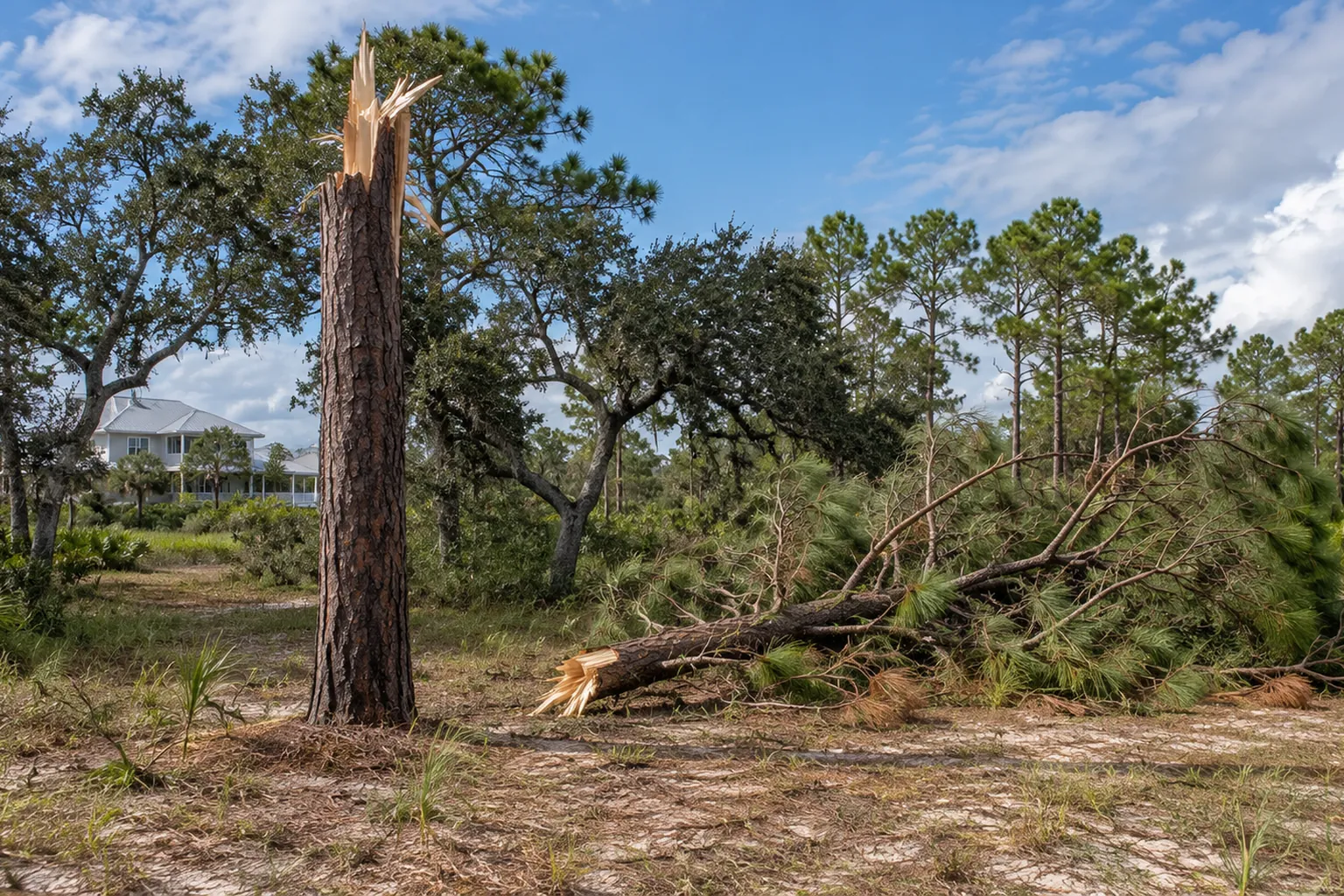
Tornado tree damage during a Florida Panhandle storm needs careful description before anyone assigns a cause. The NWS Mobile statement lists snapped or uprooted trees under both wind and tornado impacts. That overlap means a broken tree alone cannot tell apart the two hazards. NWS Mobile hurricane statement.
Twisted tops, scattered limbs, and fallen trunks can leave homeowners with several questions at once. What happened here? Which trees need attention? What should I tell the person coming to check them?
Start with what you can describe clearly. Keep the weather question distinct from the proposed tree work. Ask for an explanation of both the visible damage and the work suggested.
Why was the tornado threat greater east of the track?
The NWS Mobile forecast placed a favorable tornado environment east of the storm's track as it moved inland. Use the Emerald Coast hurricane cleanup guide for regional planning and Pensacola tree risk guide for recovery questions. This was a forecast concern, not a report of tornado damage. NWS Mobile statement.
- At 7:00 PM CDT on October 8, 2026, the National Hurricane Center forecast an isolated tornado risk beginning Friday night in the Florida Panhandle and continuing Saturday. Its wording included: “The tornado threat will continue Saturday for eastern Alabama, Georgia, and the Florida Panhandle.” NHC Hurricane Isaias advisory 9A.
- The Mobile statement described a “favorable environment for tornadoes” east of the track through early Saturday morning. It named the western Florida Panhandle and south central Alabama as the greatest threat area. Those words describe expected weather conditions, rather than confirming that a tornado crossed a particular property. NWS Mobile forecast details.
For a Tornado Warning, the Tallahassee statement advises sheltering quickly, preferably away from windows in an interior room not prone to flooding. It also says to follow local officials and receive warnings through multiple sources. Tree photos can wait while those protective steps take priority. NWS Tallahassee shelter guidance.
Do twisted tops prove tornado tree damage?
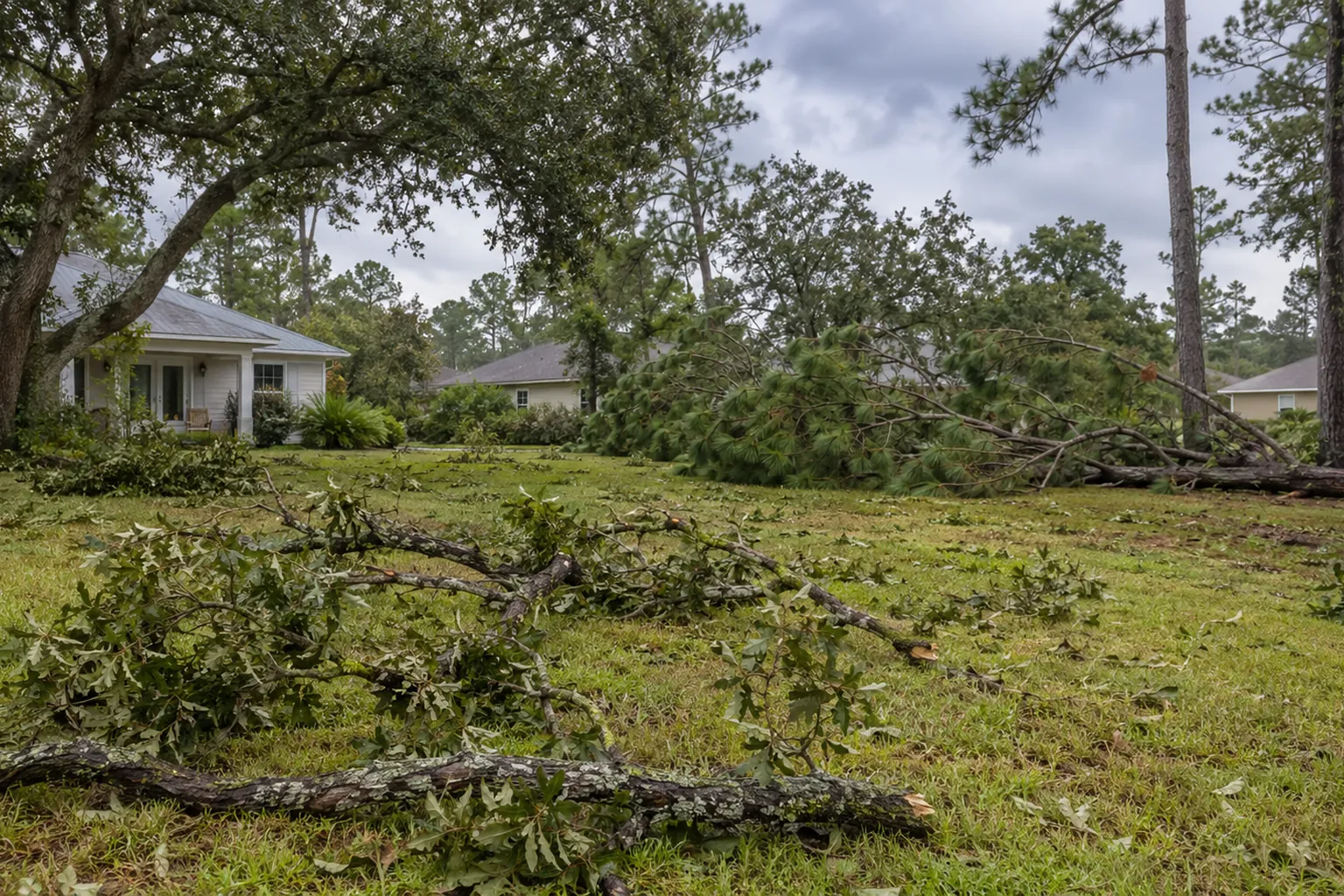
Treat twisted tops as a description of broken wood, rather than a confirmed weather diagnosis. The Pensacola tree risk guide and Pensacola tree risk guide offer related tree-care background. The official statement names snapped trees under both hazards, so their appearance needs careful interpretation. NWS Mobile potential impacts. For related tree-care background, read the Pensacola tree risk guide and Pensacola root recovery guide.
Under wind impacts, Mobile forecasts “Many large trees snapped or uprooted” Its tornado section also lists “large trees snapped or uprooted.” The same outcome appears in both sections. Calling every snapped trunk tornado damage would go beyond what this statement establishes. NWS Mobile wind and tornado sections.
Keep the same restraint when describing trees that appear to have fallen in one direction. Record the pattern without assigning a straight-line wind label. The statement does not offer a yard-level test based on fallen trunks, scattered branches, or twisted-looking tops. NWS Mobile statement.
| What you notice | What to record | What to leave open |
|---|---|---|
| A twisted-looking top | Describe where the top broke and what remains attached. | The exact wind cause. |
| Several fallen trunks | Describe their positions relative to the house or street. | A straight-line wind diagnosis. |
| Branches across the yard | List the places where branches are visible. | A tornado path through the neighborhood. |
| A fallen tree with exposed roots | Describe the visible trunk, roots, and nearby objects. | The sequence that led to failure. |
- Use distinct labels for views and weather reports in your notes.
- If an official report later names a tornado, add that report with its date and location.
- Keep your first description intact so readers can tell apart what you saw from what you learned later.
Which damage details should you record?
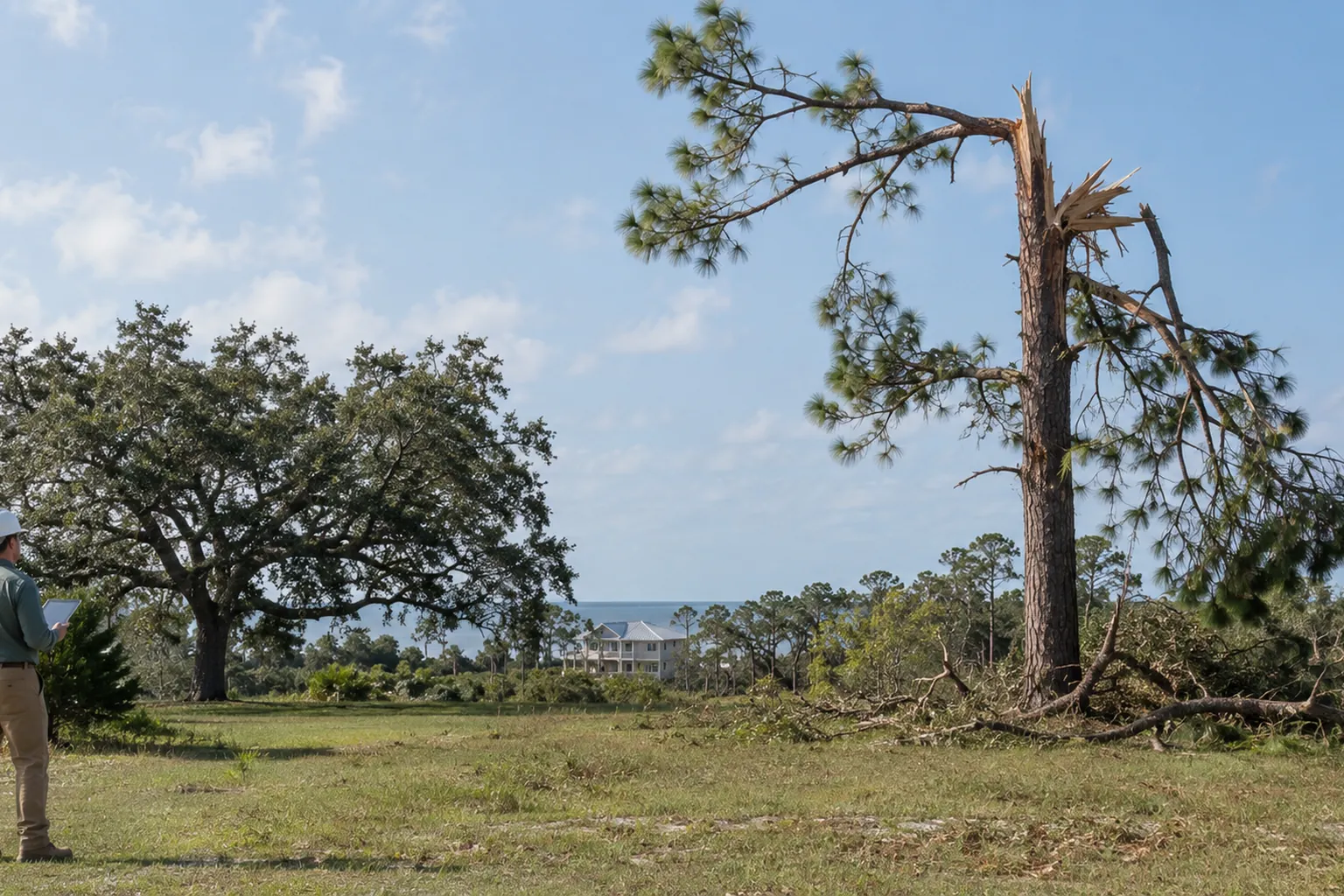
Record the tree's location, the visible break, and its position beside buildings or access routes. The Pensacola tree risk guide offers related tree-care background. Keep each entry exact enough for another person to understand. For related tree-care background, read the Pensacola tree risk guide and Pensacola root recovery guide.
Give each tree a simple label, such as front-yard pine or oak beside the garage. Use the same label in your photos, written notes, and request for a check. This keeps several damaged trees from becoming one not clear description.
- Describe the break. State whether you see a broken top, a broken branch, or a break in the main trunk.
- Describe what remains. Note any broken part that appears attached, and explain which side you cannot see.
- Name nearby features. Include the house, garage, fence, driveway, or other objects that help name the tree.
- Describe fallen material. Record where the visible trunk and branches lie, without assigning a weather cause.
- Mark missing views. State when another tree, a building, or water blocks part of the scene.
A useful entry might describe a broken pine top above the front driveway, with the rear side hidden. Another might name an oak lying toward the fence, with roots visible beside the trunk. These examples describe a scene without claiming a tornado or an exact failure time.
Use landmarks when you are unsure of compass directions. Toward the street is clearer than an uncertain north or northeast label. For several trees, a simple sketch can show which photo belongs to which tree and where each stands on the property.
What should happen before a close tree inspection?
Leave close inspection of hanging limbs, leaning trees, and tree damage near power lines to experts. Read the Pensacola tree risk guide and Pensacola tree risk guide when planning your request. UF/IFAS says these risky situations should receive expert attention before other tree work. UF tree guide. For related tree-care background, read the Pensacola tree risk guide and Pensacola root recovery guide.
UF/IFAS identifies large hanging limbs and leaning trees that could strike people or buildings as potentially risky situations. For a limb near power lines, it specifically calls for a qualified line-clearance arborist. Its warning states: “Working near electrical lines is dangerous and may result in fatality.” UF tree guide.
- Check local instructions first. Follow officials' advice on evacuation and access, rather than relying on a neighbor's account. NWS Mobile local emergency guidance.
- Plan a clear tree description. Use existing photos and notes to explain which tree concerns you and where it stands.
- Report line involvement. Tell the person arranging the work when a limb is near power lines, because UF/IFAS calls for a qualified line-clearance arborist. UF tree guide.
- Name the first work priority. Ask how the proposal addresses hanging limbs or leaning trees before other cleanup begins. UF tree guide.
The Mobile statement directs residents to local emergency management for evacuation and shelter details. It lists Santa Rosa County emergency details among those resources. Use instructions for your own county when planning your next step. NWS Mobile county details.
What matters when assessing damaged pines and live oaks?
Ask how the remaining trunk, limbs, and main roots affect the choice between removal and repair. The Pensacola tree risk guide and Pensacola root recovery guide offer related tree-care background. UF/IFAS makes the tree's remaining structure central to whether repair is possible. UF tree guide.
The guidance says a tree's structure should be intact, without visible cracks or large wounds on the main trunk, limbs, or main roots. It also says trees can recover from substantial crown damage, while “major trunk damage is often irreparable.” A broken crown and a damaged trunk therefore raise different questions. UF tree guide.
Species belongs in that discussion without replacing an inspection of the individual tree. UF/IFAS says pines “sprout very little or not at all.” It describes live oak and buttonwood as recovering from damage much better than laurel oak. Ask how those differences affect the proposed plan for your tree. UF tree guide.
Repair may extend beyond the first cleanup visit. UF/IFAS says a repair pruning program typically lasts two to five years, and perhaps longer for large, severely damaged trees. It also says age, health, size, species, and damage affect recovery. Ask which of those factors shape the advice you receive. UF tree guide.
- Ask which tree parts need immediate expert attention and which are included in the planned work.
- Ask why the tree is being considered for retention, repair, or removal.
- Ask whether the plan includes later visits and what each visit would address.
Further reading includes ISA's ISA tree care guide. Its ISA tree care guide lists storm-related damage and tree risk among its care topics.
How can photographs and notes keep the record clear?
Keep original photos, label each tree, and tell apart the time you noticed damage from any known failure time. The Pensacola tree risk guide and Pensacola tree risk guide offer related tree-care background. A clear record should show what you observed, what you were told, and what remains unknown. For related tree-care background, read the Pensacola tree risk guide and Pensacola root recovery guide.
- Arrange photos from broad views to closer views already available.
- Start with the image that names the tree and its place beside the house or driveway.
- Then add images showing the visible break, fallen material, or other details mentioned in your notes.
Name files or entries in a way you can follow later. Front pine, October 10, street view is clearer than several unlabeled images in a phone gallery. Keep a short note beside each image explaining which part of the tree it shows.
Record the last time you know the tree appeared intact, if you have that details. Record the first time you saw the damage as a distinct entry. A night of strong wind does not give you a precise failure time without another record.
Keep weather reports distinct from your property notes. Include the report's date, issuing office, and the location it names. This makes it easier to tell whether a statement describes forecast hazards or reported damage.
For insurance questions, check your coverage directly rather than relying on a contractor's explanation. The FTC advises: “Don't rely on a contractor to tell you what's covered.” FTC scam tips.
Frequently asked questions
Ask about the affected trees, the planned work, and any later visits included in the plan. The Emerald Coast hurricane cleanup guide and Pensacola root recovery guide offer related tree-care background. Use these questions to keep the talk focused on visible damage and a clearly explained scope.
Can one snapped tree confirm a tornado?
A snapped tree alone does not tell apart the hazards described in the Mobile statement. Both its wind and tornado sections list snapped or uprooted trees as possible impacts. Record the tree's location and condition, then keep any official weather finding distinct from your own views. NWS Mobile impact descriptions.
Does a leafy crown settle whether restoration is possible?
Leaves alone do not address the structural criteria in UF/IFAS guidance. The publication calls for an intact structure without visible cracks or large wounds on main parts. It also considers age, health, species, size, and damage. Ask for findings about those factors rather than judging the tree by foliage alone. UF tree guide.
Must every tree with a broken crown be removed?
A broken crown does not automatically rule out repair under UF/IFAS guidance. The publication says trees can recover from significant crown damage, including several broken limbs, when the remaining structure is suitable. Ask how the proposed treatment fits those criteria and whether later pruning visits form part of the plan. UF tree guide.
What should a written estimate include?
A written estimate should explain the work, materials, end date, price, and contractor's contact details, according to the FTC. For this tree request, ask the provider to name each affected tree and describe the planned work clearly. The FTC also suggests comparing estimates and asking about large price differences. FTC scam tips.
Which payment requests deserve caution after a storm?
The FTC warns about demands for full pay upfront and pressure to sign at once for a discount. It advises paying by credit card or check and withholding final pay until the work is complete and satisfactory. Get invoices and receipts. And keep them with the written agreement for your records. FTC scam tips.
Read the Pensacola tree risk guide and Pensacola root recovery guide for related tree-care background. Ask qualified local providers to assess your own site.
Florida Foliage is based in Daytona Beach and serves Volusia and Flagler counties. For a Panhandle or Alabama site, ask qualified local providers about your own project.
Florida Foliage is a Daytona Beach tree service that works with an ISA Certified Arborist consultant. For tree work in Volusia or Flagler County, call (386) 481-7913 to discuss your project.
For tree work in Volusia or Flagler County, call (386) 481-7913 to request a free on-site estimate.
AI assisted with drafting this article. It provides general planning information and does not assess your property.