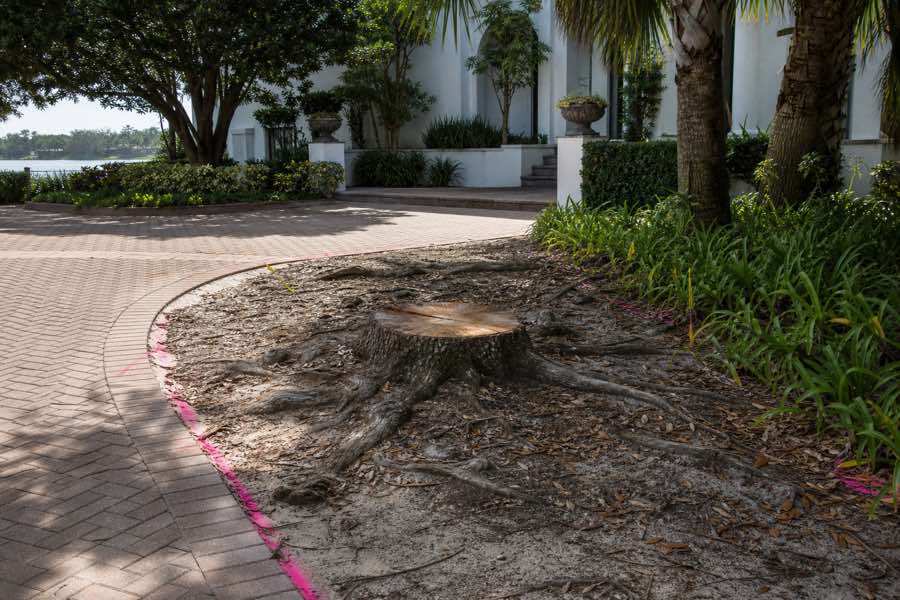
When a tree is gone, tree root removal becomes a site-planning decision, not a default cleanup task. In Daytona Beach, sandy soil, irrigation lines, fences, driveways, and future construction all change how much below-grade work makes sense. The right scope depends on what will happen next.
- Match root work to the next use of the site.
- Stump grinding and full excavation solve different problems.
- Retained trees need protection from root disturbance.
- Debris handling should be clear before work starts.
- Florida Foliage offers free estimates in Volusia and Flagler counties.
If you are comparing a tree removal service, a stump removal package, or broader excavation, start with the finish grade and the intended use. Florida Foliage serves Daytona Beach and the wider Volusia and Flagler counties, and ISA Certified Arborists are on staff to help match the scope to the site. The company is licensed and insured, and free estimates are available. For a direct call, use (386) 481-7913.
How Do Professionals Remove Tree Roots After Cutting a Tree?
Professionals remove tree roots after cutting a tree by matching tree root removal to the site plan, not by digging everything out automatically. They may grind the stump, cut selected roots, or excavate a wider area when sod, paving, fencing, utilities, or construction require a cleaner subgrade.
The first question is what must happen after the tree is gone. If the area will become lawn, a shallow finish may be enough. If a patio, driveway, or foundation is planned, the work usually becomes more involved. In Daytona Beach, loose coastal soils can make root exposure easier, but they can also make trenches and holes unstable, so the method still has to fit the job.
Selective root cutting can help when only a limited zone needs clearance. Broader excavation may be needed when roots extend under the planned work area. That is why tree root removal should be scoped before equipment starts moving. A quote should explain the target depth, the lateral boundary, and what debris will leave the property.
Florida Foliage can inspect the site and explain the difference between a minimal cleanup and a larger subgrade prep plan. If nearby trees remain, careful work matters because cutting roots too far from the stump can stress retained trees. For related planning, some owners also coordinate trimming and removal work so the yard is addressed in one visit.
How Long Do Tree Roots Live After a Tree Is Cut Down?
Tree roots can stay alive for some time after the top is gone, so tree root removal is not always urgent. Some roots die back quickly, while others may persist and slowly decompose, especially if they remain moist or connected to a stubborn stump and larger root flare.
The timeline depends on species, soil conditions, and how much of the root system remains attached. In Florida’s warm climate, decay can move faster than in colder regions, but roots do not disappear on a fixed schedule. That matters when a homeowner plans to pour concrete, install sod, or run a fence line.
Living roots left under disturbed soil can interfere with grading. Dead roots can still create voids as they break down. Either way, tree root removal should be based on what the new surface needs. For example, a planting bed may tolerate more material below grade than a driveway section.
According to University of Florida IFAS guidance on tree roots and growth habits, roots often spread well beyond the visible canopy, which is one reason site plans should account for more than the stump area alone. You can review that context at UF/IFAS. If you need a site-specific decision, Florida Foliage can review the next use before recommending deeper work. Call (386) 481-7913 for a free estimate.
What Are Common Mistakes After Tree Stump Removal?
Common mistakes after tree stump removal include assuming the hole can be filled any way, ignoring nearby roots, and skipping debris planning. In many projects, tree root removal fails when the crew or owner does not define the final surface, so the result does not hold up under sod, pavement, or posts.
One mistake is leaving large buried wood pieces where a driveway or sidewalk will sit. Those chunks can decay and settle, which may create dips. Another mistake is over-excavating near retained trees. That can cut support roots and cause stress the property owner did not expect. A third mistake is not checking for utility conflicts before digging starts.
Coastal properties around Daytona Beach also need attention to drainage. Sandy soil drains quickly, but that can expose voids after organic debris decomposes. If the area will hold lawn, the final backfill and grading should support turf, not hide a hollow pocket.
If you want the job scoped correctly, ask Florida Foliage to identify the expected excavation boundary, the debris plan, and any nearby trees that should be protected. A clear stump grinding scope often prevents a larger and more disruptive tree root removal project than necessary.
Is It Okay to Leave Tree Roots in the Ground?
It is often okay to leave tree roots in the ground when the future use is light and the roots will not interfere with the finished surface. For many properties, tree root removal is unnecessary beneath open soil, but it becomes a problem if the area will support fencing, utilities, paving, or other load-bearing work.
Leaving roots can be sensible in low-impact areas because full excavation may disturb more soil than needed. That matters around retained trees, where root disturbance can spread beyond the original stump zone. It also matters in sandy coastal sites, where wide digging can affect drainage and stability.
Still, buried roots should not be left under every project. If the new use calls for level grade, firm subbase, or buried utilities, leaving woody material in place may cause settling or future repairs. Tree root removal should follow the next use decision, not habit.
OSHA guidance on tree care and tree removal operations highlights the need for safe work practices around removal sites and equipment. That is especially relevant when roots are near excavated holes, utility marks, or active job traffic. See OSHA for the limited safety context. Florida Foliage can review site access and retained-tree concerns before work begins.
Does Tree Removal Include Root Removal?
Tree removal does not always include tree root removal. Many contracts cover the trunk and canopy, while the below-grade work is listed separately or limited to the stump area. That is why homeowners in Daytona Beach should ask what remains underground after the removal crew leaves.
One contractor may stop at the cut stump. Another may include stump grinding to a set depth. A third may offer selective root work if the site will be rebuilt. The words matter, because the same property can need very different cleanup depending on whether the next use is sod, a fence, a driveway, or a structure.
If roots run under a planned hardscape, removal may need to extend beyond the stump footprint. If the area will stay as open ground, a less disruptive scope may be enough. Florida Foliage can help compare these choices so the work matches the project instead of creating extra excavation.
Before you approve the work, ask for the boundary of disturbance, the finish grade target, and the handling of chips and roots. That is the practical way to compare tree root removal quotes. If you want to talk through a property in Daytona Beach or nearby towns, call (386) 481-7913 or request a free estimate.
Does Tree Removal Include Stump Work?
Tree removal may include stump work, but it is not automatic, so tree root removal questions should start there. Some jobs end at the cut trunk, while others add stump grinding or removal of the visible stump and flare. The contract should say exactly which below-grade tasks are included.
Stump grinding is often the lighter option when the goal is to lower the remnant and make the area usable for turf or a bed. Full stump removal or broader excavation is more disruptive and may be chosen when a slab, driveway, or fence post line needs a cleaner base. The right choice depends on how the site will be used.
In many cases, stump work is enough if the owner wants the area leveled and does not need deep compaction. In other cases, wood left below the surface can be a problem. That is why tree root removal should be tied to the future use of the ground, not the word “cleanup.”
A careful scope also protects adjacent trees. Cutting roots too widely can affect stability or water uptake on the remaining canopy. Florida Foliage can evaluate whether stump work alone makes sense or whether the project should be expanded. If you are comparing bids, use the exact Daytona Beach market context and ask what subgrade finish each quote actually provides.
| Next Use | Typical Scope | Why It Matters |
|---|---|---|
| Future sod | Stump grinding, selective backfill | Helps avoid depressions and buried wood near turf |
| Fence line | Targeted root clearing at post locations | Creates room for posts without full excavation |
| Paving or slab | Broader excavation and debris removal | Reduces settling under load-bearing surfaces |
| Utilities | Locate and expose with care | Limits conflicts with buried lines and retained roots |
| Open soil bed | Minimal below-grade work | May avoid unnecessary disturbance |
What Factors Affect Tree Root Removal Cost?
Tree root removal cost is affected by root spread, access, soil condition, debris handling, and how much of the area must be excavated. The biggest cost driver is usually scope, because shallow cleanup and full excavation require very different equipment time and disposal planning.
Daytona Beach sites can be easier or harder depending on access, narrow side yards, storm debris, and underground utilities. Sandy soil may speed digging, but it can also reveal a larger disturbed area than expected. If nearby trees remain, protection measures can also influence the plan and the labor involved.
Owners should also ask whether chips, root wood, and excess soil will be hauled away or left for separate handling. That detail often changes the scope more than the stump itself. A quote should identify what gets removed, what gets buried or backfilled, and what surface finish is expected when the crew leaves.
For a more precise comparison, ask Florida Foliage to inspect the site before the proposal. The company is licensed and insured, serves Volusia and Flagler counties, and keeps Daytona Beach as the primary market. For planning help, call (386) 481-7913 and discuss your tree root removal goals, or request a free estimate at request a free estimate.
- Confirm the next use before approving any digging.
- Ask where the excavation boundary starts and stops.
- Protect retained trees from unnecessary root cuts.
- Clarify debris hauling, backfill, and finish grade.
- Request an on-site review for hidden utilities.
Is grinding the same as full root removal?
No. Grinding is usually a limited form of tree root removal that reduces the stump and some surface roots, while full root removal means broader excavation and more debris handling. If the site will hold paving, fencing, or construction, grinding alone may not be enough. The quote should state how deep and how wide the work will go.
Can roots remain under a future lawn area?
Sometimes, yes. Tree root removal may be unnecessary under a simple lawn area if the remaining material will not cause major settling or interfere with drainage. That said, buried wood can break down and leave low spots. In Daytona Beach, where sandy soils drain fast, final grading and backfill still need to support the turf plan.
Should a quote identify the excavation boundary?
Yes. A good tree root removal quote should identify the excavation boundary so the owner knows what area will be disturbed and what will remain untouched. That matters near utilities, fences, and retained trees. Florida Foliage can mark the expected scope during an estimate so the proposal matches the property’s next use.
How are chips and excavated roots handled?
That should be stated before work starts. In a tree root removal project, chips, roots, and excess soil may be hauled away, stacked separately, or left for approved backfill depending on the plan. The answer affects cleanup and final grade, so it should be part of the quote, not an afterthought.
Can Florida Foliage inspect the site before quoting root work?
Yes. Florida Foliage can inspect the site before quoting tree root removal so the estimate reflects access, soil conditions, retained trees, and the planned next use. The company serves Volusia and Flagler counties, with Daytona Beach as the primary market. Call (386) 481-7913 to discuss a free estimate.
If you need tree root removal after tree removal in Daytona Beach, FL, choose the scope that fits the next use of the property. Florida Foliage can help you compare stump grinding, selective root work, and broader excavation, then schedule a free estimate at request a free estimate or by phone at (386) 481-7913.