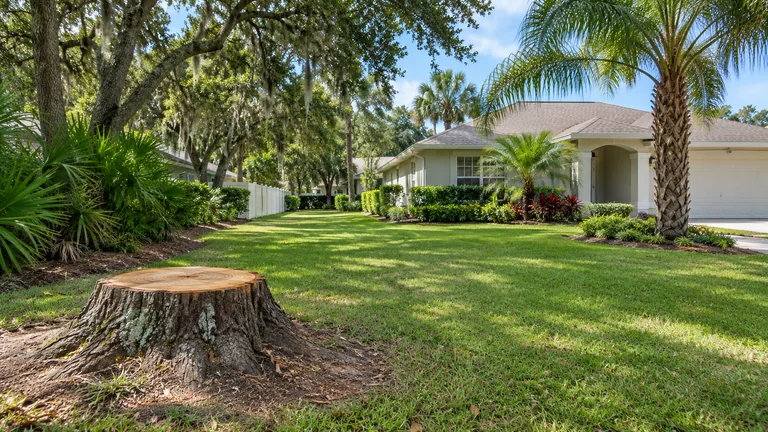
Choosing a stump removal method in Palm Coast, FL starts with what you want to do with the space. Grinding reduces stump wood below the surface while leaving much of the root system underground. Excavation removes the stump and root ball, creating a larger opening that needs restoration. Neither choice should be approved without discussing access, buried features, cleanup, and the next use of the yard.
For a lawn obstacle, grinding may provide the result you need with less disturbance. Planting a replacement tree in the exact footprint raises different questions. Describe that finished goal before comparing estimates, so each proposal addresses the same work rather than just promising to remove the visible stump.
When Does Grinding Fit Better Than Excavation?
Grinding is worth considering when the goal is to remove a visible obstruction without excavating the root ball. Florida Foliage's stump grinding service information explains that distinction, while its tree removal information identifies stump work as a separate part of the overall removal scope.
A grinder reduces the stump and agreed portions of its root flares into chips mixed with soil. It does not extract the entire underground root system. That makes the proposed working area important: a quote for the central stump may not include every exposed root that interferes with mowing. Ask the contractor to identify the included area rather than relying only on the diameter of the cut surface.
Excavation addresses a different result by taking out the root ball. Florida Foliage describes this as more intensive work that leaves a larger hole. The comparison is therefore not simply which method removes more wood. It is whether that additional removal serves your intended use and whether the proposal includes the work needed afterward.
| Decision | Grinding | Excavation | What to confirm |
|---|---|---|---|
| Underground wood | Reduces the stump and selected surrounding wood; many roots remain. | Removes the stump and root ball. | The boundaries of included root work. |
| Material afterward | Produces chips mixed with soil. | Leaves an opening after root-ball removal. | Hauling, fill, grading, and landscape restoration. |
| Future use | Can address a lawn obstruction, subject to depth and cleanup. | May warrant consideration for exact-location replacement planting. | Whether the finished area meets the next project's needs. |
For either option, distinguish stump treatment from a finished landscape. A stump can disappear while chips, an opening, or remaining roots still require attention. Compare the complete path to your intended result, not just the machinery used during the first part of the job.
When Is Excavating the Root Ball Worth Considering?
Excavation deserves consideration when leaving the root ball conflicts with the planned use, especially replacement planting in the same location. Discuss that goal through Florida Foliage's stump treatment services, and request a tree and site assessment when the original tree's condition or replacement suitability remains uncertain.
Planting directly where a tree stood can be difficult after grinding because buried wood, remaining roots, and loose material may interfere with establishment. Before committing to excavation, ask whether a nearby planting position would meet the landscape goal. Moving the planting location may change how much stump work is needed, but the alternative position still needs suitable space and growing conditions.
If the exact location matters, identify it before the contractor chooses a grinding scope. Ask what must be removed to accommodate the replacement root ball and what suitable soil preparation will involve. Do not assume that a deeper grinding request and root-ball excavation deliver an identical planting area. The proposal should explain what remains and which planting preparations are separate.
The reason the original tree was removed also matters. If decline involved disease or an unresolved site problem, taking out the stump does not by itself establish that the same species belongs in the same place. Florida Foliage works with an ISA Certified Arborist consultant; ask whether that assessment is appropriate before planning the replacement.
For excavation, request clear limits rather than an unexplained promise of complete removal. Ask which root-ball area is included, how material will leave the property, and who will restore the opening. Those details let you compare the proposed result with grinding without assuming that either method includes every distant root.
What Site Conditions Can Change the Choice?
Access, buried features, and ground conditions can change which method is practical. Florida Foliage's guide to fresh versus old stump grinding in Florida explains why age alone does not determine the work, while its equipment setup and access planning guidance reinforces the need to evaluate the route, working area, and underground constraints.
A stump beside an open lawn presents different planning questions from one behind a narrow gate or beside a patio. The contractor needs to assess how equipment will reach the stump, where it can work, and how material will leave. A photograph of the cut surface alone does not show those conditions.
- Entry and travel route: Identify gates, tight turns, steps, and shared access. Provide preliminary information without treating it as approval for equipment entry.
- Buried systems: Share known locations of irrigation, private wiring, drains, and septic components. Ask who will arrange appropriate locating and verification.
- Nearby improvements: Point out fences, patios, driveways, pool equipment, and other features that constrain the work or require protection.
- Ground history: Report recurring standing water, recent excavation, unexplained depressions, or areas where equipment has previously become stuck.
- Stump history: Mention attached fencing, embedded metal, previous grinding, and any shoots or settling you have noticed.
Public utility locating does not necessarily identify every private underground feature. Confirm what will be located and how unresolved features will be handled before work starts. Do not dig around a stump to investigate unknown lines or attempt to expose roots yourself. Useful preparation means sharing records and observations, not testing the site.
Wet or unstable ground can also affect equipment access. Tell the company if conditions change after the estimate, especially if water collects along the agreed route. An earlier access plan should not be treated as permission to proceed regardless of the ground conditions on the work date.
For an association or shared property, identify who can approve access and where residents or visitors normally walk. Keep people and pets outside the operator's work boundary. Resolve permission questions before the proposed method depends on entering a neighboring parcel or using a shared area.
What Happens to Chips, Roots, and the Finished Yard?
Grinding leaves material and underground roots that need to be considered in the restoration plan. Florida Foliage's stump grinding information describes chip handling options, while its guide to stump condition and age explains why the cleared footprint is not automatically ready for planting or construction.
Loose grindings can occupy more space than the original solid stump suggests. Confirm whether the proposal leaves them on site, removes excess material, or includes hauling. Also ask whether soil, final grading, sod, or planting are included. These are distinct parts of finishing the yard, and a general cleanup promise may not answer each question.
For a lawn, a deep concentration of woody material can complicate establishment and contribute to settling as it decomposes. The restoration discussion should address excess chips and suitable soil rather than simply covering the pile. Remaining underground roots can also decay and create depressions over time. Neither the initial level nor the disappearance of the stump guarantees that the surface will remain unchanged.
Using chips as surface mulch is different from treating them as finished planting soil. UF/IFAS guidance on pruning and maintaining trees explains that mulch helps retain soil moisture, moderate soil temperature, and inhibit weeds. It recommends a two- to three-inch layer for ordinary mulch materials and warns against piling mulch against tree trunks.
Discuss any plan to retain grindings before scheduling, including where they will be placed. Avoid turning cleanup preferences into assumptions about what belongs in a planting hole. Freshly ground wood is not finished compost, and a mixture of chips and soil should not automatically be accepted as the final growing medium for a replacement tree.
Grinding also should not come with an unconditional promise that no shoots will appear. Some species can produce shoots from surviving roots. If growth develops afterward, have it identified before choosing a response. Likewise, report new low spots rather than assuming an old stump has completely disappeared because its surface looks soft.
How Should You Compare Estimates in Palm Coast, FL?
Compare written estimates by their included work and finished condition, not just the method name. Florida Foliage's tree removal service information separates stump inclusion from removal work, and its stump grinding service information connects the proposed treatment with the intended use of the space.
Give each contractor the same goal: restoring lawn, creating a planting bed, replacing a tree, or preparing for another project. A grinding-only estimate cannot be compared fairly with an excavation proposal that also includes hauling and restoration. Ask for missing items to be clarified before deciding which proposal provides better value.
- Define the stump area: Identify the central stump, root flares, and any exposed roots included in the price.
- Record the treatment: State whether the proposal covers grinding or root-ball excavation, including relevant depth or removal limits.
- Confirm access responsibilities: Identify permissions, locating arrangements, and unresolved buried features before scheduling.
- Specify material handling: Clarify whether grindings or excavated material stay on site or are hauled away.
- Describe the finish: Separate cleanup from fill, grading, lawn restoration, planting preparation, and construction preparation.
- Identify exclusions: Ask which later tasks require another contractor or a separate estimate.
For hiring tree-care professionals, UF/IFAS recommends written proposals, checking references, requesting proof of workers' compensation insurance, and checking required permits and licenses. Apply those checks to the contractor and proposed work rather than relying on an equipment photograph or a broad service description.
Confirm property-specific permit requirements with the city or county, particularly when stump work forms part of tree removal or a broader site project. Association approval and permission to use shared or neighboring property are separate questions. Agree on who will resolve each requirement instead of assuming that another party has already handled it.
For stump removal options in Palm Coast, FL, call Florida Foliage to request an estimate and site assessment. Explain your intended use, known access restrictions, and cleanup expectations. The useful recommendation is the one that connects the selected method to a clearly defined result for your property.