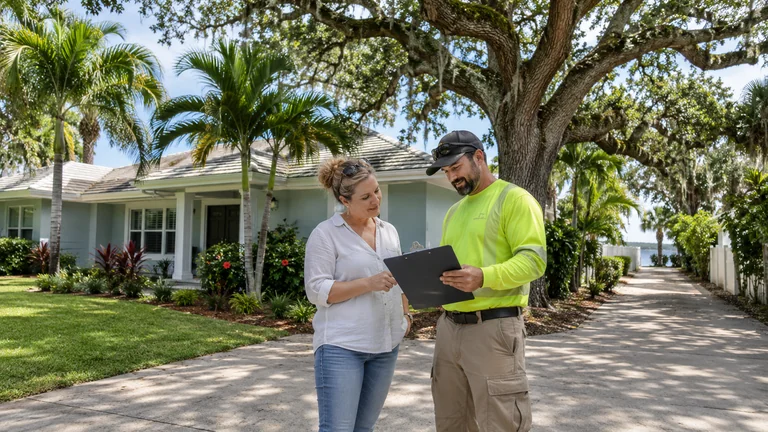
Tree removal in Daytona Beach, FL, starts with two decisions: whether the tree needs to come down and what the property requires for the work. A dead tree, an unresolved structural concern, and a tree occupying a planned building area present different reasons for removal. A branch touching a roof may instead call for a pruning assessment. The recommendation should explain that difference before the conversation turns to equipment or cleanup.
A useful estimate considers more than height. Trunk size, canopy spread, nearby structures, equipment access, debris volume, and the desired condition of the finished area all matter. Florida Foliage works with an ISA Certified Arborist consultant for professional assessments. Request a site visit that connects the tree's condition with your property goals, then ask for a written scope covering removal, debris handling, and any separate stump work.
When Is Removal the Right Choice Instead of Pruning?
Removal deserves consideration when a tree is dead, dying, presents a structural risk that cannot be adequately managed another way, or must leave an approved project area. Florida Foliage's tree removal information describes these reasons, while its arborist assessment information explains how professional evaluation can clarify condition and alternatives.
Start by separating the problem from the proposed solution. Saying that a tree is too large does not identify whether the concern is a blocked route, branches near a building, the condition of the trunk, or a change in property use. Describe what needs to change. The assessment can then address whether selective branch work would meet that goal or whether the concern involves the tree as a whole.
UF/IFAS guidance on pruning and maintaining trees explains that selective pruning can provide clearance, reduce the risk of branch breakage, or reduce size. It identifies dead, diseased, injured, crossing, and touching branches, along with stems competing with the main leader, as pruning considerations. These are reasons to evaluate targeted work, not proof that every tree with one affected branch needs removal.
The distinction is especially useful for young shade trees. An uneven outline or competing stem may call for structural planning rather than a decision to remove the whole tree. The young-tree structural pruning guide for Daytona Beach, FL explains why the relationship between the trunk and developing branches matters more than making every canopy look alike. Ask which observation supports the recommendation.
Palms need a different conversation. According to UF/IFAS palm-pruning guidance, lower fronds naturally die as new fronds develop, and dead fronds do not themselves threaten the palm's health. The guidance also cautions against removing healthy green fronds. A skirt of brown foliage therefore does not, by itself, establish that a palm must be removed. Ask for an assessment suited to the palm's identity and condition.
Where retention is proposed, ask what the work would accomplish and which concern would remain afterward. Where removal is proposed, ask why pruning, treatment, or another management option would not adequately address the finding. A clear explanation need not promise that every tree can be saved. It should make the reasoning understandable and avoid turning a general appearance preference into an unexplained safety diagnosis.
How Do Tree Size and Surroundings Affect the Estimate?
Height, trunk diameter, access, nearby structures, debris volume, and stump inclusion all influence the removal scope. The tree removal service overview identifies these factors, and the crane setup-space guide explains why the surrounding property can matter as much as the tree's dimensions.
A large trunk and a broad canopy create different planning demands. Trunk diameter affects the amount and weight of wood involved, while canopy spread affects the area occupied by branches and the amount of material to process. Height adds another dimension, but it does not describe the whole job. Two trees of similar height can have very different surroundings, access routes, and debris-handling needs.
| Factor | Why It Matters | What to Confirm |
|---|---|---|
| Height and trunk size | They influence equipment needs and the amount of wood involved. | Which tree characteristics shape the proposed scope? |
| Buildings and fences | Nearby features can restrict working space and removal options. | Which structures and surfaces need consideration? |
| Gates and equipment routes | An apparently open yard may still have a restrictive entrance. | What route will equipment and debris use? |
| Canopy and debris volume | Branches and trunk wood require processing, staging, and hauling decisions. | What material leaves and what, if anything, stays? |
Nearby roofs, screened areas, fences, pools, and parked vehicles belong in the assessment. Tell the estimator which features sit beneath or beside the canopy. A street-facing photograph may not show a rear addition or a narrow passage beside the house. Wider photographs from safe locations can help introduce the property, but they do not replace an on-site decision about the work.
The removal method should follow the tree and site assessment. Do not assume a crane is necessary solely because a tree is tall, or unnecessary because the tree looks small from the road. The proposed method needs to account for access, working space, reach, and condition. Ask the estimator to explain which constraints drive that choice without trying to select or operate equipment yourself.
Keep the estimate tied to the specific tree and scope rather than a generic size category. If two proposals differ, compare their access assumptions, equipment arrangements, hauling provisions, and stump work. A shorter description may omit work that another proposal includes. Understanding those differences is more useful than comparing totals without knowing what each company has agreed to do.
What Access and Setup Space Does the Property Need?
The property needs a workable route, suitable equipment positions, room for debris handling, and a controlled work area. Florida Foliage's setup-space guidance describes these separate needs, while its removal information explains why tight access and nearby structures affect planning.
Access starts where equipment enters from the street, not beside the trunk. Gateposts, walls, sharp turns, slopes, and overhead obstructions can affect the route. Tell the estimator about restrictions that may not be apparent during a brief visit, including locked shared entrances or parking arrangements. Preliminary measurements can communicate a concern, but they do not establish that a particular machine can safely enter.
A driveway or lawn also needs evaluation as a support surface. The crane guide notes that pavement alone does not establish suitability, and apparently firm ground can conceal fill, previous excavation, drainage features, or other concerns. Share what you know about settled pavement, recurring wet areas, recent construction, and buried systems. Leave the decision about equipment support and protective materials to qualified personnel.
Underground features deserve attention before the equipment position is agreed upon. Septic components, irrigation, private wiring, drains, and utility lines can limit an otherwise attractive setup area. Property records are useful background, but older drawings may not reflect current conditions. Ask who will coordinate any necessary locating and how privately owned underground features will be addressed. Do not dig to investigate uncertain locations yourself.
Overhead clearance includes the equipment's working path and the space occupied by tree material, not just the vehicle's parking position. Buildings, neighboring canopies, balconies, and utility lines can affect the plan. Report visible lines from a safe location. Do not approach electrical equipment, move wires, or attempt branch work near them. The qualified crew must assess the conflict and coordinate with the utility when needed.
For crane work, setup space and the full job site are not interchangeable. The crew also needs areas for handling material and keeping uninvolved people away from active work. Ask which parking spaces, walking routes, and outdoor areas must remain unavailable. On a managed property, identify how residents, visitors, maintenance workers, and deliveries normally move through those spaces.
Finally, keep the company informed if conditions change after the estimate. Standing water, new construction, a blocked entrance, or a newly occupied staging area can affect the original plan. Do not alter landscaping or remove a fence to create access without discussing the proposal first. A constrained site calls for professional review of the options, not pressure to make a preferred machine fit.
Which Permits, Reports, and Permissions Need Confirmation?
Confirm property-specific removal requirements with the responsible city or county before authorizing work, and identify any separate access or association approvals. Florida Foliage's arborist documentation information addresses reports, while its site-planning guide explains why shared and public access need separate attention.
For a Daytona Beach, FL, property, begin with the actual address and the tree involved. Do not rely on a neighbor's past project or assume that the same requirements apply to every species and parcel. Ask the relevant office what information it needs for the proposed work. If documentation is required, clarify the report's purpose before commissioning it.
- Removal authorization: Ask the city or county what requirements apply to this property, this tree, and the proposed project.
- Professional documentation: Confirm whether a tree condition report is needed and which findings or supporting materials the receiving office requests.
- Shared or neighboring property: Identify any proposed access outside your parcel and establish who will obtain permission before scheduling depends on it.
- Public space and association coordination: Ask separately about roadway use, common areas, parking restrictions, and applicable association approval processes.
A written assessment and a removal estimate serve different purposes. The assessment explains condition, observed concerns, and recommendations. The estimate describes the proposed physical work and its scope. If a permitting office, insurer, or association needs a report, ask whether the document being provided answers that request. A price proposal should not be assumed to contain all the professional findings another party requires.
Assign responsibility for each unresolved item. The owner, property manager, consultant, and contractor should understand who is contacting an office, obtaining access consent, or supplying records. Ask that the planned access area be described clearly when someone else's property is involved. Avoid scheduling arrangements that depend on an unconfirmed assumption about permission.
On association or commercial properties, designate a contact who can explain approval procedures and communicate access restrictions. The setup-space guide recognizes that shared parking, pedestrian routes, customer traffic, and deliveries can require coordination. Keep those operational arrangements visible alongside the tree recommendation so an approved removal scope also has a workable site plan.
What Should Debris Removal and Stump Work Include?
The proposal should distinguish tree removal, branch and wood handling, stump grinding, chip management, and any further landscape work. Florida Foliage describes debris options in its removal overview and addresses below-grade work separately in its stump grinding information. Confirm each item rather than treating cleanup as an unlimited promise.
Start with the material above ground. Ask whether branches will be processed, whether trunk wood will be hauled away, and whether you want any material retained. If retaining wood is important, discuss that before the work begins. The desired location and amount should be clear enough that neither party has to guess what leaving some wood means.
Next, establish whether the stump is included. Removing the standing tree and grinding the remaining base are different tasks. The stump grinder also needs access, and its working area may extend beyond the visible cut face to root flares or other agreed portions. Ask which parts are included and how the proposed work relates to your intended use of the space.
The guide to fresh and old stump grinding explains that grinding reduces wood to chips but does not extract the entire root system. Many roots remain underground and gradually decompose. That distinction matters if your goal extends beyond removing a mowing obstacle. Disappearance of the visible stump does not establish that the site is ready for planting or construction.
Chip management also belongs in the scope. Ask whether excess grindings will be hauled away, retained for use elsewhere, or left in the stump area. Loose wood and soil after grinding are not automatically a finished planting medium. The stump guide notes that concentrated woody material and remaining roots can contribute to later settling as they break down. Discuss the expected finish without assuming the initial surface will remain unchanged.
If you want a new tree, patio, driveway, or other improvement in the same location, explain that before accepting a grinding plan. Work intended mainly to remove a surface obstacle may not meet a later project's needs. Ask the appropriate landscape or construction professional to evaluate the remaining wood and ground conditions rather than treating a grinding depth as universal approval for the next project.
Finally, clarify the boundary between cleanup and restoration. Specify whether the proposal includes chip hauling, soil placement, grading, sod, or planting, rather than expecting those tasks to follow automatically. A useful scope describes the condition in which the crew will leave the area and identifies any follow-on work that remains your responsibility or requires a separate proposal.
How Can You Compare Proposals and Prepare for the Visit?
Compare written proposals by their reasons, included work, access assumptions, and cleanup details, then prepare information that helps the estimator assess the actual property. Florida Foliage's assessment information explains professional evaluation, and its setup guide identifies useful site details to share.
UF/IFAS recommends obtaining a written proposal, checking references, asking for proof of workers' compensation insurance, and checking required permits and licenses in its guidance on hiring tree-care professionals. It also advises against companies advertising tree topping. These checks support an informed hiring decision; they do not replace understanding what a particular proposal includes.
- Identify the tree and your goal. Explain whether the concern is condition, clearance, an obstructed route, or a planned property change. Avoid relying only on a label such as overgrown.
- Share safe, useful views. Provide photographs showing the whole tree, nearby structures, and the approach from the street. Do not enter an unstable area for a closer image.
- Describe hidden site history. Mention known septic components, private lines, previous excavation, settled pavement, buried objects, and areas that stay wet.
- Explain access restrictions. Identify gates, shared routes, parking controls, neighboring land, deliveries, and any approval process that could affect the proposed work.
- Define the finished result. State your preferences for wood, chips, stump work, and future use of the area so those decisions appear in the proposal.
When reviewing estimates, check that each company has identified the same tree and is pricing the same requested result. One proposal may include stump grinding while another stops at removal. One may haul chips while another leaves them. Those are scope differences, not merely different prices for identical work. Ask for clarification before choosing between descriptions that are not directly comparable.
Discuss property preparation without taking on tree work yourself. The crew can identify which vehicles, furniture, and movable belongings should be relocated and which areas must remain clear. Do not cut branches, adjust overhead lines, build an equipment support area, or alter access on the assumption that it will help. The professional plan should establish what preparation is appropriate.
Before scheduling, ask how changes will be communicated if the agreed route becomes blocked or site conditions differ from the assessment. Keep the written scope available for that discussion. Clear communication helps everyone distinguish an unchanged job from one that needs a fresh access decision, revised work description, or additional authorization.
What Should You Plan for After Removal?
Plan the next use of the space before removal, then match stump work and restoration to that goal. Florida Foliage's stump-planning guide explains remaining roots and settling, while its tree removal information provides the starting point for requesting a property-specific estimate.
For a lawn, the finished surface matters as much as the absence of a trunk. Discuss excess wood, suitable soil, and who will handle any later lawn work. Remaining buried wood can decompose over time, so the area may need attention if depressions develop. Ask what the proposed service accomplishes at completion and which later landscape tasks are outside that scope.
For replacement planting, reconsider location rather than assuming the exact former trunk position is best. The stump guide explains that remaining roots, loose material, and changing soil levels can complicate planting in the original footprint. If that location is important, raise the issue before grinding. A nearby position may provide different options, but the new tree's needs and available space still require evaluation.
Species selection should also address the site. UF/IFAS tree-care guidance recommends understanding a tree's soil, sunlight, and special fertilizer requirements. If a growing-condition problem contributed to the previous tree's decline, ask about that concern before selecting a replacement. Removal resolves the presence of the old tree; it does not automatically explain or correct every site issue.
Retained trees deserve their own care decisions. Do not extend a removal recommendation to nearby trees merely because equipment is visiting the property. Where pruning is appropriate, identify its purpose separately. Where new planting is planned, the young-tree structural pruning guide provides context for discussing branch development without assuming every young tree needs the same immediate work.
To request an estimate for tree removal in Daytona Beach, FL, call Florida Foliage and describe the tree, the concern, access restrictions, and your plans for the area afterward. Ask for a site assessment and a written proposal that distinguishes removal from stump grinding and restoration. The next step should leave you with a clear reason for the work and a scope you can evaluate.