Reviewed by Clinton Funk
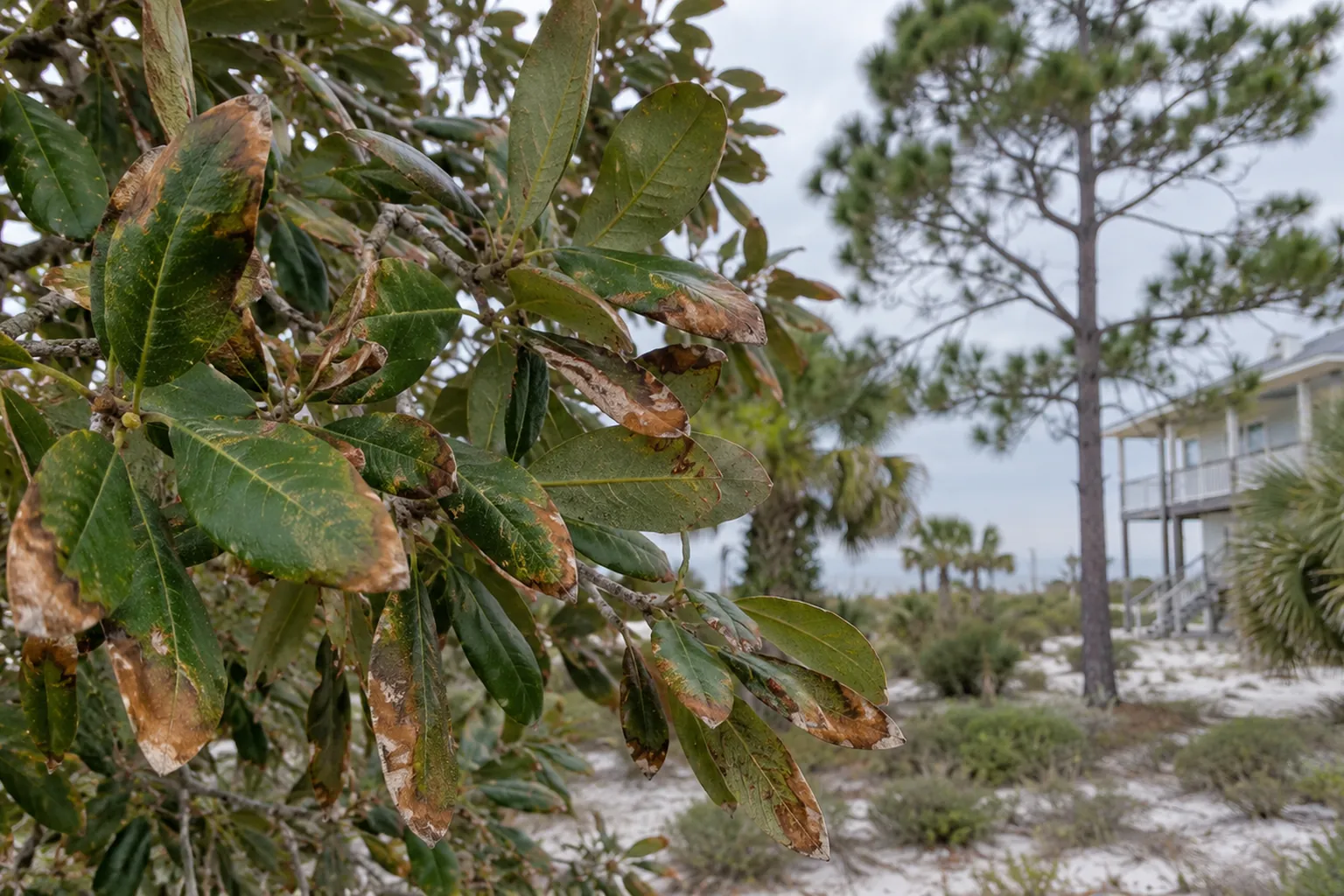
Trees after storm surge on Pensacola Beach raise several questions. What reached the yard? Which parts look changed? What needs a closer check? Start by sorting these questions rather than choosing work from a single view. This guide helps you plan that conversation.
Use the latest National Hurricane Center advisory for current storm information. Follow local officials before planning tree work. A forecast does not establish damage at your address.
Follow local officials' instructions first, as that advisory directs. See the official guidance, and any notes suggested here can wait. Use a safe indoor or distant view, and keep unknown facts marked as unknown.
What should you note about trees after storm surge?
Start with what you know about the flood, and keep that account apart from questions about the tree, and the storm cleanup guide helps organize the wider plan, and use the storm damage guide to prepare questions about work, and neither page can tell you what happened on your lot.
UF/IFAS states that salt damage can cause major tree dieback in coastal areas reached by surge, and its palm guide also describes serious injury from saltwater flooding. These are reasons to discuss known exposure, without assuming the same outcome for every tree. Read the tree guidance. Read the palm guidance.
Write a short account of what was seen, and include who saw it and when they saw it. A report from a neighbor belongs beside their name. A photo belongs beside its date, and this keeps a direct view apart from a secondhand account.
- Note whether saltwater reached the yard, if known.
- List photos that show the area before the storm.
- Record any known start and end times for flooding.
- Mark gaps in the account instead of filling them.
If the flood's length is unknown, say so. A water mark alone does not give you that detail, and avoid turning a rough guess into a firm time.
Give each tree a simple label in your notes, and for example, use “front tree” or “palm by porch.” Then keep the flood account with the right label. The useful result is a clear history to share, rather than a home diagnosis.
How can you describe salt burn without guessing?
Describe the color and location of leaf changes first, and save the cause as a question for the visit, and the save or remove guide helps frame that discussion, and the cleanup guide keeps it within the wider plan, and use plain descriptions that another person can understand without seeing your yard.
For palms, UF/IFAS says salt injury usually causes dead leaf tips throughout the crown. That statement concerns palms; it should not become a rule for every tree with brown leaves. See the salt injury guidance.
Leaf loss also needs context. UF/IFAS explains that wind can strip leaves from trees, and it also states that trees can recover from complete leaf loss when the remaining structure meets its restoration criteria. Read about tree recovery.
Use an existing photo from before the storm if available, and was the same patch already brown? Was the crown already thin? If you cannot tell, leave that question open. The palm guide notes that some problems may have existed before the storm drew closer attention. Read about prior problems.
- Describe tips, whole leaves, or patches that look brown.
- Note which side is visible in each photo.
- Keep older photos with their original dates.
- Separate leaf notes from notes about trunk changes.
Later photos should use the same distant view when practical, and note a change in light or angle as well, and ask what the person checking the tree wants you to record next. A short, specific question is more useful than a label such as “salt burn” with no details.
What if a trunk now leans beside wet sand?
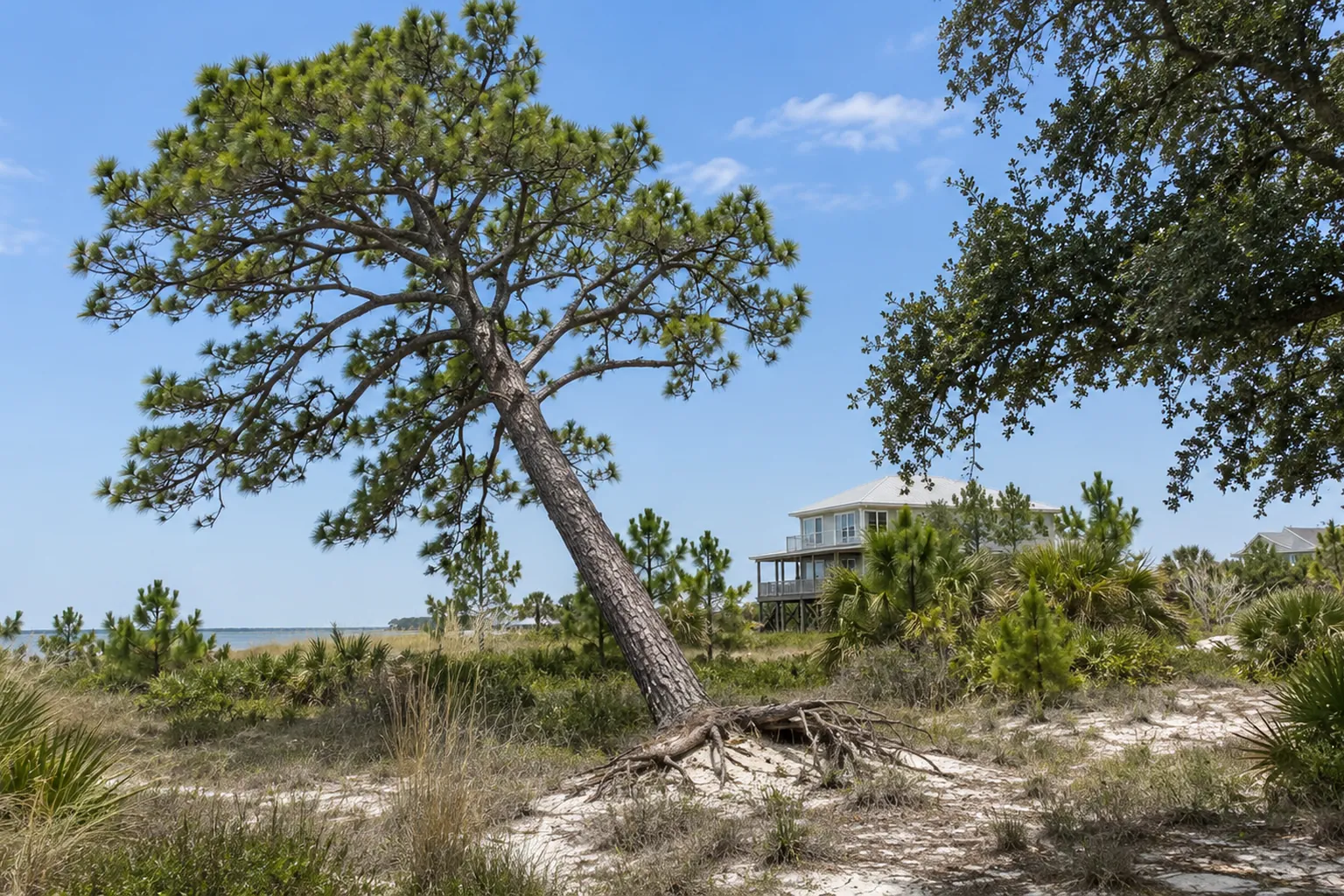
Report the lean and the wet ground as separate observations, and ask which concern needs attention first, without naming the cause yourself, and use the storm damage guide to frame the request. The hanging limb guide offers another set of questions if branches also look changed.
UF/IFAS lists leaning trees that could hit people or homes among situations for a professional to address before other work, and it gives large hanging limbs the same priority. Read the risk guidance.
An older picture may help show whether the lean changed, and compare the trunk with a fixed feature already in view. A wall corner or fence post can help describe the angle, and note when the camera position differs, since the comparison may be less clear.
If wet sand is visible, include that in the report, and keep the wording simple: “The trunk looks more tilted, and the ground looks wet.” Leave the reason as a question, and these notes do not establish how firm the roots are.
- Send a dated earlier view, if you have one.
- State whether the lean is new or uncertain.
- Describe nearby homes or paths visible from your viewpoint.
- Ask which parts of the property should remain unused.
If a limb has fallen near power lines, UF/IFAS calls for a qualified line-clearance arborist, and it warns that work near electrical lines can be fatal. See the electrical warning.
A useful first call names the tree and the concern, and you can also explain which views are available. The goal is to arrange the right kind of check, without approaching the trunk to gather more detail.
What can a damaged palm's crown tell you?
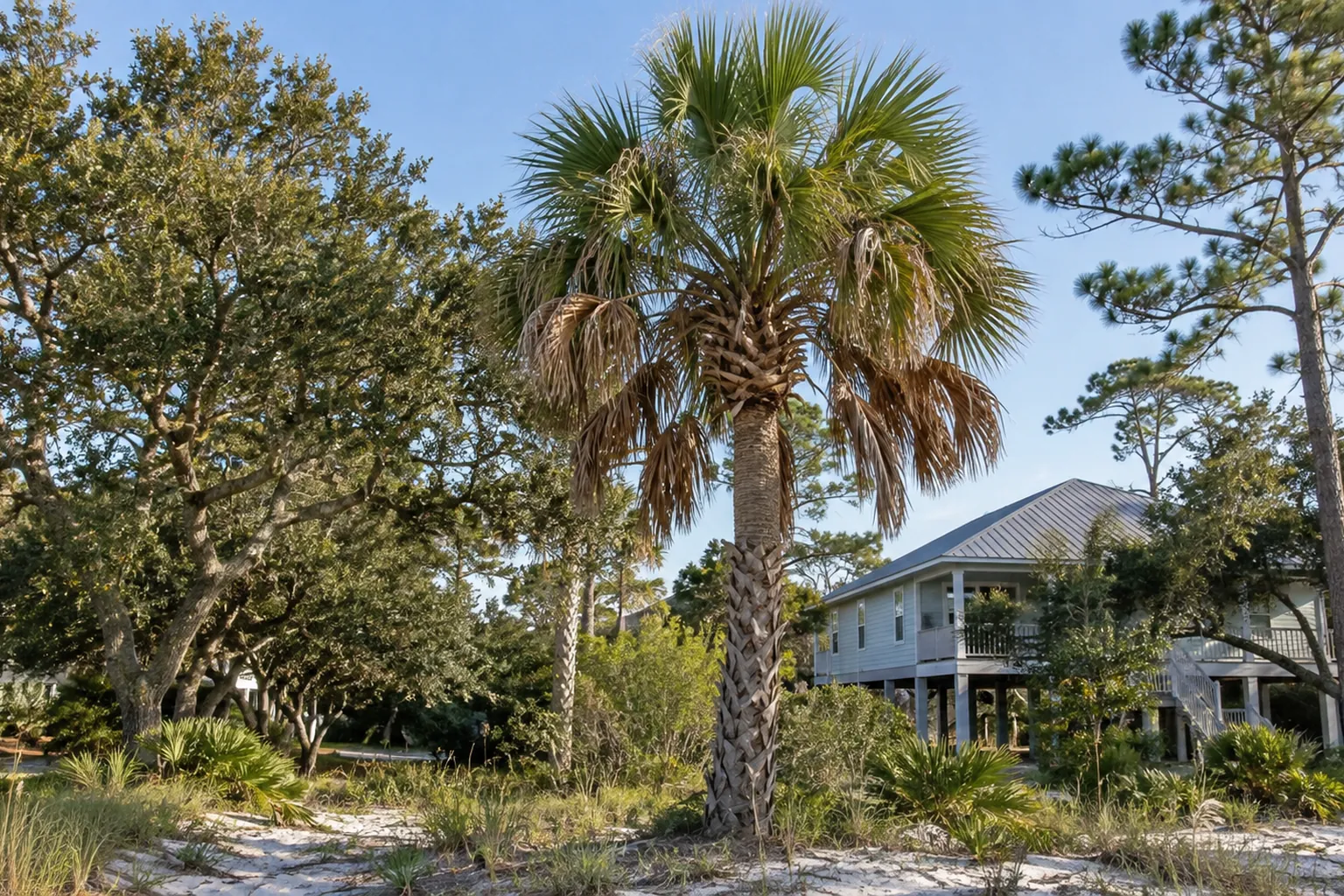
A crown photo can help you describe a palm, and it cannot answer every question about its future, and keep those questions beside the cleanup plan, and use the storm work guide when asking what needs attention now, and request separate answers about current work and later signs of recovery.
All new palm leaves come from the bud near the trunk's top. UF/IFAS explains that this bud is not visible or accessible for inspection. Unless damage is obvious, such as a broken trunk, survival after wind damage cannot be predicted from that first view. Read about the palm bud.
The same guide says recovery may take at least six months to become clear, and often longer, and new leaves may first look small or oddly shaped, and it recommends watching damaged palms over the next one to two years. See the recovery timeline.
This guidance concerns recovery after wind damage, and keep the saltwater history in a separate part of the record, and ask how both concerns apply to the palm being checked, and avoid treating a general timeline as a promise for that plant.
- Label each palm so records do not get mixed.
- Save the broad crown view already available.
- Note whether older photos show the same leaf changes.
- Ask what later growth should be recorded.
UF/IFAS recommends leaving broken leaves attached when they remain green, with limited exceptions described in its guide, and ask the person planning the work how that guidance applies. Read the leaf guidance.
Before ending the visit, agree on the next check, and record who will make it and what question it should answer.
When should you discuss watching versus removal?
Ask for the reason behind each option before choosing work. A watch plan should answer a real question. A removal plan should name the concern it addresses. Use the save or remove guide and the tree removal guide to prepare that discussion, rather than using either as a verdict.
UF/IFAS says a tree considered for restoration should have intact structure, without visible cracks or large wounds on its main trunk, limbs, or main roots, and it also states that major trunk damage is often beyond repair. Read the restoration criteria.
These criteria belong in a tree check, rather than a distant homeowner verdict, and ask which findings support keeping the tree, and ask which findings weigh against it, and request an explanation in plain words that you can refer to later.
For a watch plan, name the unanswered question, and it might concern how the tree responds over time. UF/IFAS recommends monitoring severely damaged trees to see whether they recover or decline. See the monitoring guidance.
- What finding supports keeping this tree?
- What finding supports removal?
- What work is needed before watching begins?
- What change would prompt another visit?
- Who will make the next decision?
Keep the answers together, even if some remain open, and if two recommendations differ, ask each person which findings explain the difference, and compare the reasons before comparing the amount of work.
Restoring a tree often takes more than one pruning visit, according to UF/IFAS, and its guide describes a process that commonly lasts two to five years, sometimes longer. Read about later care, and ask what a longer plan would involve for your tree.
How should you plan cleanup around retained trees?
Discuss routes and work areas before cleanup starts, and put the trees you hope to keep on that plan, and use the cleanup sequence to organize the tasks, and the storm work guide can help shape the request, and ask who will resolve questions about access before equipment arrives.
UF/IFAS warns against adding stress by injuring a damaged tree's trunk, branches, or roots, and its immediate response plan puts removal of unacceptable risks first. Read the cleanup guidance.
Use this order to prepare for the work:
- Check official instructions before arranging property access.
- List concerns using the photos and notes already available.
- Arrange a tree check before choosing the full scope.
- Ask the contractor to explain access and work areas.
- Keep the agreed plan with the later follow-up notes.
Make the plan specific to the yard, and which entrance will be used? Where will debris go? Which tree questions remain open? These are planning questions, not instructions for handling roots or moving a fallen tree.
- Name the trees included in the work.
- List trees awaiting a decision.
- Ask how retained trees will be protected.
- Record who to contact if the scope changes.
If a proposed task was not discussed, ask for an explanation before adding it, and keep cleanup work and later care clearly described, and the first visit does not have to settle every future task.
For local emergency information, use Escambia County's updates, and the National Weather Service names this county resource in its local statement. See the local statement.
Frequently Asked Questions
Leave the visit with a clear next step, and ask what is known, what remains open, and when those questions will be revisited, and bring the tree recovery guide for that discussion, and use the removal guide if removal is proposed. Keep the reasons with the plan, rather than saving only a list of tasks.
UF/IFAS links recovery time to a tree's age, health, size, kind, and extent of damage, and it also explains that health before the storm affects recovery. A general schedule therefore needs to be discussed in light of the tree being checked. Read about recovery factors.
- What did the visit establish about this tree?
- What could not be settled at this visit?
- Which earlier photos would help answer that question?
- What work belongs in the current plan?
- What should wait for the next check?
- How should a new concern be reported?
Ask for simple wording in the written notes, and if a term is unclear, request a plain explanation, and you should be able to match each proposed task to the finding behind it.
Set up one record for each tree or palm, and keep the first visit date at the top, and add later advice below it, with dates and names, and leave earlier notes intact so changes in the plan remain clear.
Give the next visit a purpose as well as a date, and for example, ask what question the visit will revisit, and this helps keep the follow-up useful when several trees need different plans.
Does saltwater exposure mean a tree must be removed?
Exposure alone does not settle that choice. UF/IFAS discusses salt damage alongside criteria for restoring trees, including intact main structure, and ask how those criteria apply to the tree in question. Share the known flood history, then request the specific findings behind any recommendation to keep or remove it. Read the tree guidance.
Can green leaves settle whether a tree should stay?
Use the whole set of findings when discussing retention. UF/IFAS bases restoration criteria on intact structure and the absence of visible cracks or large wounds in key parts, and leaf color does not replace those criteria. Ask which findings support the proposed plan, rather than using a green crown as the answer. See the restoration criteria.
Should every brown palm leaf be removed?
No. UF/IFAS advises leaving palm fronds that are yellowing or have brown tips, and its guidance also distinguishes those leaves from dead fronds that could fall onto a target. Ask the person checking the palm to explain which leaves are included in the proposed work and why. Read the palm restoration guidance.
How soon will palm recovery become clear?
UF/IFAS says it takes at least six months, and probably longer, before recovery after wind damage becomes clear, and recovery means new leaves emerging from the bud. Ask how that guidance applies to your palm and what the next visit will check, and treat the timeframe as guidance, rather than a promised outcome. Read the recovery guidance.
Where should residents check access instructions?
Start with Escambia County's emergency updates for local information, and the National Weather Service directs residents to local emergency management and tells them to follow officials' advice, and check those instructions before setting a property visit, and an appointment for tree work should be planned around the official access guidance. Read the local statement.
Related Reading And Scope
See the Pensacola tree guide and tree risk assessment guide for related background.
The Emerald Coast tree cleanup guide covers the wider Florida coast. For nearby Alabama, read the coastal Alabama storm cleanup guide.
For related reading, see the Pensacola tree guide and tree removal guide. For a property outside Volusia or Flagler County, contact a local tree professional.
Florida Foliage is a Daytona Beach tree service that works with an ISA Certified Arborist consultant. For a property in Volusia or Flagler County, call (386) 481-7913 to request an estimate.
Drafting disclosure: This article was drafted with AI assistance using public sources. It does not independently verify live forecasts, site conditions, pickup notices, or insurance coverage. Check current details with the responsible agency or a qualified local professional.
Call (386) 481-7913 to talk through next steps.