Reviewed by Clinton Funk
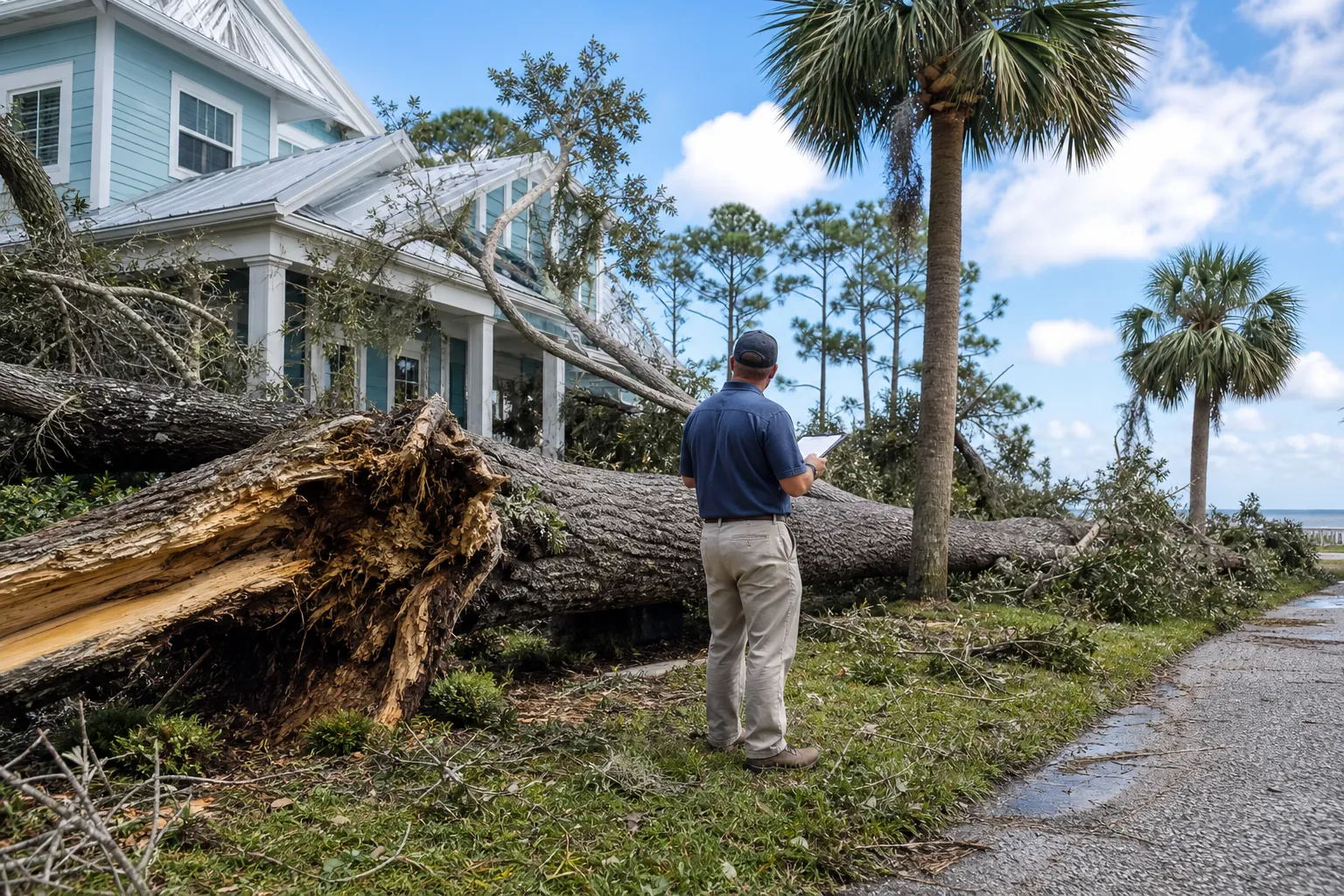
Hurricane tree rechecks help you compare finished work with the agreed cleanup scope. View the work from agreed safe areas, and record what remains. Keep debris notes separate from tree risk judgments. A clear yard, a finished task, or a photo cannot establish that a tree or site is safe.
What should hurricane tree rechecks cover after professional work?
A post-work recheck should compare visible results with the tasks agreed before work. Use the tree cleanup scope guide to name those tasks. Keep any judgment about standing trees separate, as explained in the storm-damaged tree assessment guide. Record finished items, visible debris, and areas you couldn't view.
This is a work recheck, rather than a fresh storm inspection. Its purpose is to describe what changed after professional work. It also preserves the limits of what you could see. The record should leave room for unfinished work and unresolved tree concerns.
Start with the agreed task names, such as trunk removal or branch hauling. Avoid broad labels like “whole yard finished” when the scope was narrower. A tree removal task and debris hauling may have separate completion points. Neither label explains the condition of nearby standing trees.
Keep three types of notes apart throughout the walk-through. This makes the record easier for the tree service to use.
- Record visible cleanup results using the same task names found in the agreed scope.
- List debris that remains, including its location and the limits of your view.
- Keep tree concerns in a separate entry that calls for professional assessment.
- Mark unseen areas as unchecked instead of treating them as cleared or finished.
For example, “large trunk sections no longer visible beside the driveway” describes an observation. “The tree removal made the driveway safe” goes beyond that observation. It assumes a site condition that a simple work comparison cannot establish.
A useful recheck can end with several items still open. It doesn't need a single pass-or-fail label for the property. Its value comes from clear task records and honest limits. Keep each conclusion no broader than the evidence that supports it.
Where should the post-work walk-through begin and end?
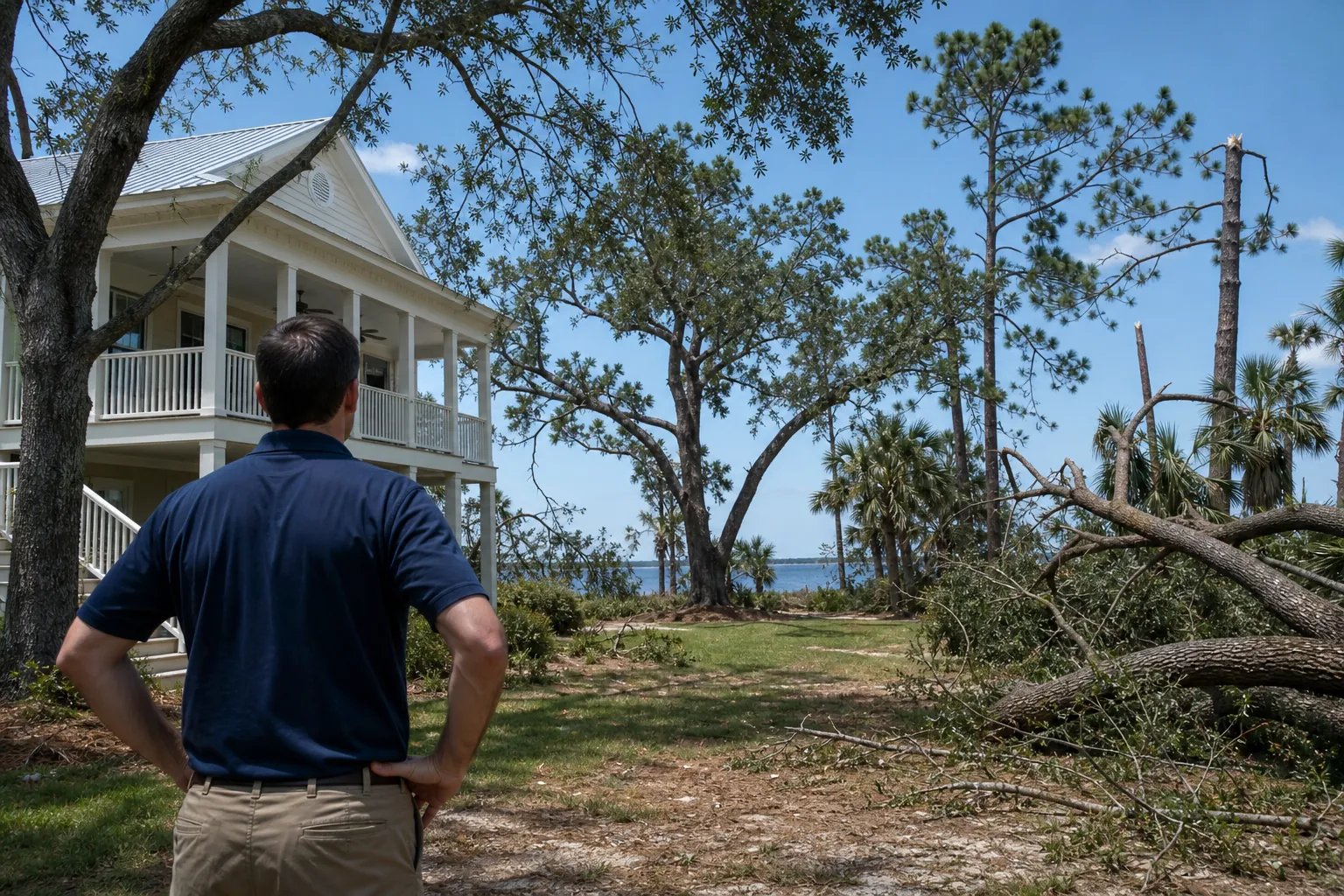
Begin only within the viewing areas agreed for the post-work visit. The yard cleanup zone guide helps separate work areas from viewing areas. The tree crew visit preparation guide provides access-planning context. An open path or a removed pile doesn't expand the agreed route.
Use the route as a limit, rather than a target to complete. You don't need to reach every corner for a useful record. If a task can't be viewed from that route, mark it unseen. Don't turn the recheck into a search through debris.
The National Weather Service warns about downed wires, fallen objects, and weakened surfaces after hurricanes. Those warnings still matter when some cleanup work has occurred. Follow its after-hurricane safety guidance, and don't treat a completed task as proof that these hazards are gone.
Use this short sequence to keep the visit focused on work results. It is a record-making sequence, not a site clearance procedure.
- Match the agreed work items to locations visible from the agreed viewing area.
- Describe each visible result before adding any comment about work that remains.
- Mark blocked views clearly, without moving debris or changing your viewing route.
- Separate cleanup entries from concerns that need a tree professional's judgment.
- End the record with open items and any follow-up that has been confirmed.
Stop the walk-through if conditions no longer fit the agreed route. Ready.gov says not to wade in floodwater or touch wet electrical equipment. Water may contain debris or carry electric current from power lines. Leave those areas unviewed and follow Ready.gov's hurricane safety guidance.
The endpoint is a useful record, not a complete tour. A partly viewed site can still produce a clear follow-up note.
How do cleanup observations differ from tree risk judgments?
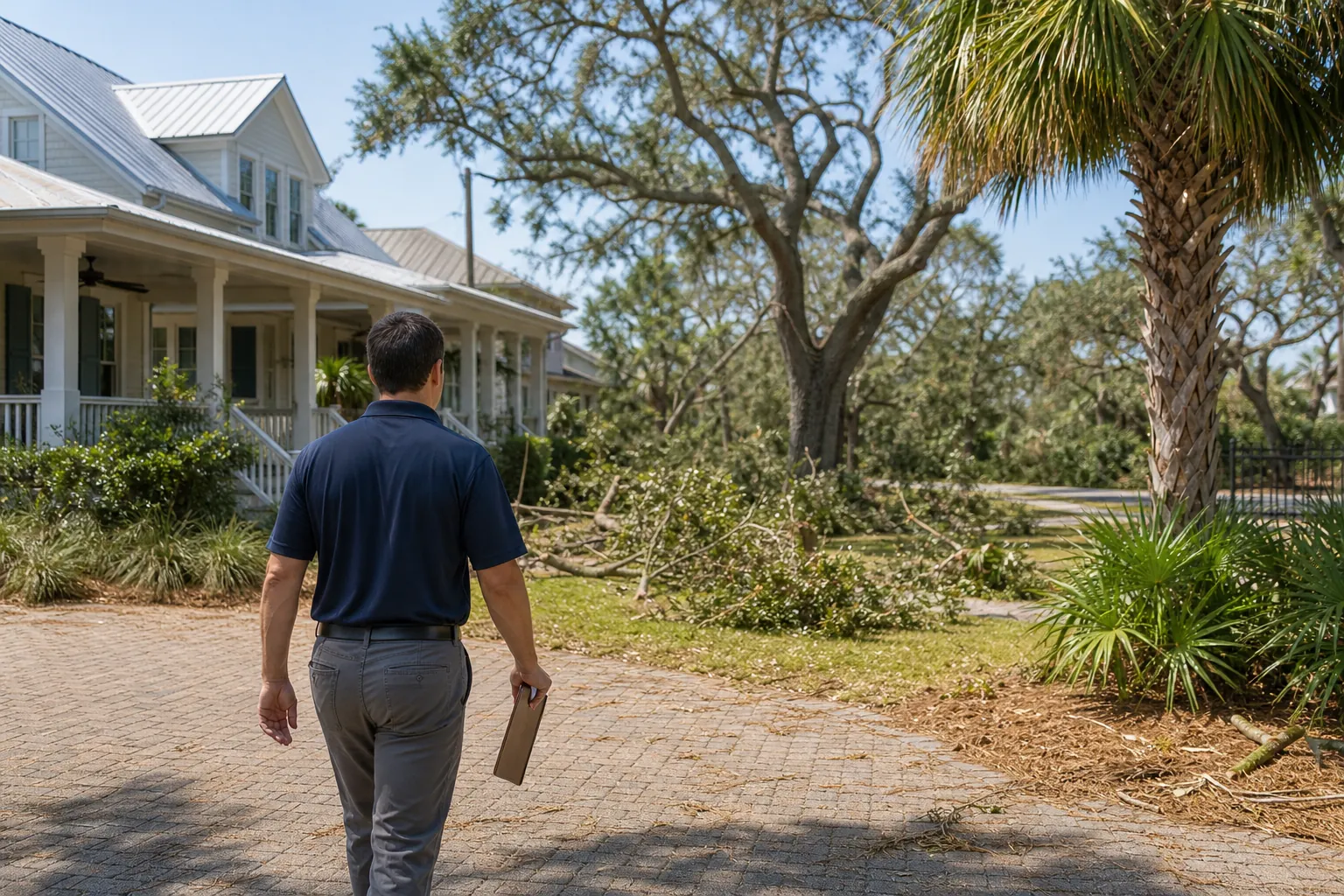
Cleanup observations describe visible work results; tree risk judgments address the tree's condition. Read the tree damage records guide for clear note structure. Use the leaning tree notes guide for related concerns. Keep a visible feature separate from any conclusion about strength, stability, or future failure.
A homeowner can note that cut wood remains near a fence. That doesn't establish why it remains or how it should be moved. Likewise, a visible split can be recorded without judging its depth. The next step for that concern is professional assessment, not a guessed rating.
Use plain words that describe shape, place, and what you can see. Terms such as “sound,” “stable,” and “secure” can imply an assessment. They don't belong in a cleanup note based on a distant view. A photo cannot establish those conditions either.
| Visible item | Useful cleanup observation | Judgment to leave open |
|---|---|---|
| Cut trunk sections | Several sections remain beside the rear fence. | The remaining wood can be moved without further assessment. |
| Standing tree | A split is visible from the agreed driveway view. | The tree is stable because nearby debris was removed. |
| Cleared walkway | No loose branches are visible on the viewed stretch. | The entire route and overhead area are safe. |
| Hidden garden bed | The bed remains blocked from view by a debris pile. | The bed contains no remaining debris or damage. |
| Trimmed crown | Cut branches are no longer visible in the viewed area. | The remaining crown needs no further tree care. |
A crown means the upper part of a tree with branches and leaves. Even when that area looks tidier, appearance doesn't settle tree risk. Cleanup records and tree assessments serve different purposes and may have different next steps.
If a professional provides an assessment, record it as a separate statement. Include its stated limits and the part of the tree addressed. Don't stretch a comment about one branch into a judgment about the whole yard.
How should unfinished debris zones be recorded?
Record each unfinished zone by location, visible material, and its current work status. The yard debris storage guide explains a related planning topic. The grapple truck debris guide covers hauling context. A pile's presence alone doesn't tell you whether pickup is pending or outside the agreed work.
Use fixed landmarks that another person can recognize from the record. “Rear fence, near the left gate” is clearer than “back there.” If several piles look alike, assign each a simple zone name. Keep those names unchanged in later notes and photo captions.
Describe only material that is visible without handling the pile. You might see branch pieces, trunk rounds, or leafy brush on top. Don't assume those materials describe everything underneath. A partly hidden pile should keep that limit in its record.
- Name the zone using a fixed landmark rather than a temporary piece of equipment.
- Describe the visible material without guessing what lies beneath or behind it.
- State whether removal was included, deferred, excluded, or still unclear in the scope.
- Record any confirmed next step without treating an expected pickup as completed work.
Use “status unclear” when the record doesn't explain why debris remains. That wording is more useful than assuming the crew forgot something. It also avoids treating every remaining branch as an unfinished task. Some work scopes address selected trees or specific debris only.
Keep hauling status separate from the state of the ground beneath a pile. “Pile removed” describes the hauling result, not everything previously hidden below it. A later view may reveal another item that needs its own entry.
If a zone remains outside the agreed viewing area, say so directly. Record its location from the available view and leave details open. The recheck should never require entry into a work zone to fill a blank.
What belongs on a practical post-work recheck worksheet?
A useful worksheet ties each task to a place, observation, and unresolved item. The tree cleanup steps guide provides broader work context. The tree damage record guide supports clear documentation. Use the worksheet below to track work results without turning them into tree safety findings.
Create one row per task or unresolved item, rather than per tree alone. A single tree job may include cutting, hauling, and a separate assessment. Combining them in one completion box can hide an unfinished step. Separate rows keep each result clear.
| Field | What to record | Example wording |
|---|---|---|
| Task and place | Match the agreed task to a fixed landmark. | Branch hauling beside the rear gate. |
| Viewing limit | State where the observation was made. | Viewed from the agreed driveway area only. |
| Visible result | Describe what can currently be seen. | The large brush pile is no longer visible. |
| Remaining item | List visible debris or an unresolved detail. | Small branch pieces remain along the fence. |
| Unseen area | Name any part blocked from view. | The far side of the bed wasn't viewed. |
| Separate tree concern | Keep assessment needs outside cleanup status. | A visible trunk split needs professional assessment. |
| Follow-up status | Record the next step only when confirmed. | The tree service will clarify the remaining hauling scope. |
Add the recheck date and a photo label where useful. Ready.gov recommends documenting property damage with photographs in its after-hurricane guidance. For this worksheet, images can also show visible work results. They don't establish tree stability or conditions outside the frame.
Write captions before details become hard to recall. “Rear gate, viewed from driveway, brush pile still visible” gives useful context. “All clear” does not describe the image or its limits. Keep the original image with its matching worksheet entry.
Use “not viewed” rather than leaving a blank cell. A blank may later be mistaken for “nothing remained.” Clear limits make the worksheet useful even when the walk-through was brief.
How should unresolved work and follow-up be closed out?
Close each work item with a specific status, while keeping unresolved concerns open. The cleanup scope guide helps define the task being closed. The damaged tree assessment guide covers a separate need. Finishing a hauling task doesn't close a concern about a standing tree.
Send a short summary built from the worksheet rather than a broad verdict. Group visible work results first, followed by remaining debris and unseen areas. Put tree assessment needs in their own final group. This keeps a cleanup request from becoming an implied tree judgment.
- Use “observed complete” only for the named task and the area actually viewed.
- Use “remains open” when visible work or a confirmed next step is pending.
- Use “not viewed” when the agreed route did not provide a useful view.
- Use “assessment needed” for a tree concern that cleanup observations cannot resolve.
If the tree service later clarifies an item, add that response beside the entry. Keep the first observation instead of replacing it with a broad completion note. The record can then show what was seen and what happened next.
A changed condition calls for a new entry, not a rewritten earlier record. Describe the difference without guessing its cause or how long it existed. Don't label something new damage merely because it was hidden before. A previously blocked view and a changed tree are different facts.
This process ends when the work record is clear, even with open items. It doesn't issue a safety clearance for the property. Follow local instructions and ongoing updates, as directed by the National Weather Service's post-hurricane guidance.
Florida Foliage is headquartered in Daytona Beach. This article provides educational guidance for Pensacola homeowners, not a statement of local crew availability. A request for further service should identify the remaining work without assuming a visit or response time.
Frequently asked questions
Does professional cleanup mean the remaining trees are safe?
No. A completed cleanup task doesn't establish the condition of remaining trees. Removal of fallen wood and assessment of standing trees are separate matters. Keep any tree concern open until a professional addresses it. Record the scope and limits of that assessment separately from hauling or cleanup results.
What if I cannot see the full work area?
Mark the hidden part as “not viewed” and name the blocked area. Record only what is visible from the agreed viewing location. Don't infer that hidden ground is clear because nearby work looks finished. A partial record with clear limits is more useful than a complete-looking record built on guesses.
Can photos replace a post-work tree assessment?
No. Photos can support a record of visible debris and work results. They cannot establish that a tree or yard is safe. Keep the viewing location and any hidden areas in the caption. A professional may use images as background, but the images alone don't settle the tree's condition.
Should every remaining branch be listed as unfinished work?
List visible branches, then compare their location with the agreed cleanup scope. Remaining material may be included, deferred, excluded, or unclear. Don't assume which status applies from its appearance alone. Keep the observation factual and leave the work status open until the task record or tree service clarifies it.
Can children join the walk-through to help record debris?
Keep this process adult-led and don't give children cleanup tasks. Ready.gov's hurricane guidance says children should not help with disaster cleanup work. Photos and notes don't require a family tour through the yard. Adults can share the finished record later without bringing children into debris areas.
Call (386) 481-7913 to request an estimate.
AI helped draft this article and create its images. The text offers general guidance; it cannot establish the condition of a tree or work area.
Call (386) 481-7913 to talk through next steps.