Reviewed by Clinton Funk
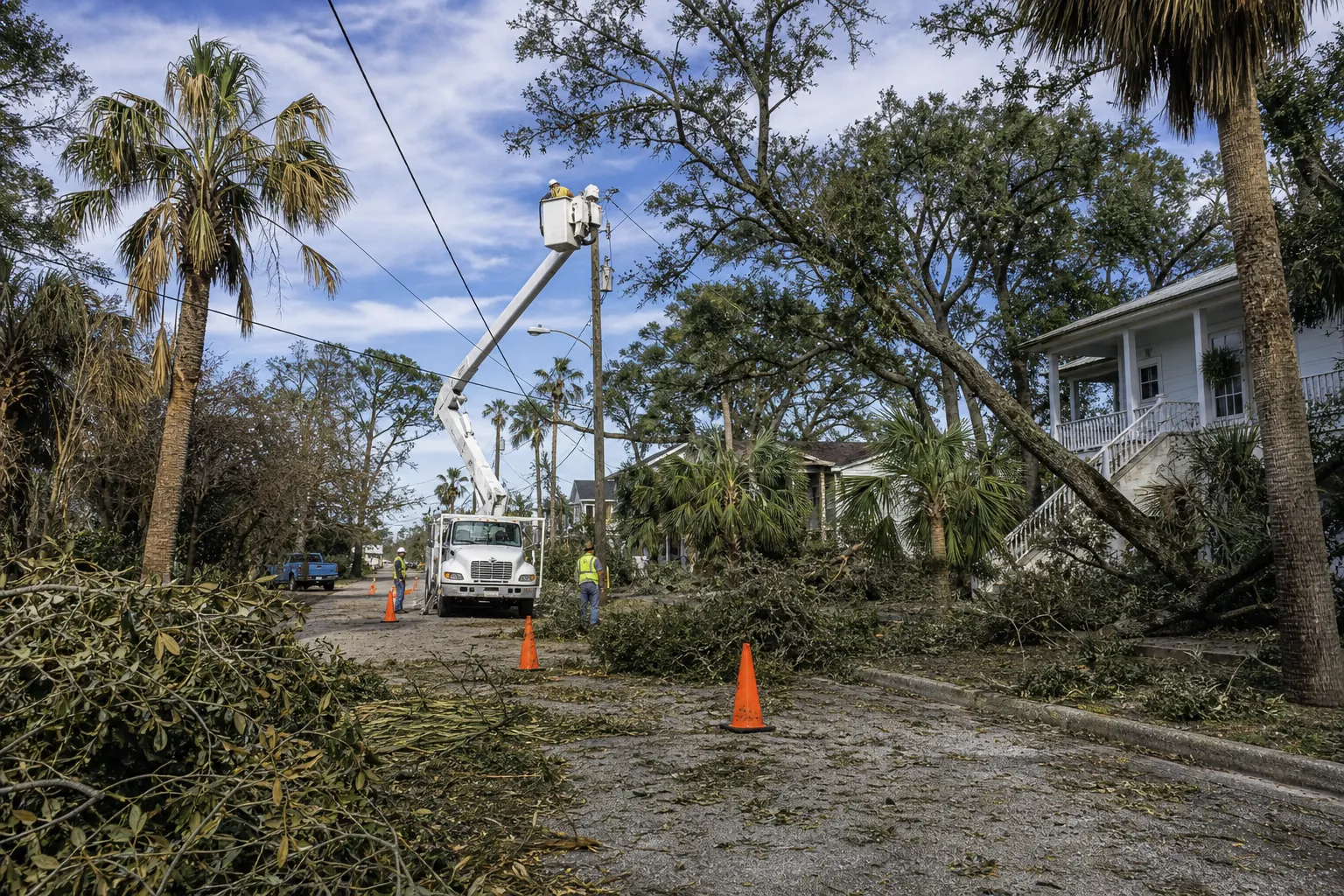
Entry to hurricane work zones needs a clear handoff from the tree crew’s named contact. Residents, drivers, and other trades should wait for a direct reply before approaching. Agree on a waiting point, a route, and an exit plan. A quiet saw or open gate does not mean entry is approved.
This Pensacola guide covers access during active tree removal, rather than yard cleanup tasks. It offers a shared entry plan that the crew can adapt. Florida Foliage’s headquarters is in Daytona Beach; this guide does not describe local crew availability.
Who controls entry to hurricane work zones?
The tree crew should name one contact to handle entry requests and route changes. Residents need that person’s name before work starts. Pair the yard cleanup zone plan with tree crew visit preparation so everyone knows where to wait and how to reach the contact.
For this plan, call that person the entry contact. The role is to pass requests to the crew and relay clear instructions. It does not give a resident control over tree work. The crew still decides when its work allows a crossing.
A household contact serves a different role. That person shares resident needs, expected visitors, and changes to planned arrivals. Keeping these roles separate helps prevent a message from sounding like approval. A resident saying “come over” cannot replace the crew’s entry handoff.
- Name one crew entry contact and one household contact before sharing arrival instructions.
- Choose a waiting point with the crew, separate from the planned work area.
- Give expected visitors the contact method before they begin their trip to the property.
- Send all route changes through the entry contact instead of passing them between visitors.
Write the names in a shared note rather than relying on memory. If the crew contact changes, update the note and tell anyone still expected. An old name can leave someone waiting for a reply that never comes.
The crew must set the boundary for the actual job. This guide gives no universal safety radius or fixed clearance. A driveway, fence, or strip of tape does not establish the full boundary by itself.
Entry planning also sits within wider storm instructions. Follow local officials’ information and special directions, as Ready.gov’s hurricane guidance advises. A private work plan does not replace those directions or make a closed route available.
How should an entry handoff work?
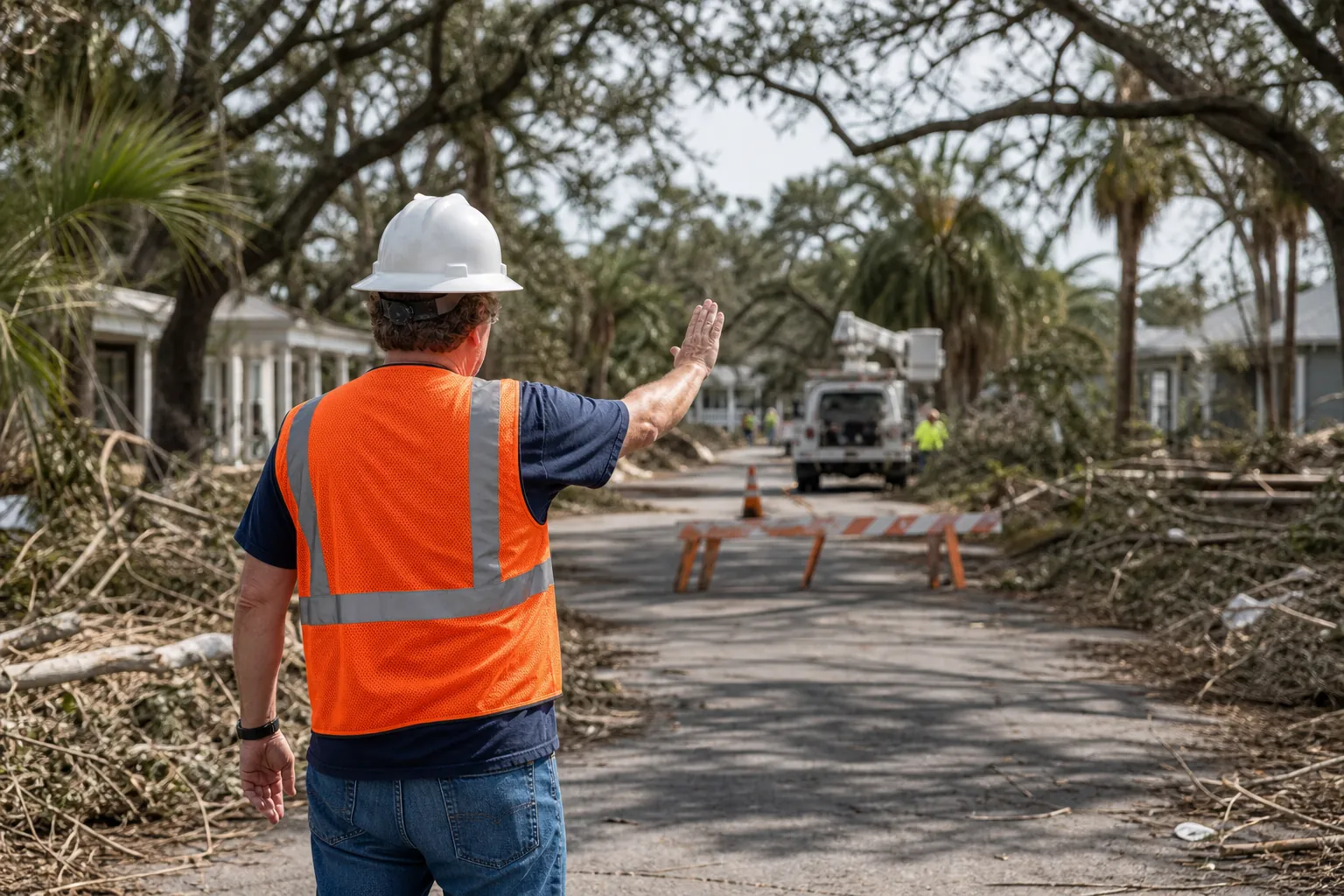
An entry handoff should identify the person, the purpose, and the exact route. It needs a clear reply from the crew contact, followed by confirmation from the visitor. Use guidance for waiting for tree help alongside useful details to share about tree work to keep messages focused.
Agree on the words before the work begins. “Wait at the agreed point” and “use the named route now” mean different things. Avoid vague replies such as “looks good” or “should be fine.” They leave the visitor to guess what was approved.
- The visitor contacts the named person from the agreed waiting point and states the entry need.
- The entry contact checks with the crew before giving any instruction to approach.
- The contact names the person, route, destination, and limits for that single entry.
- The visitor repeats the route and destination so the contact can correct any mismatch.
- The visitor follows that instruction and reports departure through the same agreed contact method.
This is a sample message sequence, not a standard set of tree crew signals. The crew may use its own system. Residents should learn the parts that apply to them without copying signals meant for trained workers.
A wave from across the yard can have several meanings. It may be meant for another worker or driver. Unless the agreed system clearly says otherwise, treat it as no entry instruction. The same applies to a nod seen through a window.
A text saying “I’m here” is a request, not permission. If there is no reply, keep waiting rather than trying a different gate. Do not enter to get someone’s attention or move closer because the machines sound quiet.
Keep routine family updates brief. Ready.gov recommends text messages or social media for family communication after disasters, when phone systems may be busy. Agree separately on how the crew will handle entry requests; do not assume it monitors household messages.
Which routes should residents and visitors use?
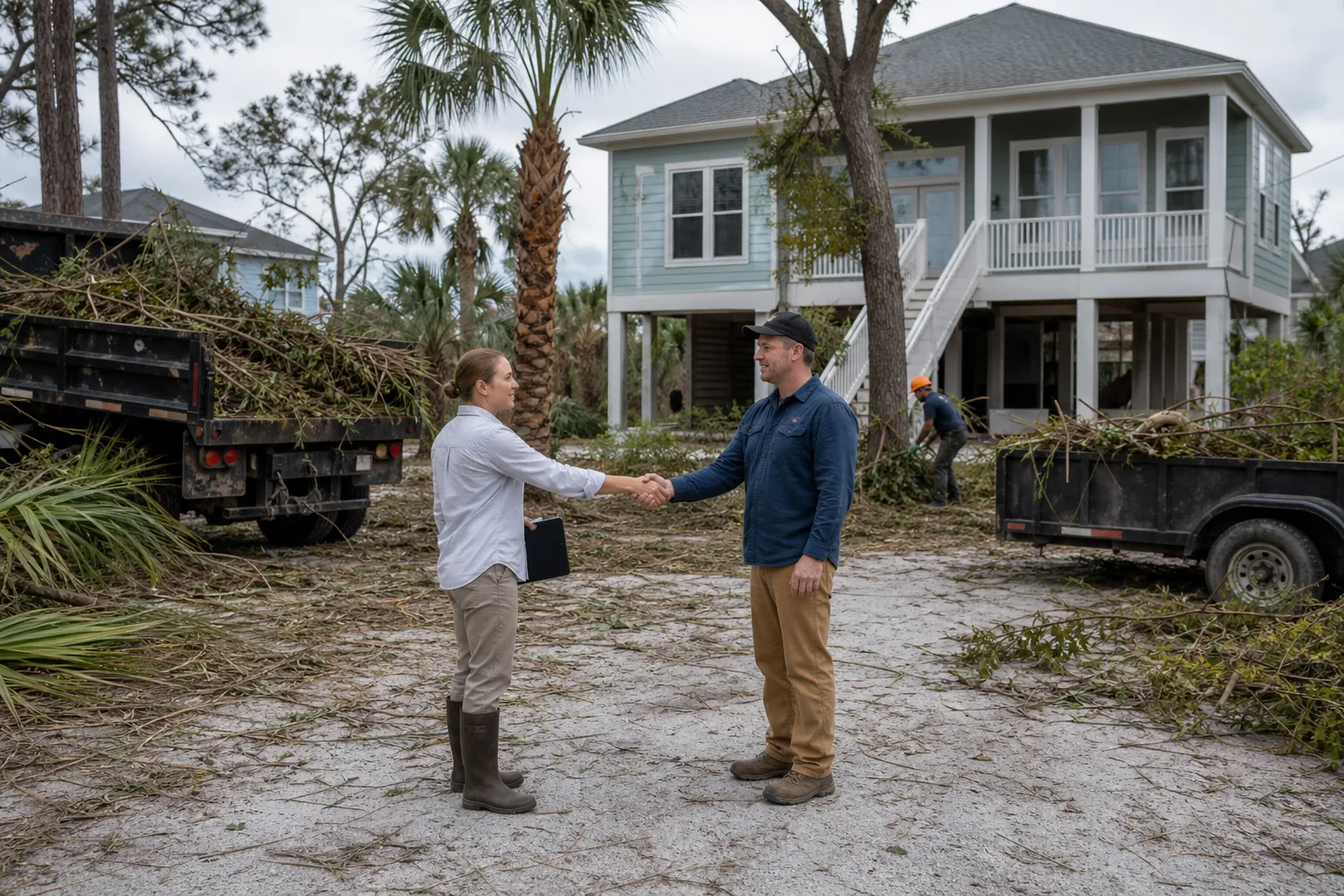
Use a named route that the crew has accepted for the current work stage. Do not replace it with a shorter path through the yard. Review front door access when a tree blocks entry and garage access around a fallen tree when choosing which entrance to discuss.
Give the route a plain name tied to fixed features. “Side gate to kitchen door” is clearer than “go around back.” The label should describe the route without suggesting that it stays open throughout the job.
Separate the waiting point from the destination. A driver may wait at one place while a resident needs another entrance. Neither person should assume that the other person’s approved route applies to them.
The following comparison helps keep those needs distinct. It is a message guide, not a map or a safety assessment. The crew must confirm each route for the actual site and task.
| Person arriving | Entry request | Handoff needed |
|---|---|---|
| Resident returning home. | Name the door and reason for entry. | Confirm the route and when the crossing may begin. |
| Delivery driver. | Describe the package and proposed drop point. | Confirm a drop point that does not require entering the work zone. |
| Another trade. | Name the work area, tools, and expected visit length. | Confirm how that visit fits the tree crew’s current work. |
| Guest or caregiver. | State whom they are visiting and any access needs. | Confirm the entrance and how the resident will meet them. |
An alternate route needs its own review. It is not a fallback just because the main path is closed. Avoid flooded routes and watch for downed wires and damaged surfaces, as the National Weather Service advises after a hurricane.
Describe access needs early, including steps that someone cannot use. Do not improvise help across the work area. Ready.gov recommends planning for household members who need extra help. Build those needs into the entry discussion rather than waiting until arrival.
How can deliveries and other trades coordinate entry?
Deliveries and trade visits need separate handoffs, even when they share an arrival time. A package drop is different from bringing tools through the yard. Link debris truck street guidance with the tree cleanup scope so each visitor understands which activity the entry plan covers.
A delivery note should state the agreed drop point and contact method. Avoid notes such as “leave by the back door” when that route crosses planned work. Update saved delivery instructions before the visit, and remove old directions that could send drivers elsewhere.
For large items, arrange the handoff before the vehicle arrives. The crew needs to know that the request differs from a small parcel. A scheduled arrival time alone does not approve unloading or entry.
- Tell each trade which crew contact handles entry during the tree removal stage.
- Describe the visit’s destination and equipment before anyone brings tools onto the property.
- Keep delivery directions tied to the current drop point rather than an old gate code.
- Report early arrivals and delays so the contact can review the handoff again.
Other trades should explain where their work will take place. “Checking the outdoor unit” gives more context than “here for service.” This lets the tree crew compare the requested visit with its current task.
One trade finishing its work does not release the tree work area. Each team needs to understand who controls the shared crossing. Residents should pass messages through the named contact rather than trying to judge which task can continue.
If the visits cannot be kept separate, change the sequence or arrival plan. That is a planning choice, not a reason to squeeze through. Record the revised order so the next visitor does not rely on the earlier arrangement.
What belongs on a work zone entry sheet?
A useful entry sheet records people, routes, and the last confirmed instruction. It should be short enough to check during a call. Combine household cleanup roles with clear tree damage records, while keeping access notes separate from any professional judgment about the tree.
Use the worksheet below as a shared note, not a resident inspection task. Fill it from the crew’s instructions and known visit details. Do not enter the work zone to collect missing information or check a route yourself.
| Worksheet field | What to record |
|---|---|
| Current entry contact. | Record the crew contact’s name and agreed contact method. |
| Household contact. | Record who will relay resident needs and visitor changes. |
| Waiting point. | Use the exact place name agreed with the crew. |
| Requested crossing. | Name the visitor, purpose, destination, and expected arrival. |
| Current route. | Copy the crew’s route description without adding shortcuts. |
| Last instruction. | Record who gave it and which visit it covered. |
| Departure update. | Note when the visitor reported leaving through the agreed route. |
A sample entry might read: “Resident returning for medicine; waiting point confirmed; route pending.” That wording separates the need from approval. Do not replace “pending” until the crew contact gives a clear instruction for that visit.
Keep observation and assessment in separate parts of any record. “A branch lies across the path” describes something seen. “The path is safe” states a conclusion that a resident’s note cannot establish.
A photo may help explain which gate or path someone means. It cannot establish that entry is safe or replace the crew’s assessment. Do not request closer photos from someone waiting outside the zone.
Share only the current version of the sheet with expected visitors. If a route changes, mark the old one closed rather than leaving both listed. This prevents a saved screenshot from looking like a choice between equal options.
When must an approved crossing be checked again?
Check again when the person, route, work stage, or planned visit changes. Earlier approval covered a specific handoff, not every later crossing. Use professional storm tree assessment guidance and multiple tree work priorities to understand why the crew may change its sequence and access plan.
An approved trip out does not automatically cover the return trip. The crew may have moved to another task while the resident was away. Request a fresh handoff instead of using the route from memory.
- Request a new handoff when a visitor arrives after the agreed entry window.
- Confirm instructions again when the crew names a different entry contact during the job.
- Report a blocked route without moving debris or choosing an unapproved path around it.
- Check the return plan before assuming an earlier exit route remains available.
If a visitor reaches a closed gate, the next step is contact, not entry. If the agreed contact cannot be reached, the crossing remains pending. Silence should never be recorded on the worksheet as approval.
Some conditions need more than a route update. Ready.gov warns against wading in floodwater or touching wet electrical equipment. Do not turn those hazards into a passage request or attempt electrical work to reopen access.
When tree work ends, ask the crew contact to explain what has changed. A finished task may release one route while leaving another area outside the handoff. Record the actual instruction rather than writing that the entire yard is clear.
Keep children out of disaster cleanup work, as Ready.gov directs. A resident crossing plan is not an invitation for children to join cleanup. Share the final entry instructions with household members before routine visits resume.
Frequently asked questions
Does a stopped saw mean I can enter?
No. Quiet equipment is not the agreed entry signal. Contact the named crew person from the waiting point. State where you need to go and wait for a direct reply. Entry stays pending until the contact confirms the route for your crossing.
Can a delivery driver use my earlier entry approval?
No. Your handoff covered your visit, route, and purpose. A driver needs separate instructions for the agreed drop point. Send those instructions before arrival. If the drop cannot happen as planned, contact the crew rather than directing the driver through another gate.
Is there one distance everyone should stay from tree work?
This guide provides no universal distance. The crew must set the boundary for the actual work and site. Use its waiting point and entry instructions. Do not use a distance from another job, a parked truck, or the edge of a debris pile as a substitute.
What if I need something inside the house?
Tell the entry contact what you need and which room or door is involved. Let the crew decide how that request fits the work. A brief errand still needs a handoff. Do not assume that a familiar path remains open because you used it earlier.
Can a photo confirm that my route is safe?
No. A photo can help identify a gate, path, or visible blockage. It cannot establish safe entry or replace professional assessment. Share it as a location aid, then wait for the crew contact’s instructions. Do not move closer to get a better view.
To request an estimate from Florida Foliage, call (386) 481-7913.
AI helped draft this article and create its images. The text offers general guidance; it cannot establish the condition of a tree or work area.
Call (386) 481-7913 to talk through next steps.