Reviewed by Clinton Funk

Hurricane gate access planning starts with notes, not a wider opening. Record the clear width only from a safe, undamaged area. Leave blocked gates and loaded limbs alone. A width helps describe the route, but it doesn't select equipment. Tree crews need to assess the full path and debris first.
What does hurricane gate access planning need to show?
A useful gate record shows the opening, approach, and space beyond it. Keep this narrow task separate from the full tree cleanup scope. Pair it with clear storm damage records, while marking each detail as measured, seen, or still unknown. That keeps early notes useful without overstating them.
A side gate can look like the only limit. Yet the route may bend sharply just inside the fence. A wall, bed edge, or outdoor unit may narrow the next stretch. The gate width describes one point, rather than the whole route.
Start with the side of the home and the gate location. Use plain labels such as front approach, latch side, and yard side. These labels help someone read your notes without guessing which direction you mean.
Separate the opening from the gate panel itself. The panel's listed size may differ from the space available between fixed edges. A hinge, latch, or post can affect that space. Record what you can actually see rather than copying a product size.
- Label each gate by its location so separate openings don't get mixed together.
- State whether the width came from a current measurement or an older record.
- Describe visible bends and fixed objects without entering an unassessed debris area.
- Mark hidden ground, blocked views, and uncertain dimensions as unknown in the notes.
This article focuses on the narrow passage between a street-side approach and backyard debris. It doesn't replace a tree assessment or a full cleanup plan. Its purpose is to make the access limits clear before work methods are chosen.
For Pensacola homeowners, a short route record can keep that first discussion focused. Florida Foliage is headquartered in Daytona Beach. This is educational Pensacola guidance, rather than a statement about local crews or service availability.

How can you record a narrow gate opening without disturbing damage?
Record a width only when both sides are reachable from a safe, undamaged area. Use safe porch observation guidance for distant notes and waiting for tree help guidance when access is blocked. An unknown width is better than a number gained by moving debris or forcing a gate.
First, follow local instructions about returning and moving around damaged property. The National Weather Service's after-hurricane guidance warns of downed wires, fallen objects, and weakened structures. A measurement can wait when those hazards affect the approach.
If an undamaged gate is already open and reachable, record the clear gap. Describe the two edges used for that measurement. State whether a latch or other fitting narrows part of the opening. Don't reach past debris to find a more exact figure.
A closed, jammed, or damaged gate needs a different entry in the record. Write that its clear opening is unknown. An older measurement may still help, but label it as an earlier figure. Don't present it as the space available after the storm.
- Choose a viewpoint in a safe, undamaged area before making any access notes.
- Identify the fixed edges of the opening without moving the gate or debris.
- Measure only if the full task stays within that safe, undamaged area.
- Record the units, reference edges, and whether the gate was already open.
- Leave blocked dimensions unknown and pass those limits to the tree service.
Photos can add context when taken from that same suitable viewpoint. Include the opening and nearby fixed features, if they're visible. A photo cannot establish that a gate, tree, or route is safe.
Don't cut a gate, remove a post, or shift a loaded limb for a measurement. Those changes are outside this observation task. A partial record with clear limits is more useful than a precise number based on disturbed damage.
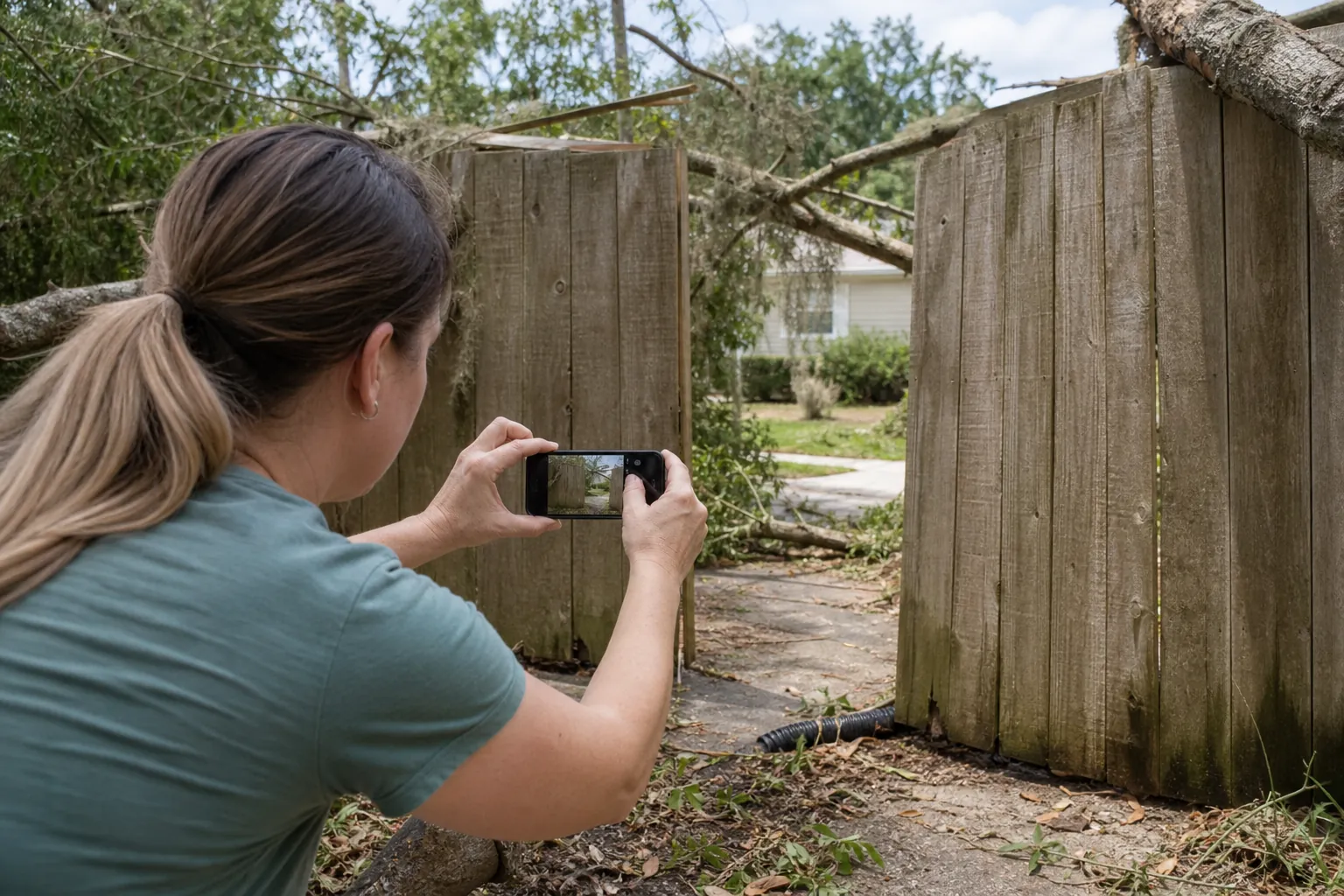
Why doesn't gate width decide which equipment will fit?
Gate width is one access fact, not an equipment decision. The broader tree removal access planning guide covers route planning, while grapple truck debris guidance addresses a different removal method. Keep the measured opening separate from any proposed machine, carrying method, or loading plan until the site is assessed.
A machine's listed width doesn't describe every part of its use. The route may need room for turns, workers, and the material being handled. A straight gate opening can lead into a tight corner. That corner belongs in the access record too.
Ground conditions are a separate issue from width. A view through the gate may show paving, grass, or pooled water. It won't establish the ground's strength or reveal everything below debris. Write the visible surface, then leave its suitability for assessment.
Don't enter floodwater to check a route or take a measurement. Ready.gov's hurricane guidance says floodwater can contain debris, chemicals, wildlife, and electrical hazards. A wet or hidden section should remain an unresolved part of the plan.
| Access detail | What it helps describe | What it doesn't establish |
|---|---|---|
| Clear gate width. | The gap between the recorded fixed edges. | Which machine or work method suits the site. |
| Visible turn beyond the gate. | Where the route changes direction. | Enough room to turn equipment or debris. |
| Visible ground surface. | Whether paving, grass, or water can be seen. | The strength or condition of hidden ground. |
| Overhead view. | Objects visible above the proposed route. | Tree stability or safe clearance for work. |
| Street-side approach. | How the gate connects with the front area. | A final loading or truck placement plan. |
Use wording such as “opening measured” rather than “equipment fits.” That small change preserves the boundary between a homeowner's record and a professional decision. It also leaves room for a different route if the site assessment calls for one.
What belongs in a practical side-gate access worksheet?
A useful worksheet pairs each observation with its limit and planning role. Connect it with details to share about storm tree damage and tree crew visit preparation. Keep it brief enough to read quickly, but clear enough to distinguish the gate opening from the full debris route.
The example below shows how a narrow-gate record can work. It uses descriptions rather than invented site measurements. Replace only the entries you can support from a safe, undamaged area. Leave the rest marked unknown.
| Worksheet field | Example entry | Planning use |
|---|---|---|
| Gate location. | Side gate between the home and fence. | Identifies the opening being discussed. |
| Opening width. | Unknown because the gate remains closed. | Shows that usable width still needs review. |
| Measurement basis. | No current measurement; older record available. | Keeps earlier dimensions separate from current facts. |
| Gate condition. | Lower edge hidden behind fallen branches. | Explains why movement has not been tested. |
| Route beyond gate. | Path turns toward the backyard near a bed. | Flags a turn for the site assessment. |
| Ground view. | Partly hidden by leaves and tree debris. | Marks the surface as incompletely observed. |
| Debris contact. | A limb appears to rest against the gate. | Separates visible contact from a load assessment. |
| Photo viewpoint. | Front approach, outside the damaged area. | Explains what the image can and cannot show. |
Add a simple sketch if words leave the route unclear. Draw the house, fence, gate, and visible turn. Mark areas outside your view with a question mark. The sketch should show relationships, rather than pretend to be a measured site plan.
Keep photos and notes under the same gate label. A wide view can show the approach, while another view shows the opening. Neither needs a person standing beside debris for scale. Use a recorded dimension only where it was actually measured.
The finished sheet should make one point clear: these are access observations. The tree service still needs to assess the route, tree damage, and work method. The worksheet supports that review without trying to replace it.
What changes when a limb rests on the gate or fence?
A gate touching tree debris becomes part of the damage scene, not a simple doorway. Read about storm tree damage to fences and bent limb warning signs for related context. Leave the gate, fence, and loaded limbs in place while recording only what you can see without approaching damage.
For this access record, “loaded” means a limb is bearing weight or under force. A homeowner's photo may show contact without showing how that force is shared. Describe the visible contact instead of deciding which object supports another.
Useful wording might be “branch rests across the upper gate edge.” Avoid a conclusion such as “the fence holds the tree.” The first reports a visible feature. The second claims a load assessment that the view may not support.
The National Weather Service warns about fallen objects and weakened structures after hurricanes. Keep those hazards in mind when choosing an observation point. Don't treat an intact-looking fence as proof that the surrounding area is safe.
- Describe where the limb touches the gate without testing either object's movement.
- Leave the latch alone when debris blocks the gate or bears against it.
- Do not cut fence sections or posts to create a wider debris passage.
- Do not pull, lift, roll, or drag loaded limbs to expose the opening.
If the latch side is hidden, mark it hidden. If the gate hangs at an angle, record that appearance without testing the hinges. These limits keep the record tied to observation, rather than an attempted repair or stability check.
A blocked side gate doesn't establish that another route will work. A different opening may have its own turns, overhead obstacles, or ground concerns. It can be listed as a possible route for assessment, without naming it the chosen route.
How does a gate record become a cleanup access plan?
The record becomes a plan when a tree service assesses the route and work. Use storm-damaged tree assessment guidance alongside the yard cleanup zone plan to keep those steps distinct. Your notes describe the opening; the assessment addresses debris handling, access limits, and the order of work.
A useful handoff starts with the gate label and measurement status. It then states what blocks the view and what remains unknown. This gives the service a clear starting point without suggesting that equipment has already been chosen.
Keep the access plan separate from the debris destination. Getting material through a gate and placing it for removal are different tasks. A narrow passage may affect both, but one measurement cannot settle the full handling plan.
- Keep original measurements separate from any later dimensions confirmed during the site assessment.
- Record the agreed route without treating nearby unassessed paths as spare access lanes.
- Keep gate changes and debris movement outside the homeowner's observation task.
- Revise the notes when new information changes the opening or route description.
The plan should also distinguish visible access from access that remains blocked. For example, a front approach may be clear while the backyard turn stays hidden. That is a partial route description, not approval to start moving material.
Keep children out of disaster cleanup work, as Ready.gov advises in its hurricane guidance. Sharing a gate worksheet doesn't create a role for children as spotters or helpers. The record can be passed along without anyone entering the work area.
A complete access discussion may still end with unresolved details. That's reasonable when debris hides the route or tree conditions need closer assessment. Clear limits help the next decision more than an unsupported claim that everything will fit.
Can I use the gate's listed size instead of measuring?
You can share it as background, but label it as a listed size. It may describe the panel rather than the clear opening. Hinges, posts, and the latch can affect the usable gap. If current measurement isn't possible from a safe, undamaged area, leave the present opening width unknown.
Should I open a jammed gate to get a better photo?
No. Leave a jammed or debris-loaded gate in place. Record that the opening is blocked and photograph only from a suitable viewpoint. A better angle isn't worth changing the damage scene. The photo can show visible conditions, but it cannot establish stability or confirm a safe work route.
Does a narrow gate rule out backyard tree cleanup?
A narrow gate alone doesn't settle the work method. The full route, ground, turns, tree damage, and debris need assessment. Share the measured opening if you have one, but avoid matching it to equipment yourself. The service must determine what approach suits the site after reviewing those conditions.
What if I already have an older gate measurement?
Keep it, clearly marked as an earlier measurement. State which opening it describes and how it was taken, if known. Storm damage may leave the current gap different or blocked. Don't replace an unknown current width with the older number, and don't move damage to check the difference.
Should the worksheet include a possible second route?
Yes, if you can describe it without entering damaged areas. Label it as a possible route, with its own visible limits and unknowns. Don't call it usable based on appearance alone. A separate route still needs assessment, even if its gate looks wider than the blocked side opening.
To request an estimate from Florida Foliage, call (386) 481-7913.
AI helped draft this article and create its images. The text offers general guidance; it cannot establish the condition of a tree or work area.
Call (386) 481-7913 to talk through next steps.