Reviewed by Clinton Funk
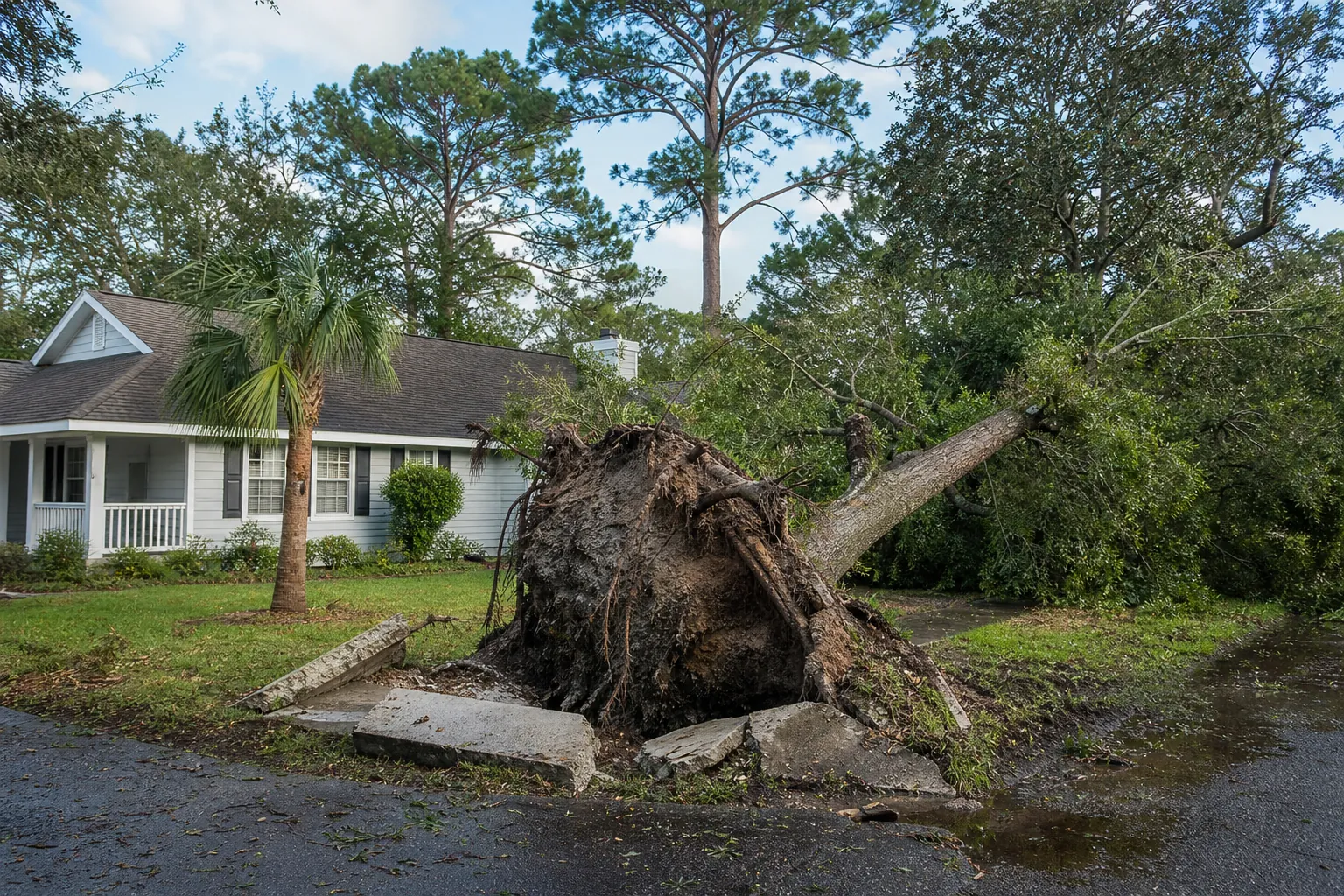
Keep people away from a raised root plate and the disturbed ground beside it. Hurricane root plates need professional assessment before nearby space returns to normal use. A fallen tree’s exposed roots don't show the full ground condition. Plan around that uncertainty without entering the hollow or moving roots.
Why do hurricane root plates need space around them?
This guide concerns visible raised roots and soil beside a fallen tree. Space planning starts with what remains unknown beneath and around that mass. Our guides to storm damage at a tree’s base and professional storm tree assessment explain related concerns.
The raised soil may look like a wall beside the trunk. The hollow below may look like an open patch of yard. Neither view tells a homeowner how firmly the remaining soil holds together.
Treat disturbed soil as an unresolved condition, rather than normal walking ground. Don't use its dry surface or still appearance as proof of stability. This is a reason to keep people away, not a diagnosis of the tree.
The National Weather Service warns that storm-damaged roads and sidewalks might collapse. Its after-hurricane guidance supports caution around damaged walking surfaces. It does not set a root-plate boundary or clear a particular yard.
A useful space plan includes more than the visible hole. It also accounts for the routes people would use beside the tree. A door, gate, or garden path can draw foot traffic toward disturbed ground.
- Keep the raised soil, exposed roots, and hollow out of routine yard use.
- Describe nearby paths and doors without walking closer to check their condition.
- Leave the extent of the restricted area to a professional site assessment.
- Keep unknown ground conditions clearly marked as unknown in your cleanup notes.
The goal isn't to judge the tree from across the yard. It's to prevent ordinary errands from becoming close inspections of damaged ground. That keeps this task separate from decisions about saving or removing the tree.
A small visible opening doesn't establish a small concern. A large root mass doesn't provide a reliable boundary either. The boundary needs to reflect the actual site, not a rule based on appearance.
How should daily routes change near raised roots?
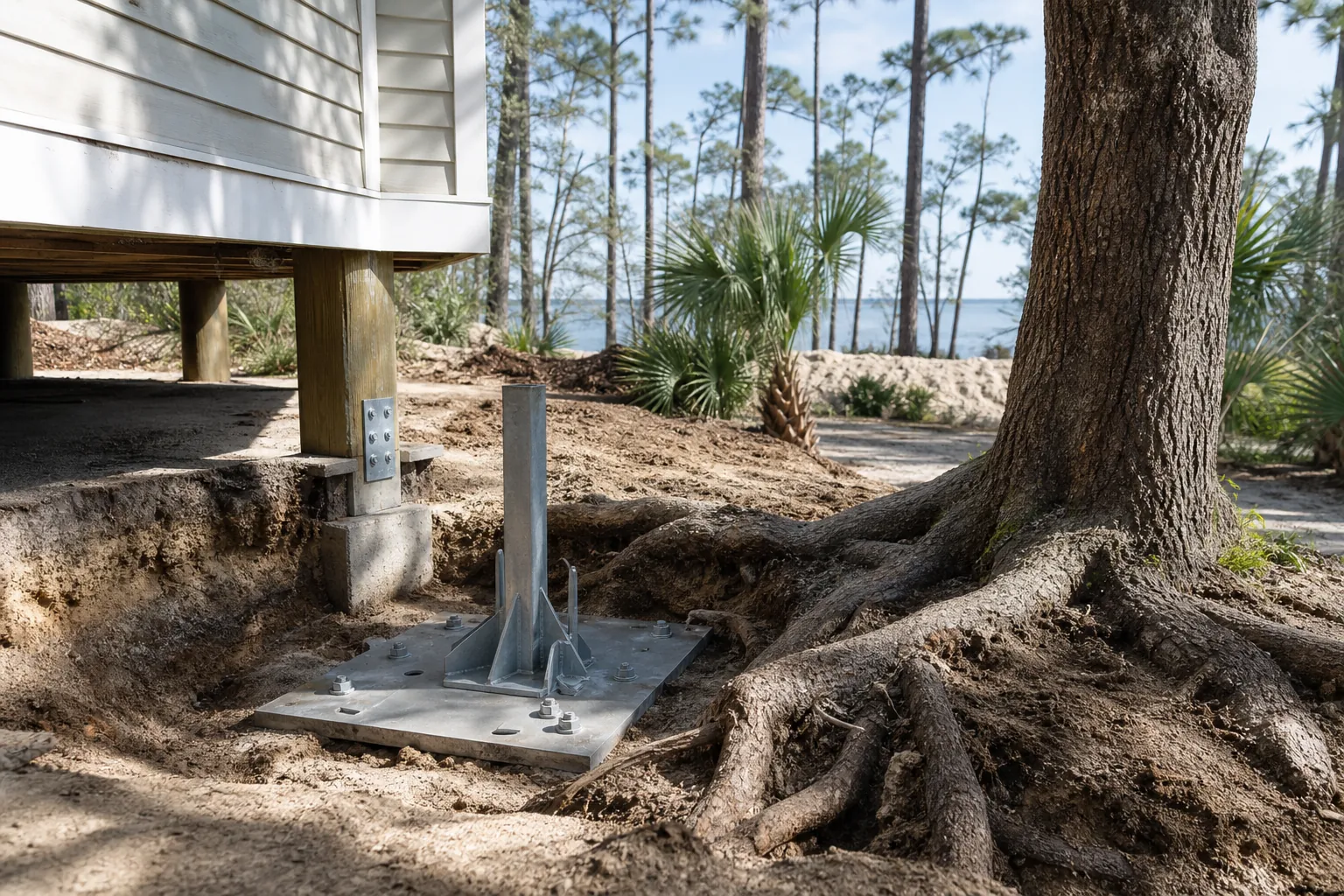
Keep daily travel separate from the raised roots and nearby disturbed ground. Start with doors, gates, and paths people already use, without approaching the tree. The guides to planning yard cleanup zones and a tree blocking the front door address those access concerns.
A route can be familiar without being suitable after a storm. The usual trip to a side gate may now pass the root hollow. A path beyond the trunk may still lead back toward raised soil.
Don't create a shortcut across the disturbed area. Don't test the ground by stepping beside the roots. A route plan should remove the need for those tests, rather than turn them into chores.
If a route includes floodwater, don't use it to reach another door. Ready.gov says people should avoid wading in floodwater, which may contain hidden debris and electrical hazards. Water also prevents a clear view of the ground.
Think about the full trip, including the return. Carrying groceries, handling a pet, or opening a gate can change where people step. Keep these everyday needs in the plan without sending anyone outside to inspect.
- Tell household members which usual yard routes are no longer in use.
- Keep deliveries from depending on access through the affected side yard.
- Plan pet needs without using the root hollow or nearby disturbed soil.
- Leave forgotten outdoor items alone when reaching them would require a close approach.
These changes are temporary access choices, not proof that another route is safe. Use only routes that are already available without entering the affected space. If access remains unclear, explain that limit when seeking help.
The National Weather Service advises following official updates and returning only when officials allow it. That return-home guidance comes before any yard plan. An article cannot clear a home, porch, or path for use.
What can you observe without assessing the root plate?
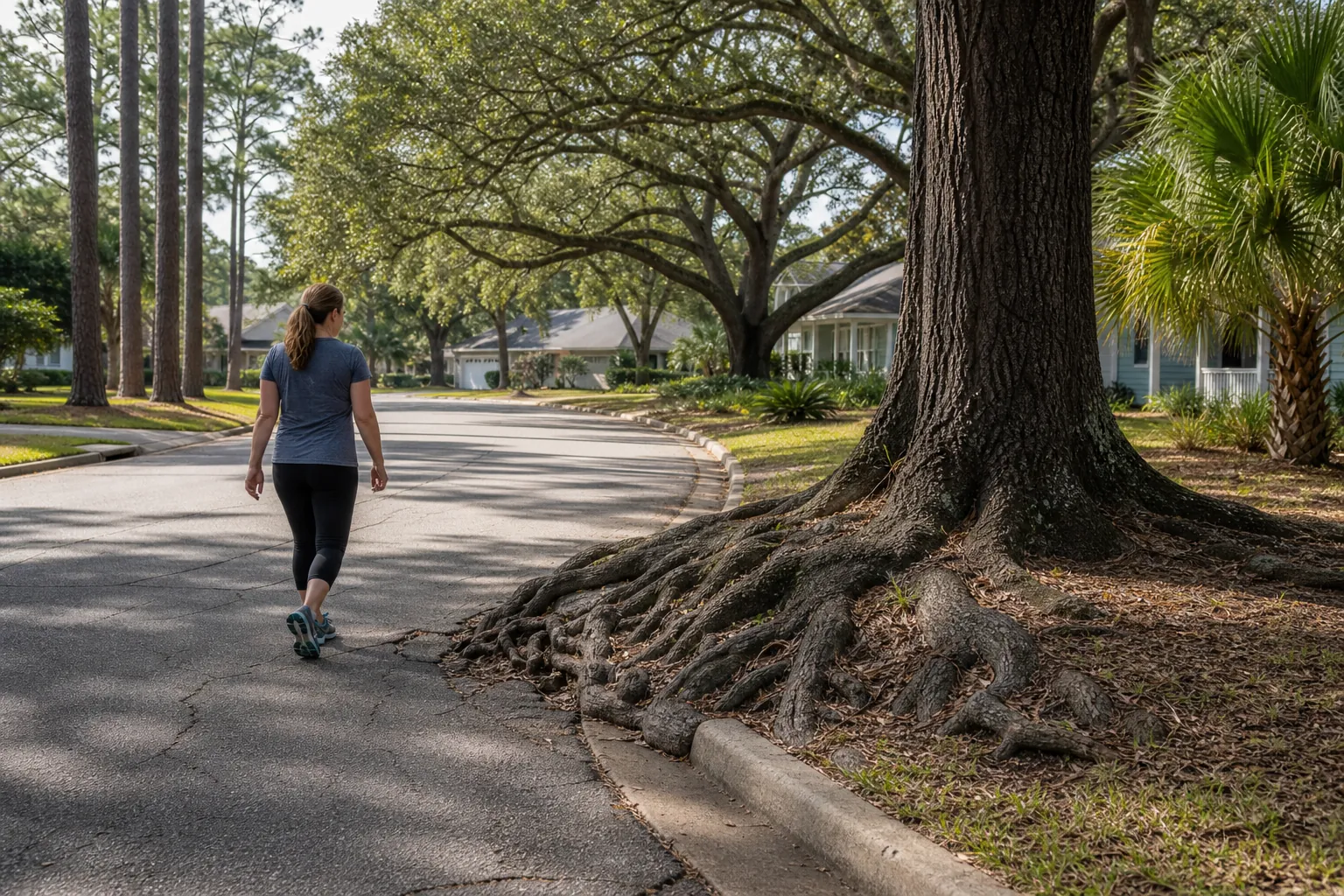
Useful observations describe visible features without deciding what those features mean. Record only what you can see from a place you already occupy without approaching. Read about limited tree observations from a porch and clear storm tree records for related ways to share information.
An observation might say that soil is raised beside the trunk. An assessment would decide how that soil, the roots, and the tree may behave. Those are different tasks, even when both begin with the same view.
Use plain words such as visible, hidden, blocked, and unknown. Avoid labels such as stable, settled, or ready for cleanup. Those labels can imply a conclusion that a distant view cannot support.
A photo can help show where the root plate sits beside a gate. It cannot establish that the gate route or nearby ground is safe. No close image is worth entering the affected area to obtain it.
The following comparison keeps everyday descriptions separate from professional judgments. It is a wording aid, not a method for testing soil or roots. Leave any feature you cannot see listed as unknown.
| Visible observation | What remains unknown | Space-planning response |
|---|---|---|
| Raised soil faces the side path. | The condition of ground beside and beneath the roots is unknown. | Keep that path out of routine use pending assessment. |
| A hollow is visible below the roots. | Its full edge and underlying ground condition are unknown. | Do not enter the hollow or approach to measure it. |
| Loose debris hides part of the ground. | The covered surface cannot be judged from the view. | Leave the debris in place for professional review. |
| A fence blocks the view of the root mass. | The hidden side and nearby access remain unknown. | Report the blocked view without crossing the fence. |
| Water covers the area beside the roots. | Ground conditions and possible hidden hazards remain unknown. | Do not wade into the area to inspect it. |
Ready.gov supports using photographs to document storm damage. That advice does not call for entering damaged ground or approaching a fallen tree. Existing views can still help explain why access remains restricted.
Keep the original wording when sharing the notes with others. “The hollow is visible” says less than “the ground has settled,” but it is more precise. Clear limits make the information more useful.
How can a space worksheet prevent mixed messages?
A short space worksheet keeps the root area separate from normal yard tasks. It records known access limits without asking anyone to inspect the roots. Pair it with household cleanup roles and planning while waiting for tree help so everyone uses the same message.
This worksheet is an indoor planning tool, not an outdoor survey. Complete it from existing knowledge and views. An empty field is better than a guess that sends someone toward damaged ground.
Use one page or one shared note for the household. Give the root area a plain name, such as “raised roots beside the rear gate.” Avoid several names that might describe different places.
- Name the affected space using a familiar door, gate, or yard feature.
- Write which routine routes currently depend on passing beside that space.
- List visible features separately from hidden ground, blocked views, and other unknowns.
- Record the household message that the root area remains out of use.
- Leave a separate field for professional findings and any later access instructions.
The finished note might read: “Raised roots beside rear gate; gate route out of use.” A second line might say: “Ground behind root mass hidden from view.” Neither line claims to measure the hazard.
Add daily needs only when they affect access. For example, a pet's usual route may need to change. The worksheet doesn't need a full inventory of branches, garden tools, or lawn damage.
Keep children out of disaster cleanup work, as Ready.gov directs after a hurricane. Don't give them root-area checks, warning duties, or debris tasks. Adults can share the household message without involving children in the work.
Update the note when a professional provides new findings or access instructions. Don't replace “unknown” with “fine” because nothing appears to have changed. A quiet day is not a soil assessment.
This shared note helps prevent conflicting directions during a long cleanup. It keeps a helpful visitor from treating an unused gate as an open route. Its value is clear communication, not more homeowner inspection.
What should professional assessment resolve before nearby cleanup?
Professional assessment should address the root mass, disturbed ground, and access needed for work. It should distinguish tree work from later ground restoration. Our pages on uprooted tree work planning and defining storm cleanup scope explain those broader tasks without replacing a site visit.
The homeowner's role is to explain where everyday movement meets the affected area. The professional's role is to evaluate site conditions and plan the work. A short description of a blocked route can support that process.
Raised roots, attached wood, soil, and nearby objects form one work setting. Treating them as separate household chores can obscure that connection. The space beside the roots needs attention even when loose branches seem easy to reach.
This article provides no cutting, pulling, digging, or root-resetting steps. It also provides no formula for a boundary around the root mass. Those choices require information that a general article and distant photos cannot supply.
- Keep tree handling and root-area access within the professional work plan.
- Include the hidden ground and blocked views in the description of the site.
- Separate debris collection from any later work needed to restore the ground.
- Record which nearby routes remain restricted after each stage of the work.
Other storm hazards may change the whole access plan. The National Weather Service advises watching for downed wires and weakened structures after hurricanes. Don't let interest in the root plate distract from those wider warnings.
A tree beside a damaged structure needs more than a discussion of soil. Likewise, visible water calls for a separate access limit. Ready.gov warns that floodwater may contain debris, waste, wildlife, and electrical hazards.
The useful outcome is a clear account of what work addresses each concern. Removing visible wood and restoring ordinary use are different milestones. Keep that distinction in the plan from the start.
When can the space around a root plate return to use?
Don't treat an empty-looking space as automatic clearance for normal yard use. The ground and access routes still need attention after tree work. See our guides to later yard checks after a storm and root-zone recovery planning for related follow-up topics.
The visible tree may be gone while a hollow remains. Loose material may still hide the shape of the ground. A homeowner's view can describe those features, but it cannot settle their condition.
Keep the space restricted until the relevant site concerns have been addressed. Ask the professional handling the work to explain any remaining access limits. Do not infer clearance from the absence of tools or equipment.
The handoff should distinguish completed tree work from unfinished ground care. It should also identify any route that remains out of use. This avoids turning the end of one task into the start of casual foot traffic.
Don't use new soil, grass, or tidy edges as your own stability test. Appearance describes the surface, not everything beneath it. Decisions about filling, grading, or planting belong after the ground condition has been assessed.
Keep following local instructions during recovery, as Ready.gov advises after a hurricane. Professional tree work does not replace official guidance about broader storm hazards. Both can affect how a yard is used.
For a Pensacola household, the lasting lesson is simple: plan for people before planning for lawn use. Keep the raised root area distinct from general debris cleanup. Let site findings guide the return of gates, paths, and outdoor routines.
Florida Foliage is headquartered in Daytona Beach. This article offers educational guidance for Pensacola, not a statement of local crew presence or availability. A site-specific work plan requires more information than this page can provide.
Does a root plate that looks still mean the ground is stable?
No. A still view does not establish the condition beneath raised roots or nearby soil. Record what you can see without using words such as stable or settled. Keep the affected space out of routine use while professional assessment remains pending.
Can I walk behind the raised roots to see the hole?
Don't approach the root mass to inspect its hidden side. A blocked view is useful information and can remain unknown in your notes. Describe the limit from your existing location rather than trying to complete the picture yourself.
Can a photo show where people may walk?
A photo can show visible features and help explain a blocked route. It cannot establish safe footing, hidden soil conditions, or a suitable boundary. Keep photo observations separate from professional conclusions about access and the work area.
Should loose debris beside the root plate be cleared first?
Leave nearby debris within the professional assessment and work plan. Don't turn clearing a better view into a household task. Note that the ground is hidden, and explain which daily routes depend on that space.
Does removing the trunk reopen the root area?
No. Trunk removal and restored ground access are separate matters. The remaining hollow, soil, and route conditions still need attention. Use the professional handoff to understand what has been completed and what remains restricted.
Call (386) 481-7913 to request an estimate.
AI helped draft this article and create its images. The text offers general guidance; it cannot establish the condition of a tree or work area.
Call (386) 481-7913 to talk through next steps.