Reviewed by Clinton Funk
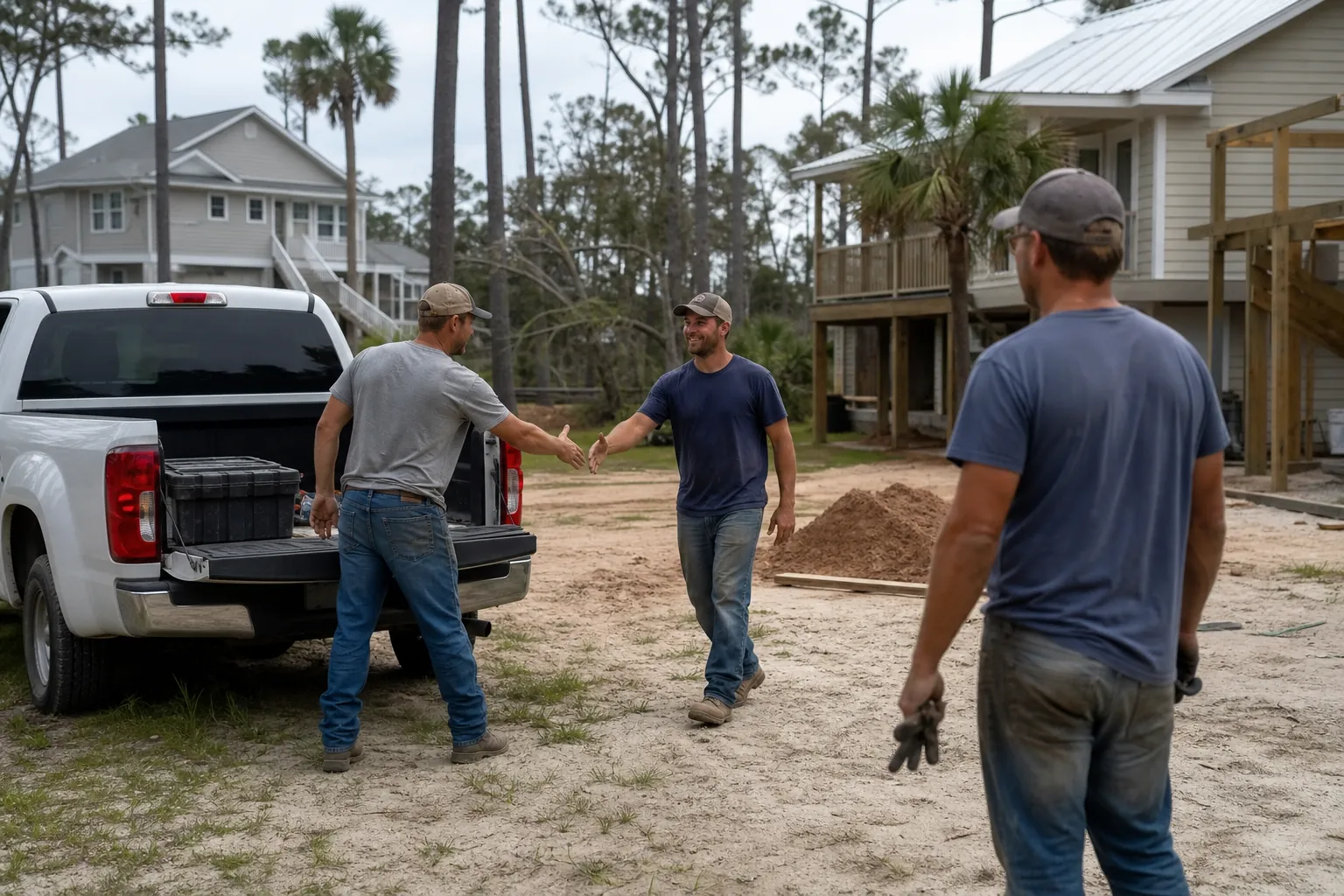
Hurricane crew handoffs should separate finished tree work from debris still awaiting pickup. A shared note should name completed tasks, limits still in place, and changes since departure. For Pensacola homeowners, this keeps separate visits connected without treating a cleared space, photo, or finished task as proof of safety.
What should hurricane crew handoffs tell the next team?
A useful handoff explains what changed during the first visit and what remains unfinished. It carries the tree cleanup scope into the next visit without assuming every task is complete. Pair it with clear tree work records so the next team can trace each note to its source.
Tree removal and hauling can happen during separate visits. The first visit may leave cut wood, a stump, or work that needs another assessment. The second team needs more than a message saying the tree work ended.
Use three status labels throughout the record: completed, still restricted, and changed. Completed describes a named task, such as removing one trunk section. Still restricted carries forward a limit the departing team reported. Changed records something noticed after that team left.
- Name the exact task completed instead of describing the whole yard as finished.
- Keep each reported restriction beside the place or task it affects.
- Record later changes separately so they do not overwrite the earlier work report.
- Identify who supplied each note and when the information was received.
A handoff is a shared work record, not a yard assessment. It should preserve the difference between a homeowner's observation and a professional's finding. Write “wood remains beside the shed” rather than “the shed area is ready.”
Give each work area a plain name that both teams can use. “Front drive pile” is clearer than “that pile over there.” Use the same names in messages, photos, and the worksheet. This reduces confusion when several piles look alike.
The record should travel to the next team's named contact. A message stored only on the homeowner's phone may never reach that team. Mark receipt separately from agreement about the next task.
How should completed work be separated from hauling work?
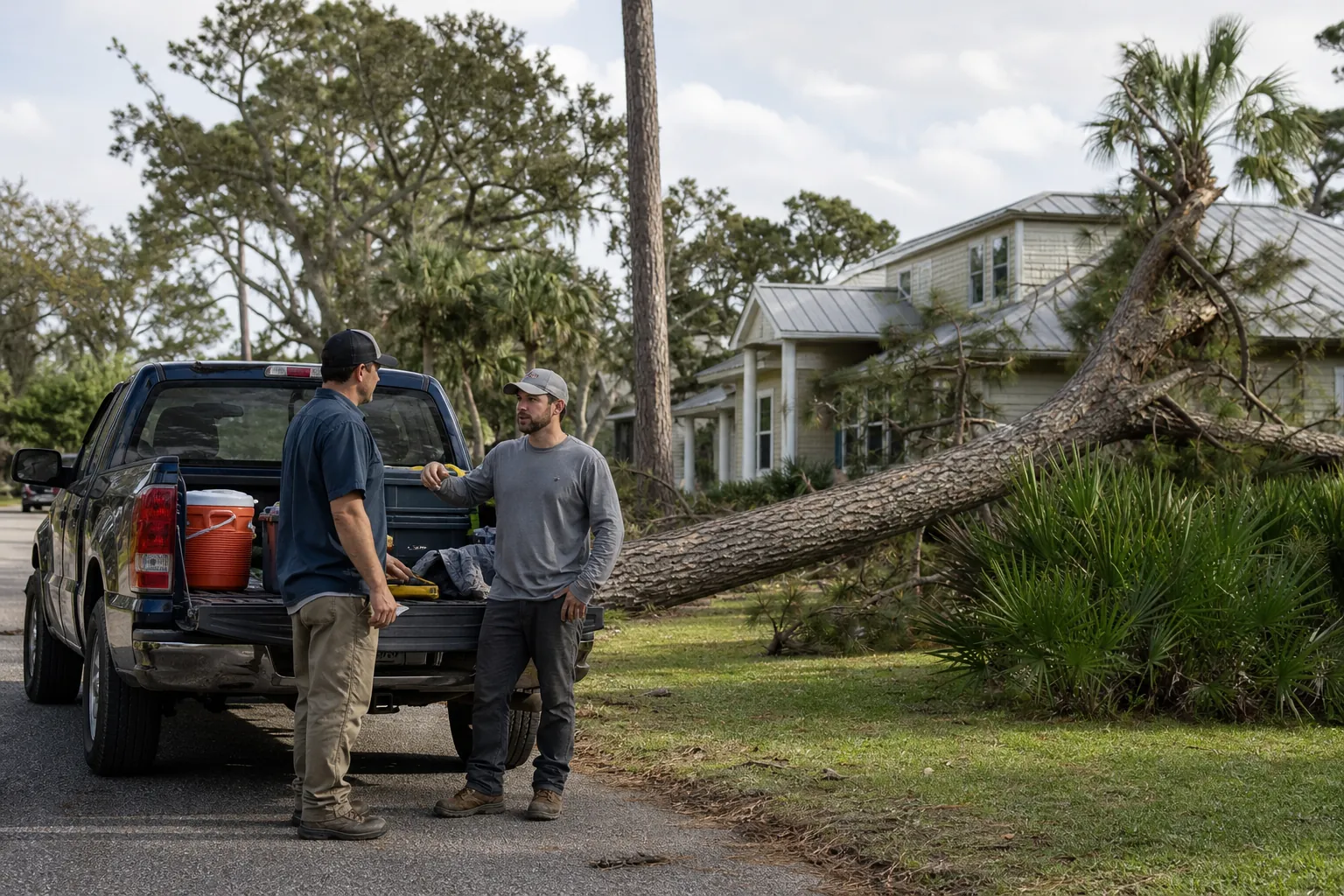
Describe completed work by task and location, then list what the hauling visit still covers. The storm debris cleanup guide provides broader cleanup context. The grapple truck debris guide addresses the pickup side. Neither a cut trunk nor a removed pile means every related task is finished.
“Tree removed” can mean different things to different readers. One person may mean the trunk came off a structure. Another may expect every branch and wood chip to leave. A useful handoff replaces that broad phrase with a short task record.
Keep remaining material separate from remaining tree work. A stack of cut logs is a pickup item. A part of the tree that remains attached needs a different description. The hauling team should not have to infer that difference from a distant photo.
The comparison below shows how precise wording helps. These are sample record entries, not reports about a Pensacola property. Each entry describes scope without declaring access or conditions suitable for work.
| Broad message | Clearer handoff entry | What stays unresolved |
|---|---|---|
| The tree is done. | The departing team reports that the trunk section beside the drive was removed. | Other tree work and pickup status need separate entries. |
| The pile is ready. | The west pile contains wood listed for the hauling visit. | The arriving team still needs to review current conditions. |
| The back area is clear. | The listed branch pile was hauled from the back area. | This statement does not assess trees, ground, or structures. |
| Everything else is small. | Loose twigs and chips remain outside the named pickup scope. | The next step for that material remains open. |
Close each task on its own terms. Pickup can be complete while stump work remains outside that visit. That distinction helps both teams understand the record without expanding the next team's work by mistake.
How do remaining restrictions carry into the next visit?
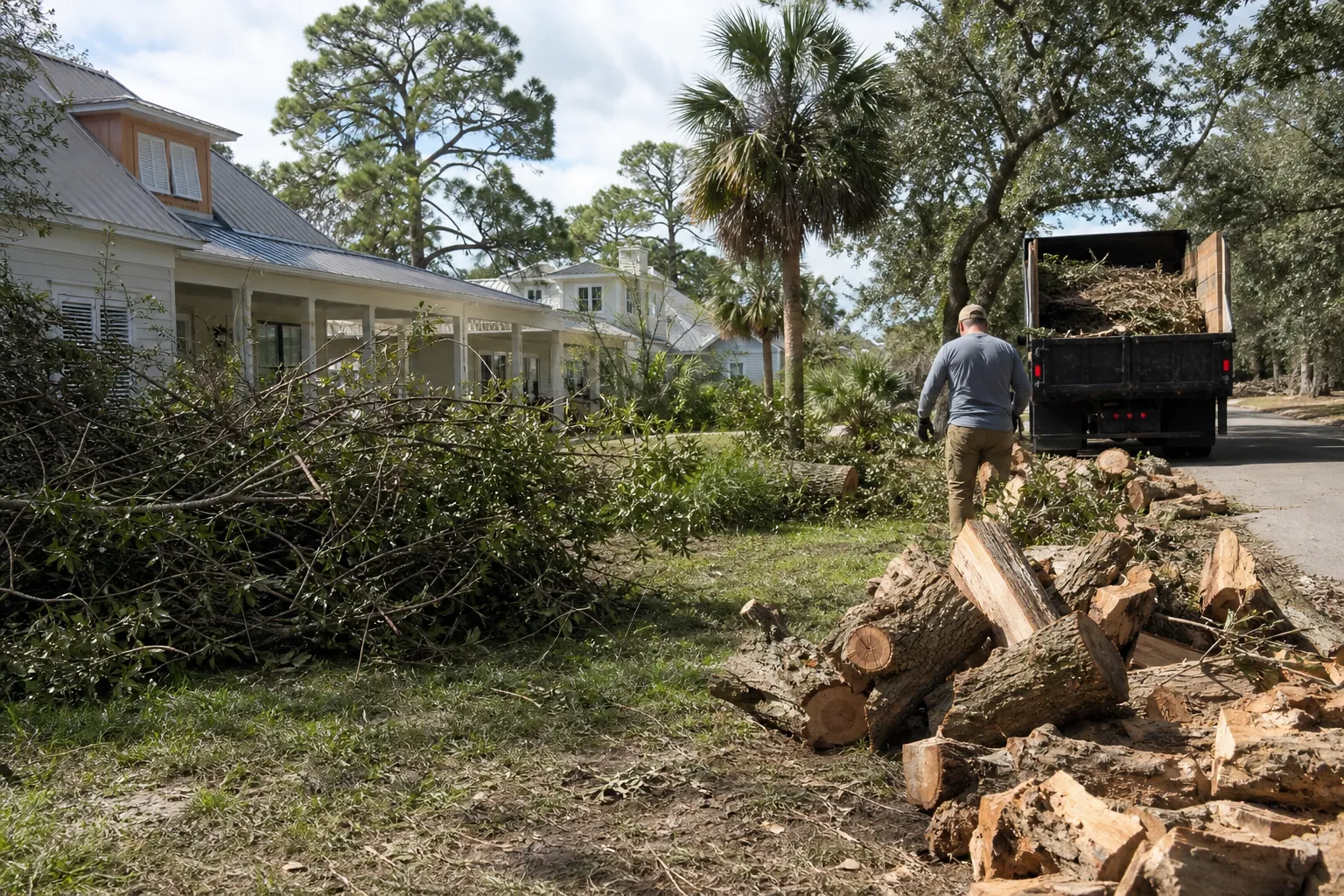
Keep reported restrictions visible until the relevant professional provides an updated finding. A hauling appointment does not erase an earlier limit. Use the yard cleanup zone guide for location labels and the waiting for tree help guide for related planning. Record the limit, its source, and its current status.
Write down the departing team's actual instruction without broadening its meaning. If the instruction concerns a rear work area, name that area. Do not turn it into a statement about the entire property. Leave any unclear wording marked for clarification.
Keep this entry separate from the list of wood awaiting pickup. Otherwise, a reader may mistake a debris location for an approved work area. A blank restriction field is unclear too. Use “no restriction information received” when that is the truth.
- Carry forward the exact area named in the departing team's restriction.
- Identify the person or team that supplied the instruction and its time.
- State what remains unresolved instead of treating missing information as approval.
- Keep an earlier restriction visible when a later note changes its status.
Specific storm hazards need more than a handoff note. Ready.gov says not to wade in floodwater or touch wet electrical equipment. It notes that downed or underground power lines can charge water. Attach those concerns to the affected area, without entering it to investigate (Ready.gov hurricane guidance).
For example, a message might state that water is visible across the listed approach. That is an observation about current conditions, not a finding about depth or electrical hazards. The next visit needs that distinction before its work plan is confirmed.
The record should never replace instructions from local officials. Ready.gov directs people to follow their information and special instructions after a hurricane (official hurricane recovery guidance).
How should changed conditions reach the arriving team?
Send a changed-condition update as a new entry rather than editing the old report. The later yard recheck guide covers follow-up observations. The tree call information guide helps frame a clear message. State what was noticed, where it appeared, and what remains unknown.
Conditions at the first visit may differ from those at the second. A photo from departure records one moment. It does not confirm the next day's ground, tree, or access conditions. Keep the original time attached to that photo.
Use factual words when reporting a change. “Water is visible across the drive” is an observation. “The drive can support a truck” is a work assessment. The homeowner's update should not make the second claim from the first.
Send the update through the contact route arranged for the visit. Identify it as a change since the tree crew departed. Include the affected location name used in the shared record. This helps the arriving team find the right entry quickly.
- Describe the visible change without guessing at its cause or hidden effects.
- State when the change was first noticed, rather than when it likely began.
- Link any existing image to its location, time, and brief description.
- Mark the update as unacknowledged until the receiving contact confirms receipt.
Do not enter floodwater to improve an update or collect a closer photo. Ready.gov warns that floodwater can contain debris, chemicals, waste, wildlife, and electrical hazards (floodwater precautions after hurricanes). An incomplete view should stay labeled incomplete.
The National Weather Service advises continued attention to weather radio or local news after hurricanes. It warns about downed wires, fallen objects, and weakened structures (NWS after-hurricane guidance). A handoff should preserve relevant official instructions rather than replace them with an earlier crew's departure message.
What belongs in a shared crew handoff worksheet?
A shared worksheet should connect each task to its place, status, and information source. Keep it brief enough to read before the next visit. The tree crew visit preparation guide covers arrival planning, while the yard debris storage guide provides context for material left between visits.
Use one record with a clear version time. Separate messages can support it, but they should not compete with it. Keep older versions available so a changed instruction can be traced. Name one contact who maintains the shared copy.
This worksheet is a communication tool, not an inspection form. Fill it with reports already received and observations already available. Unknown entries should remain unknown. There is no need to approach debris or inspect a tree to complete a box.
| Worksheet field | What to record |
|---|---|
| Record version | List the update time and the person maintaining this copy. |
| Work area | Use one plain location name shared by both teams. |
| Completed task | State what the departing team reports completing in that area. |
| Material remaining | Describe the named pile or material awaiting the next visit. |
| Restriction still open | Repeat the reported limit, its source, and any unresolved point. |
| Changed condition | Record the observation, its time, and what could not be seen. |
| Next task | Name the planned work without treating its timing as confirmed. |
| Receipt status | Identify who received this version and any reply still pending. |
For a sample entry, use “front drive pile” as the location. The completed task could read “cut wood placed in one pile, per departing team.” The next task could read “haul listed wood, subject to arriving team's review.”
If no restriction report was received, say so plainly. Do not fill that gap with “none.” If a photo shows only one side of the pile, describe that limit. Useful records make missing information easy to spot rather than hiding it.
How does the handoff close without declaring the yard safe?
Close the handoff when both teams understand the recorded work and unresolved items. That is a communication milestone, not a finding about the whole yard. The storm-damaged tree assessment guide explains the separate assessment topic. The tree cleanup steps guide places individual tasks within a broader cleanup plan.
The arriving team needs the current record before it starts its planned work. Receipt alone does not mean it agrees with every earlier description. Its review may identify a mismatch between the listed task and the conditions it finds.
Keep that mismatch visible instead of forcing the old plan to fit. A hauling visit may end with some material still present. The closing note should state what left, what remains, and what further review was identified.
- The departing team reports completed tasks and any limits that remain in place.
- The shared record separates remaining material from unfinished tree work and unknown conditions.
- The receiving contact acknowledges the current record and any later change messages.
- The arriving team reviews current conditions before deciding how its planned work proceeds.
- The closing entry lists completed hauling tasks and every item still left open.
A useful closing message might read, “The listed front drive pile was collected.” It should not become “the front yard is safe.” The first statement reports a task. The second makes a much broader judgment that the task record cannot support.
Photos can show removed material or a remaining pile. They cannot establish that a tree, structure, or approach presents no hazard. Keep any professional assessment separate, with its source and the area it actually addressed.
This guidance concerns communication between visits, rather than cutting methods or pickup arrangements. It is educational information for Pensacola homeowners. Florida Foliage is headquartered in Daytona Beach; this article does not state that a Pensacola crew or appointment is available.
Frequently asked questions
Does finished tree removal mean debris hauling is complete?
No. Tree removal and hauling may cover different tasks during separate visits. Record the work the departing team reports completing. Then name the material still awaiting pickup. Keep stump work, loose chips, and other remaining tasks separate unless they were included in the next visit's stated scope.
Can the next team rely on departure photos alone?
No. Photos show a limited view at a particular time. They do not establish current ground conditions or assess hidden tree damage. Label each image with its location and time. Carry forward written restrictions and later updates beside it, while leaving professional assessment to the relevant professional.
What happens when two crew reports disagree?
Keep both reports with their sources and times. Mark the difference as unresolved rather than choosing the more convenient version. Send that point to the receiving contact before the next task proceeds. A newer message may describe changed conditions, but its meaning should be clarified rather than assumed.
Who should maintain the shared handoff record?
One named contact can maintain the current copy and send updates. That role keeps messages together; it does not make that person a tree assessor. Each crew remains the source for its own work report. The record should show who supplied each finding, observation, restriction, or completion note.
What if hauling ends with some debris still present?
Record what was collected and identify the material that remains. Explain any reported scope difference without marking the whole visit unfinished by default. Keep unresolved tree work distinct from loose material awaiting pickup. Close the completed tasks while leaving the next action clearly open in the shared record.
Call Florida Foliage at (386) 481-7913 to request an estimate.
AI helped draft this article and create its images. The text offers general guidance; it cannot establish the condition of a tree or work area.
Call (386) 481-7913 to talk through next steps.