Reviewed by Clinton Funk
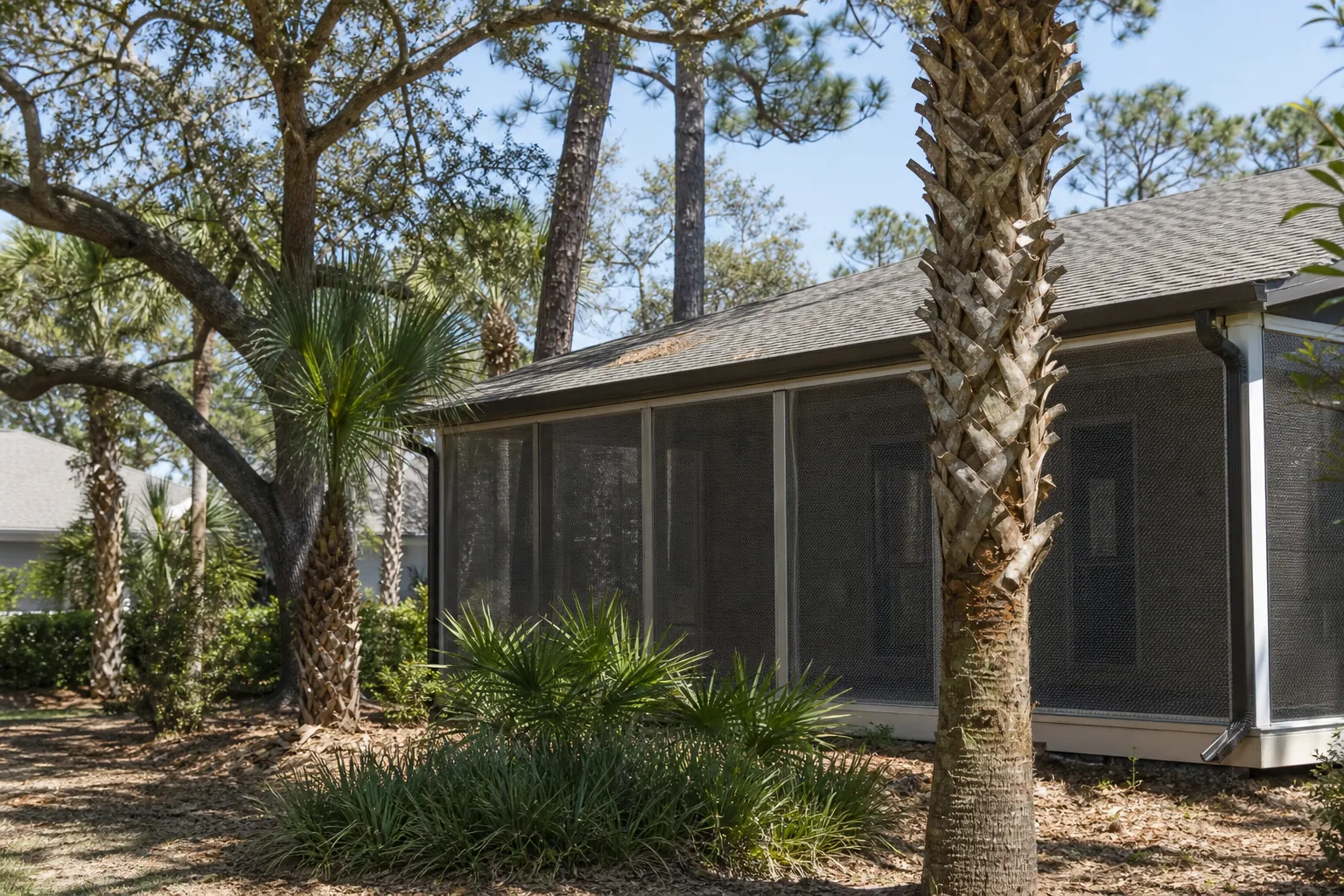
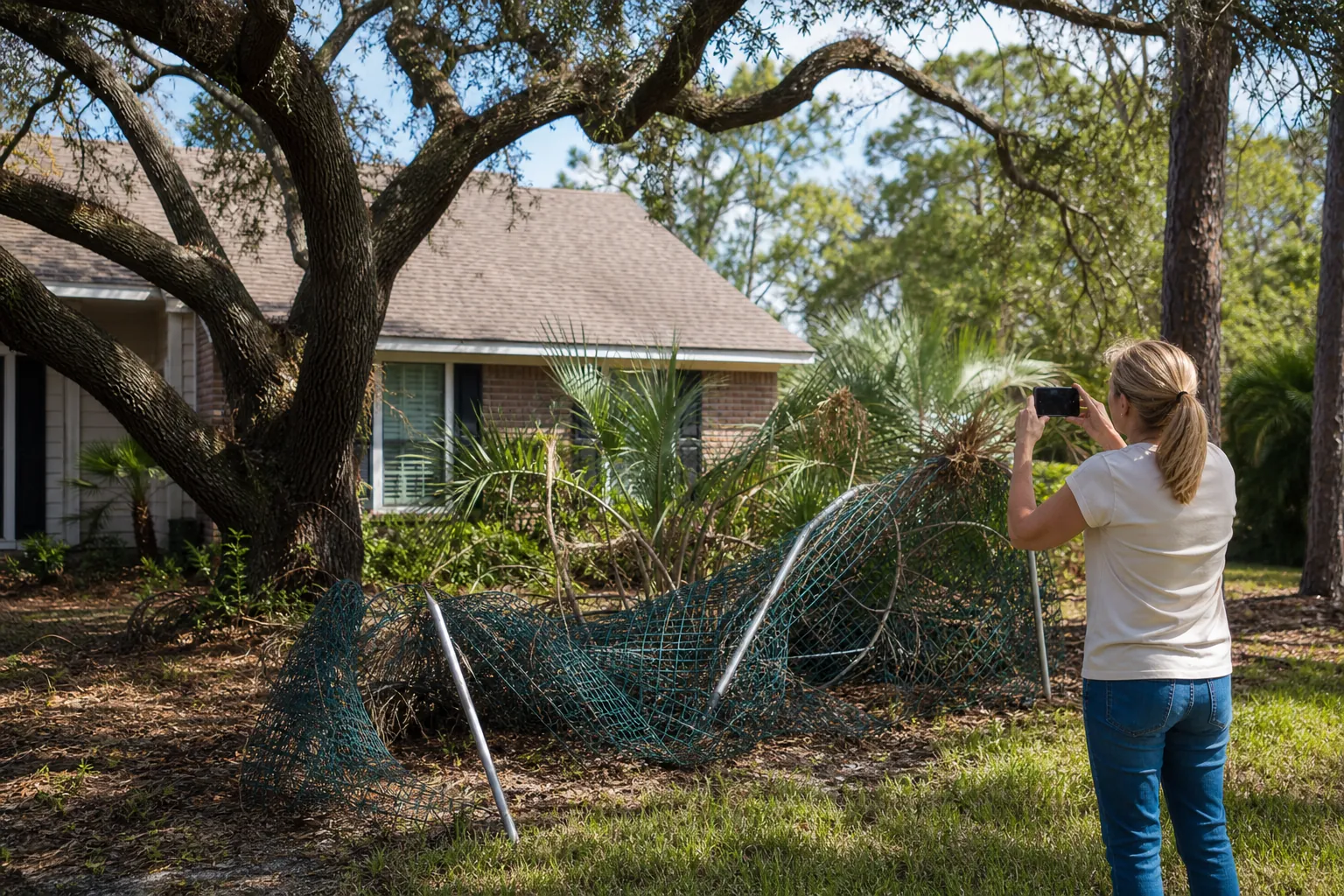
Hurricane garden mesh here means garden netting caught in storm-damaged limbs, rather than equipment designed to lift debris. Leave the tangle undisturbed. Record only what you can already see without approaching it. Photos and plain notes describe visible details; they do not establish that the branches are stable.
How should you describe hurricane garden mesh?
Describe the visible contact between netting and branches without testing or disturbing either one. Record hidden areas as unknown instead of reaching for a clearer view. Our guides to bent limb warning signs and hanging storm limbs explain related concerns without treating appearance as proof of stability.
Mesh has many openings, and small twigs can pass through several at once. A loose edge may belong to the same sheet wrapped around heavier wood. That makes the visible edge a poor guide to the whole tangle.
Visible mesh may extend beyond your view or disappear behind branches. Describe where you can see it, and mark the rest as unknown. A photograph can document that limited view without establishing what the unseen material touches or how it should be removed.
A photo may show where a branch touches another object. Record the visible contact without assigning it a supporting role. The image may leave other parts of the scene hidden, so separate visible features from unknown details.
Record a visible bend, split or patch of netting without interpreting the forces involved. Mark any blocked part of the view as unknown. Leave the tangle unchanged while requesting professional assessment; do not test it to complete a description.
- A loose strip can remain joined to mesh caught deeper among several branches.
- A small twig may pass through several openings in the same net.
- A branch resting on another limb may have hidden contact points.
- A still scene does not reveal how branches would respond to a pull.
Don't treat a lack of motion as a finding about strength. The National Weather Service's after-hurricane guidance warns about fallen objects, downed wires, and weakened structures. Those wider hazards matter before any yard observation begins.
The useful homeowner role is to describe visible links between mesh and wood. Deciding what carries weight belongs to a professional assessment. Keep those two tasks separate throughout the cleanup plan.
What can you record without approaching tangled mesh?
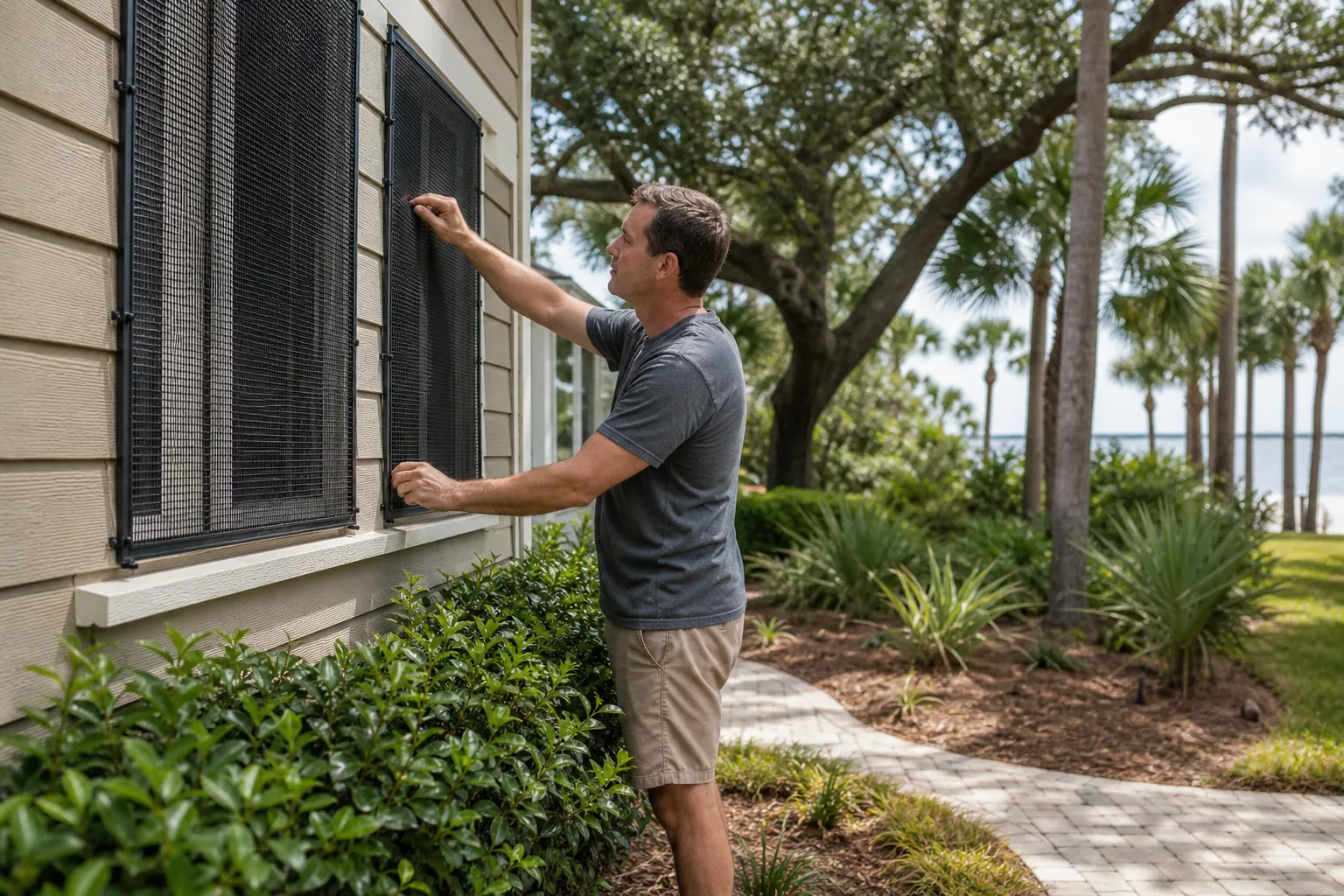
Record the broad scene, visible mesh, and nearby fixed features from an existing view. Leave hidden areas marked as unknown rather than seeking a closer angle. Our guides to limits of porch observations and storm tree records help frame useful notes without turning observation into inspection.
A record doesn't need to show every strand to be useful. One broad image may explain where the tangle sits within a garden bed. A second image from the same position may show the visible mesh more clearly.
Ready.gov's hurricane guidance recommends documenting damage with photographs. That advice does not mean entering a debris area to complete a photo set. Missing details can stay missing until someone can assess the site.
Use fixed features to describe location in plain terms. For example, write “mesh visible beside the rear garden bed” rather than “mesh holding the limb.” The first describes a view; the second makes a judgment about support.
Color can help distinguish garden mesh from nearby leaves or fencing. Record it as an aid to finding the same object later. Don't use color, thickness, or mesh size to judge the strength of the tangle.
- Note where the mesh appears beside a fixed feature already in view.
- Describe visible loops around wood without guessing how tightly they are caught.
- State which parts of the tangle are hidden by leaves or branches.
- Keep each photo linked to a short note about its viewing position.
Use phrases such as “appears to touch” when the contact isn't clear. Write “outside the frame” when the image simply doesn't include an area. Those terms explain the limits better than a firm statement based on a partial view.
Keep the original image with any zoomed copy. A crop may show strands well while hiding nearby branches. Neither view can establish that the branch or the place where you stood is safe.
How do visible mesh patterns differ from an assessment?
A visible pattern describes how mesh looks, not what will happen when it moves. Loose folds, straight strands, and hidden edges all leave important facts unknown. Read about professional storm tree assessment and debris in garden beds for the wider context around these limited views.
A straight strand may look tight, but a photo cannot measure its load. A fold may look loose while another part remains caught. The table below pairs useful descriptions with the questions they cannot settle.
| Visible feature | Useful record | What remains unknown |
|---|---|---|
| Mesh crosses two limbs. | Write that the same visible sheet crosses both pieces of wood. | The view cannot establish how force passes between those limbs. |
| A fold hangs below a branch. | Describe the fold and where it disappears behind the wood. | The fold does not show how the rest of the mesh is caught. |
| Several strands appear straight. | Note their visible direction without calling them load-bearing. | The image cannot measure tension or predict movement. |
| Leaves cover one mesh edge. | Mark that edge as hidden in the photo and notes. | The full sheet size and its hidden contact points remain unclear. |
| Mesh meets a garden frame. | Record the visible meeting point beside the frame. | The view cannot establish the frame's strength or the branch's support. |
This comparison keeps a common mistake out of the record. “Mesh crosses two limbs” is a useful fact about the view. “The mesh is holding both limbs” goes further than that view can support.
Overlapping strands can make separate sheets look like one piece. Leaves can hide gaps between a branch and the mesh. Keep the wording open when depth or contact is unclear.
An assessment must consider the wood as well as the net. Visible mesh may draw attention away from a broken branch above it. The National Weather Service warns of fallen objects and weakened structures after hurricanes; a close-looking mesh photo cannot clear those broader concerns.
Which details belong in a tangled-net worksheet?
A short worksheet should preserve what is visible, what is hidden, and what each photo shows. It should never assign a removal method. The guides to sharing tree details by phone and defining storm cleanup scope offer context for passing along this limited record.
The worksheet below is a record format, not a yard inspection route. Fill it from information you already have. An empty field is better than a guessed answer or a closer visit made to complete it.
- Label the scene with a fixed feature, such as the rear garden bed.
- Describe the visible mesh color and pattern without estimating its strength.
- Record where mesh visibly crosses wood, leaves, or a garden support.
- List hidden areas in plain words, including edges outside the photo.
- Match each note to an image while keeping the original image unchanged.
- End with unresolved details rather than a proposed way to free the net.
A sample entry might read: “Dark mesh crosses a leafy limb beside the garden frame. One edge disappears behind the leaves. The lower end of the branch is outside the photo.” This records a scene without inventing a cause.
A separate line could say: “Contact between the branch and frame is unclear.” That tells the reader exactly where the image stops helping. It doesn't suggest that the frame supports the branch or could withstand movement.
Avoid labels such as “easy net removal” or “small cleanup.” Those phrases turn a partial view into a work judgment. A short mesh tail may lead into a much larger tangle hidden under leaves.
Don't make a branch count sound complete when parts are hidden. “Three branch sections visible” is more precise than “three branches involved.” Several visible sections might belong to one limb, or more wood may lie outside the frame.
The worksheet's value is a clear boundary between known and unknown details. It helps keep later planning tied to the actual view. It does not replace an on-site assessment or establish a safe approach.
What nearby hazards can change the observation plan?
Mesh is only one part of the scene, and nearby hazards may stop observation altogether. Water, wires, and damaged structures take priority over getting another photo. See the guides to wet yard electrical hazards and flooded yard debris concerns for those separate storm conditions.
Don't wade through floodwater to view the back of a garden bed. Ready.gov warns that floodwater can contain harmful waste, debris, and electrical hazards. An unseen mesh edge is not a reason to enter it.
Leave wet electrical equipment alone, even if the net seems within reach. Ready.gov advises against touching wet electrical equipment or touching equipment while standing in water. This article provides no electrical work steps.
A porch or window is not automatically a suitable viewing place. The National Weather Service identifies weakened walls and other damaged structures as post-storm hazards. A view from a building does not establish that the building is sound.
- Leave a missing photo unresolved when floodwater blocks the available view.
- Keep wire concerns separate from guesses about the type of garden mesh.
- Record a blocked view without moving nearby debris to reveal it.
- Leave children out of cleanup tasks, including work around tangled garden mesh.
Ready.gov states that children should not help with disaster cleanup work. A small-looking garden tangle does not change that guidance. Making a record should not become a cleanup task for a child.
Follow local officials' instructions before focusing on yard details. The National Weather Service says to return after evacuation only when officials say it is safe. Permission to return still does not assess any particular branch, net, or garden structure.
No exact standing distance fits every mesh tangle. The size, height, nearby structures, and hidden wood can differ. A photo record must remain optional when the setting prevents observation without approaching the debris.
How should mesh details shape a cleanup plan?
Describe mesh as part of the tree debris, rather than a separate item ready to collect. Its links with branches need assessment before the scope is settled. Our guides to planning for a tree work visit and waiting for tree help explain related planning limits.
The useful scope starts with the visible problem: tree limbs entangled in garden mesh. Add where the tangle lies and which parts remain hidden. That is more useful than asking for net disposal based on a loose-looking edge.
A professional assessment can address branch support, hidden connections, and the work area. Your photos help describe the scene before that assessment. They cannot establish which piece should move first or how the mesh should be freed.
Keep general garden cleanup separate from the tangled-limb issue in the record. Loose leaves elsewhere do not explain the condition of caught branches. The plan should identify the mesh tangle as an unresolved tree concern.
Likewise, a visible garden frame is not proof of a useful support. Its condition may be unclear, and parts may be hidden. Record the frame as a nearby feature without treating it as equipment for the work.
If a later view differs, save it as a new record. Don't replace the first image or guess why the scene changed. Different light, camera angles, and actual movement can all affect what appears in a picture.
A clear handoff includes the original images, brief notes, and visible limits. It leaves out tests, handling attempts, and proposed removal steps. That keeps the record useful without turning it into a plan based on guesses.
This is educational guidance for Pensacola homeowners, not a statement of local crew availability. Florida Foliage is headquartered in Daytona Beach. Site conditions and the needed assessment must guide any discussion of the tree work.
Does loose-looking netting mean a branch is free?
No. One loose fold does not show how the rest of the sheet is caught. Other strands may pass around hidden wood or through small twigs. Record the fold as visible mesh, without treating it as proof that the branch can move freely.
Can a photo show whether mesh is under tension?
A photo may show straight strands, but it cannot establish stability. Record the visible appearance without turning it into a strength judgment. Camera angle and hidden contact points limit what you can describe. Use “strands appear straight” and leave unknown details unfilled.
Should I uncover mesh hidden beneath leaves?
No. Leave the hidden area marked as unknown instead of disturbing the tangle. Moving material would change the scene you are trying to record. A useful note can simply state that leaves block the view of the mesh edge or the branch beneath it.
Is garden mesh the same as a debris collection net?
No. Here, the term refers to garden mesh caught among storm-damaged limbs. It does not describe a net designed to collect or lift debris. Don't infer a lifting purpose from its shape, size, or appearance in a photograph.
What if I cannot get a clear image?
A clear image is optional. Keep a brief description of what is already visible and state what blocks the view. Missing information should remain unresolved until an appropriate assessment. Don't approach the tangle or enter floodwater to improve a record; Ready.gov warns against wading in floodwater.
Call (386) 481-7913 to request an estimate.
AI helped draft this article and create its images. The text offers general guidance; it cannot establish the condition of a tree or work area.
Call (386) 481-7913 to talk through next steps.