Reviewed by Clinton Funk
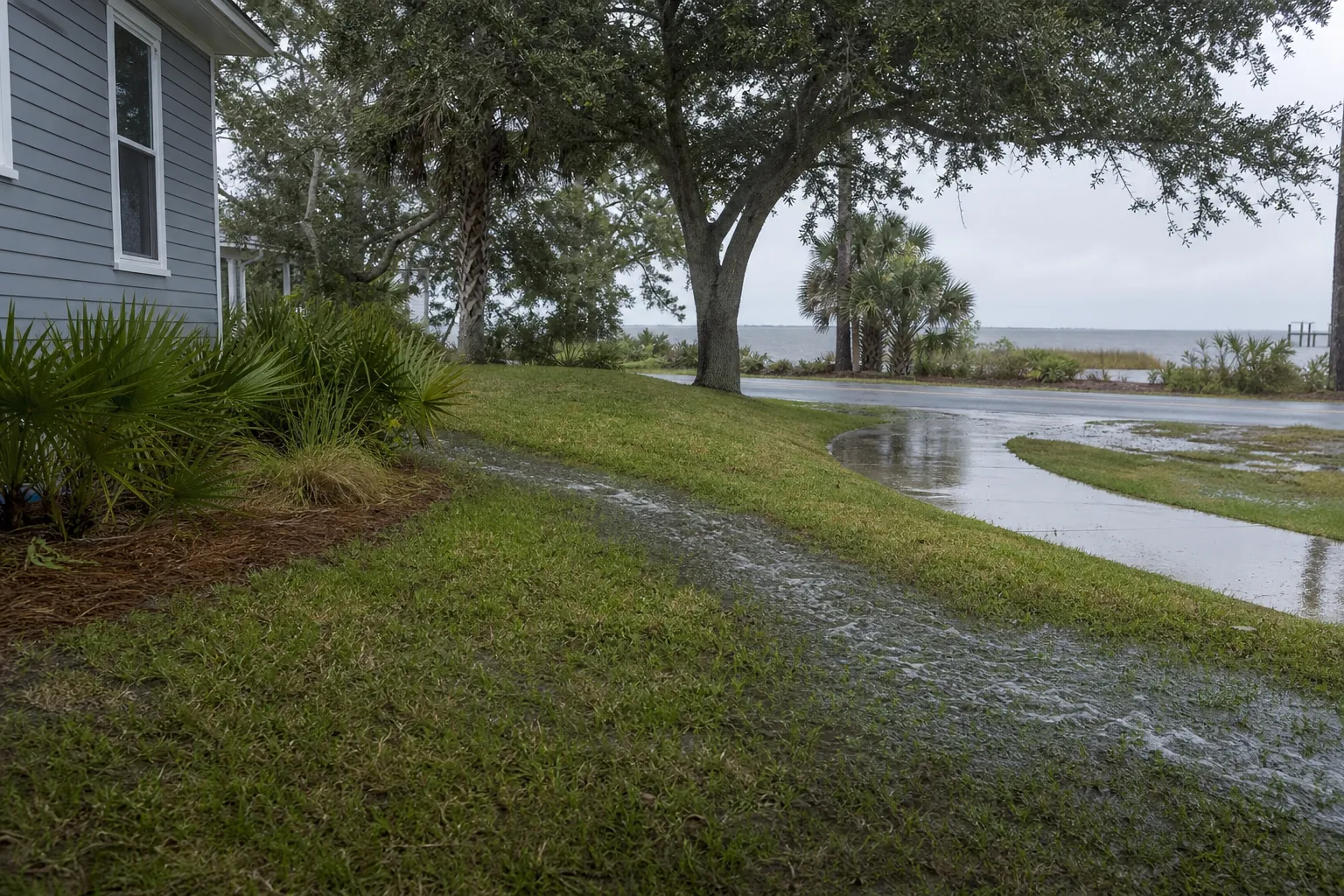
Debris on hurricane yard slopes calls for a hands-off cleanup plan. Leave piles undisturbed, keep people away from downhill routes, and describe the ground to professionals. These steps apply general storm caution to sloped yards. Follow Ready.gov’s cleanup guidance, and leave judgments about pile stability to an on-site assessment.
What makes hurricane yard slopes different from level yards?
A sloped yard adds a key detail: what lies below the debris. Your plan should describe both the pile and the lower yard. Use the yard cleanup zone guide for area labels and the storm tree assessment guide to separate visible facts from judgments.
A pile can cross several parts of a yard at once. Its upper end may rest near a bed or fence. Its lower end may reach a path, gate, or shared gathering space. Describing only the thickest part leaves out much of the scene.
Use simple words such as upper yard, middle slope, and lower path. These labels help explain the layout without measuring the grade. You don't need to calculate an angle or name the soil type. A plain account of where the ground falls is more useful.
Don't treat a neat-looking pile as proof that it can be moved. A photo shows visible surfaces, not every contact point underneath. The professional assessment must address how the pieces rest and overlap. Your role is to describe what you can see without testing anything.
Keep these three details separate when describing the yard:
- State where the debris rests, using fixed landmarks visible from your current location.
- Describe what lies downhill, including paths, gates, beds, and places people normally gather.
- Mark hidden areas as unknown rather than guessing what supports the lower branches.
General storm hazards still take priority over a tidy yard description. The National Weather Service’s after-hurricane guidance warns about downed wires, fallen objects, and weakened surfaces. Apply that caution before choosing any place to observe the slope.
This article focuses on debris already resting on sloped ground. It doesn't provide a slope repair plan or instructions for securing logs. Tree work, ground concerns, and equipment access need separate judgments based on actual site conditions.
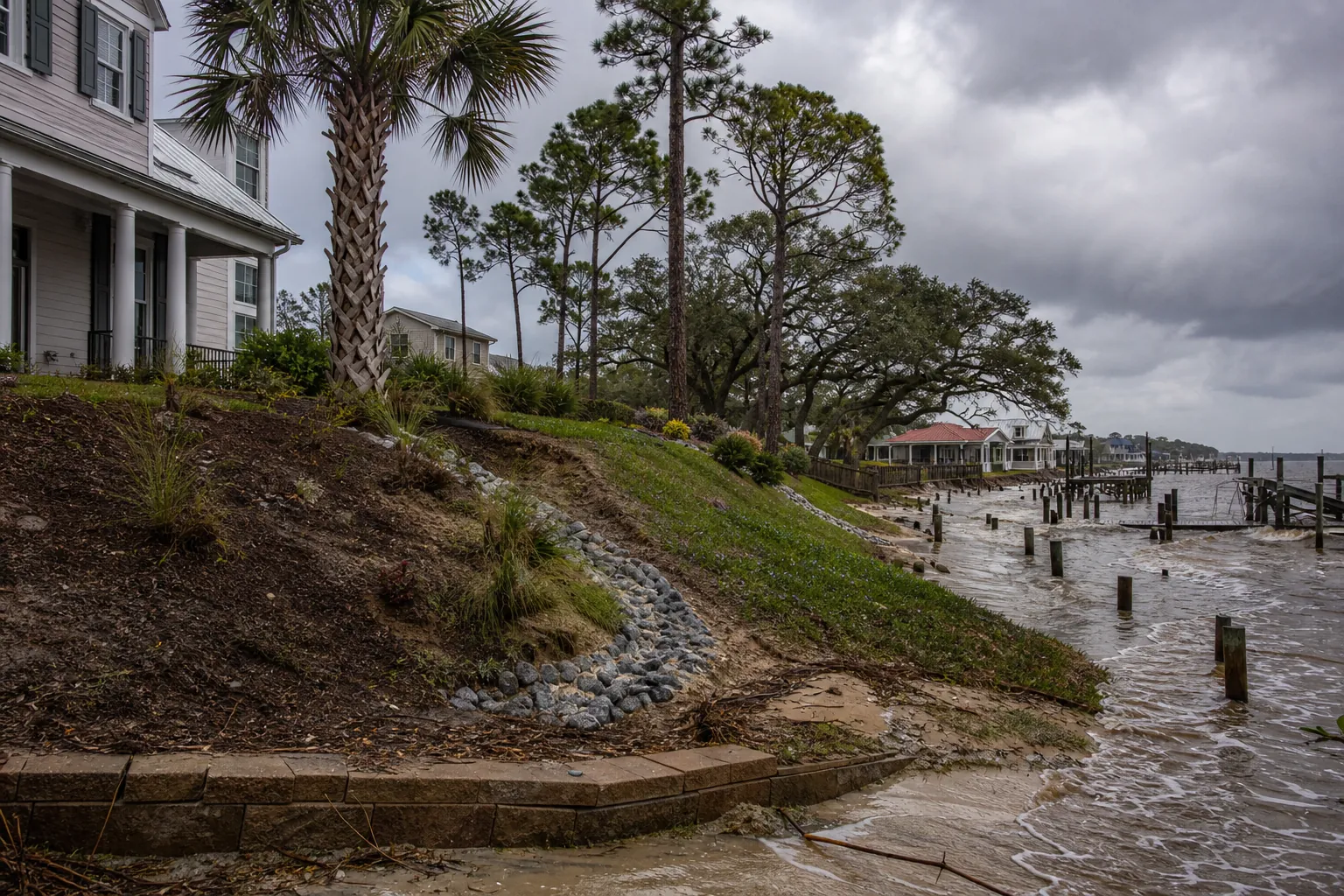
How should you handle a pile that might shift?
Leave a questionable pile as you found it and avoid testing individual pieces. Describe visible overlap instead of trying to prove stability. The bent limb warning guide explains a related concern, while the guide to stopping DIY cleanup helps define the limits of homeowner work.
Don't begin by removing the smallest branch or the easiest-looking limb. Do not test a piece or disturb the pile to find out how it rests. Its size doesn't tell you its role within the pile. Leave the removal order for the professional who assesses the whole scene.
Avoid poking the pile, stepping on branches, or tugging at loose ends. Don't ask someone to stand below while another person checks the top. These are cautious boundaries for this slope-focused plan, not a method for testing debris.
Ready.gov calls for care during storm cleanup, protective clothing, and working with someone else. Having another adult present doesn't make a shifting pile suitable for homeowner work. For this situation, shared work can mean handling calls and keeping household members informed.
Useful visible details include branches crossing each other, a trunk spanning two areas, or bark disappearing beneath leaves. State these as observations. Avoid labels such as secure, settled, or ready to move. Those words imply conclusions that a distant view cannot support.
If you notice a change, don't move closer to find its cause. Record the change from your existing place only if that remains appropriate. For example, you might report that a branch now reaches the lower path. You don't need to explain why it moved.
Leave wedges, ropes, stakes, and other homemade supports out of the homeowner plan. This article offers no method for holding debris on a slope. The next useful step is professional assessment, not a trial move that changes the scene.
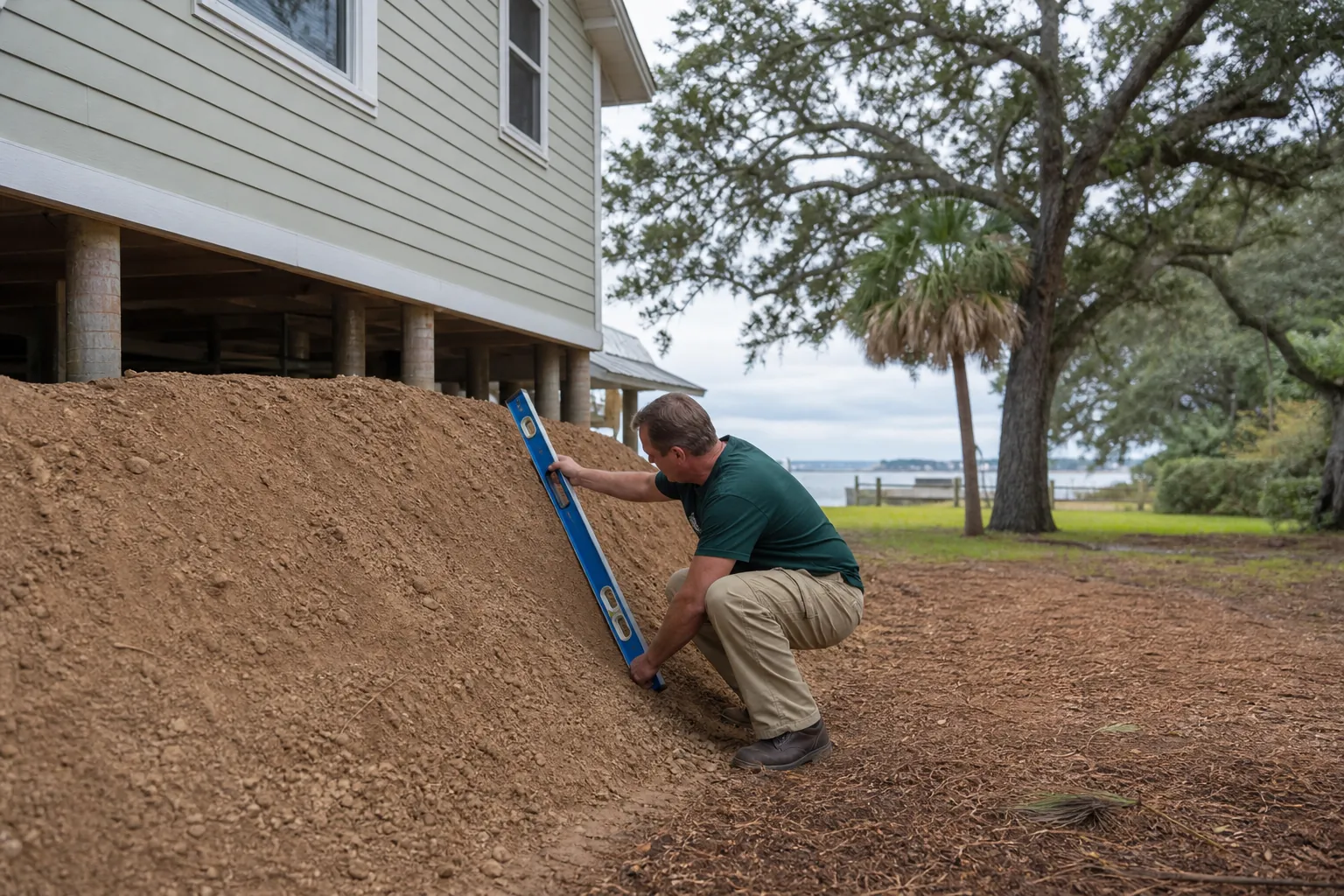
How can you restrict access below the debris?
Keep the lower yard out of normal household use while the debris awaits assessment. Plan around people’s usual routes, rather than focusing on the pile alone. The children and pets yard guide supports household planning, and the waiting for tree help guide covers the pause before work.
Start with doors and gates already under your control. Tell household members which lower path or yard area is closed. Use a clear landmark, such as the back gate or lower patio. “Stay away from the mess” can mean different things to different people.
Keep children out of cleanup work, as Ready.gov directs after a hurricane. For a sloped yard, make that rule clear before opening doors. Keep pet routines away from the affected area rather than relying on supervision beside the pile.
A notice at an accessible door can remind adults about the changed route. It isn't a shield against moving debris. Don't enter the slope to place tape, cones, or a sign. Use controls you can reach without approaching the affected ground.
- Tell every household member which downhill path is closed before normal yard routines resume.
- Keep play, pet breaks, and yard storage away from the affected lower area.
- Share the access change with expected visitors before they arrive at the property.
- Leave a blocked route unused rather than creating a shortcut beside the debris.
Don't assume the uphill side provides a suitable alternate route. Other storm damage may affect that side too. The National Weather Service advises watching for downed wires and weakened surfaces after a storm. A route must be considered as a whole.
If the debris affects the only usual way outside, explain that clearly when requesting help. Don't describe it as an ordinary yard pile. State that access is restricted and identify the affected door or gate. That detail helps others understand the cleanup setting.
What terrain details help professionals plan the work?
Describe the slope with landmarks, visible ground conditions, and the location of the debris. Leave equipment choices and work methods to the professionals. The tree service call guide helps organize a brief description, while the cleanup scope guide helps separate tree work from other yard needs.
Begin with the direction the yard falls. “The ground drops from the back steps toward the rear fence” gives a clear picture. Then describe where the pile sits along that route. Use left and right only with a stated viewpoint, such as facing from the house.
Describe ground cover in plain terms. You might see grass, bare soil, paving, thick leaves, or standing water. Don't convert those details into claims about grip or ground strength. Visible cover alone doesn't show what equipment the ground can support.
Standing water changes the conversation. Ready.gov says not to wade in floodwater, which may contain debris and other hazards. Report the visible water from where you are. Don't enter it to learn its depth or inspect the base of the pile.
Mention fixed features that shape the work area. Steps, narrow gates, fences, beds, and walls help explain the layout. Describe their location without deciding whether they can carry weight or hold debris. That judgment is outside a homeowner’s visual account.
Don't promise vehicle access because a mower once used the slope. Different equipment needs its own assessment. You can report the usual entrance and any visible blockage without suggesting a route. The professional should decide what access is suitable after reviewing the site.
Keep hidden features marked as unknown. A leaf-covered dip is not a confirmed drain, and unseen ground is not confirmed firm. If you already know where yard features sit, share that knowledge. Don't search beneath debris to fill gaps in the description.
What should a slope debris handoff sheet include?
A short handoff sheet can preserve useful facts without sending anyone into the yard. Keep it focused on slope direction, debris location, and access limits. Pair the tree damage record guide with the tree crew visit preparation guide to organize information already available from an appropriate location.
The table below is a practical worksheet, not a site inspection. Fill only the fields you can describe without approaching the pile. “Unknown from current view” is a useful entry. It tells the professional where an on-site check is still needed.
| Worksheet field | Useful example wording | What remains unconfirmed |
|---|---|---|
| Slope direction. | The yard falls from the house toward the back fence. | The grade and ground strength need assessment. |
| Debris position. | The trunk crosses the middle slope above the lower path. | The contact points beneath it are hidden. |
| Downhill use. | The lower path normally leads to the rear gate. | The path is not being used pending assessment. |
| Visible ground. | Leaves cover part of the grass beside the pile. | The covered ground has not been checked. |
| Known entrance. | The usual yard entrance is beside the left fence. | Equipment access has not been assessed. |
Use one simple sequence to turn these notes into a clear handoff:
- Name the viewpoint used for your description so left and right remain clear.
- State the slope direction and locate the pile between two fixed landmarks.
- Identify the lower route that household members are no longer using.
- List hidden areas and explain that no pieces have been tested or moved.
- Send available notes without delaying contact to gather a complete set.
If you already have photos, pair each image with its viewpoint. Don't move into the yard to improve the angle. Ready.gov recommends documenting damage with photographs, but a photo remains a record, not a stability check.
A short description often works better than many close views without context. Keep the house, slope, and lower route connected in your wording. The goal is a usable layout, not proof that any part of the yard is ready for work.
How should the cleanup plan change as conditions change?
Keep the plan open until professionals assess the debris and the work area. New visible changes should update the description, not trigger a closer homeowner check. The later yard recheck guide explains follow-up observations, while the yard debris storage guide addresses separate planning for removed material.
Pass on changes in plain language. Say that water now covers the lower path or that branches obscure the gate. Avoid deciding that a change makes removal easier or harder. The professional needs the new fact before making that judgment.
Continue following local instructions while waiting. Ready.gov advises paying attention to local officials after a hurricane. A planned yard visit doesn't replace those instructions. Access arrangements may need to change when the surrounding area remains affected.
When discussing scope, keep three parts distinct: assessment, removal, and the remaining yard condition. Assessment addresses the tree debris and how the work can proceed. Removal addresses the agreed material. Bare ground, damaged beds, or drainage concerns may need a separate plan.
- Report visible changes without entering the slope or moving material for a clearer view.
- Keep downhill routes closed while restrictions remain unresolved; record the responsible professional's access instructions before reopening household routes.
- Confirm which debris remains before returning the lower yard to normal household use.
Don't use elapsed time as a test of stability. A pile that looks unchanged still needs assessment before anyone disturbs it. This guidance sets no waiting period that makes debris ready to handle. It also offers no fixed distance that fits every sloped yard.
Before normal routines resume, make sure the work discussion covers the lower route. A cleared upper area doesn't answer every question about debris left below. Describe any remaining obstruction and let the responsible professionals explain the limits of their completed work.
Florida Foliage is headquartered in Daytona Beach. This article provides educational guidance for Pensacola homeowners, not a statement about local crews or scheduling. Keep the focus on a clear terrain description and a professional assessment of the actual yard.
Frequently asked questions
Can I remove small sticks from beneath a larger pile?
Leave pieces beneath or tangled within the pile alone. A small visible end doesn't show how the whole piece rests. Treat its position as part of the professional assessment, rather than sorting by size. Ready.gov urges care during storm cleanup; this plan keeps homeowners from testing the pile.
Does a gentle slope still need to be described?
Yes. Describe where the yard falls and what lies below the debris. You don't need a measured angle or a steepness label. A gentle-looking slope is still part of the site layout. That description helps explain the scene without claiming the ground or pile has been assessed.
Can a photo show that debris will stay in place?
No. A photo can record visible position, but it cannot establish stability. Hidden contact points and covered ground remain unknown. Send existing photos with a clear viewpoint and plain notes. Leave conclusions about movement, removal order, and equipment access to professionals who assess the site.
Should I walk below the pile to measure the path?
No. Use known landmarks or mark the width as unknown. Don't enter the affected lower area to complete a worksheet. The National Weather Service warns about fallen objects and weakened surfaces after hurricanes. Missing measurements are better than notes gathered by approaching an uncertain debris pile.
Do I need to know which machine can reach the slope?
No. Describe the normal entrance, visible obstacles, and where the ground falls. Don't choose equipment or assume a past access route suits this work. Professionals need to assess the actual conditions. Your most useful contribution is a clear account of the layout, with hidden areas marked as unknown.
Call (386) 481-7913 to request an estimate.
AI helped draft this article and create its images. The text offers general guidance; it cannot establish the condition of a tree or work area.
Call (386) 481-7913 to talk through next steps.